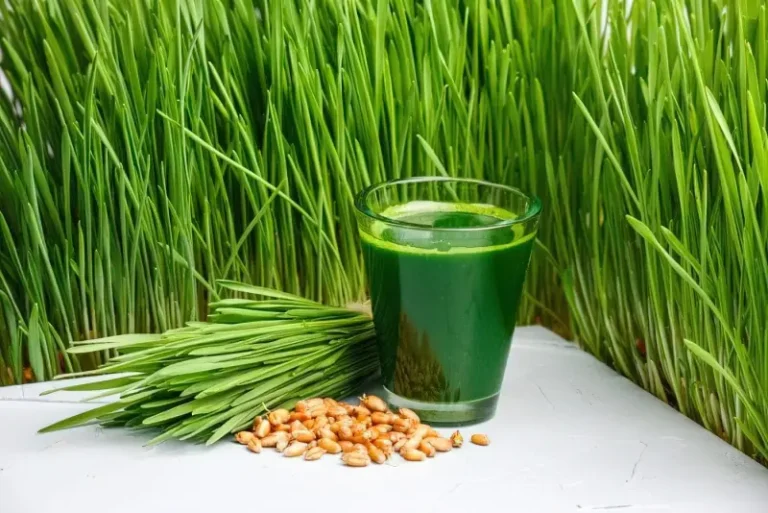
Radish microgreens in a refrigerator at 5 °C lose a quarter of their vitamin C (26.2%) in eight days while still looking sellable. Meanwhile mustard microgreens kept their chlorophyll and overall antioxidant activity almost unchanged for fourteen days. So the question “do microgreens lose nutrients in the fridge” has two honest answers, depending on the nutrient. Here are the numbers from both studies.
What was measured
The first study, Ghoora and coauthors, 2020 (Foods, doi 10.3390/foods9050653): seven-day-old radish and roselle microgreens were stored at 5 °C for eight days in two packages, a PET clamshell and an LDPE self-seal bag. Vitamin C was measured in four replicates on days 0, 4 and 8. Total ascorbic acid (TAA) is the sum of the free form (FAA) and the oxidized dehydroascorbic form (DHA).
The second, Dayarathna and coauthors, 2023 (Life, doi 10.3390/life13020393): mustard microgreens in 150 µm polyethylene bags at five temperatures from 5 to 25 °C for fourteen days. They measured chlorophyll, electrolyte leakage, weight loss and antioxidant activity by the DPPH test.
Vitamin C: the curve by day
| Day at 5 °C | Radish: total, mg/100 g | Change | Radish: free form, mg/100 g | Roselle: total, mg/100 g | Change |
|---|---|---|---|---|---|
| 0 | 73.98 | - | 67.83 | 106.62 | - |
| 4 | 65.93 | -10.9% | 55.08 | 70.01 | -34.3% |
| 8 | 54.59 | -26.2% | 38.29 | 49.24 | -53.8% |
PET clamshell. Radish loses 10.9% of total vitamin C by day 4 and 26.2% by day 8. In the LDPE bag it was 22.4% over eight days, and for radish the difference between packages is not statistically significant: the authors state that packaging made no significant difference to ascorbic acid levels at the end of storage. Roselle is worse: 53.8% over eight days. Different crops, different losses, so radish figures cannot be carried over to kale or peas.
The free form on its own falls faster: 43.6% in radish over eight days and 71.0% in roselle. But part of it turns into dehydroascorbic acid (DHA), and in radish the ratio of DHA to the free form rises from 0.091 to 0.426. Xiao and coauthors, discussing these forms in microgreens, cite work in which DHA utilization is equivalent to that of the free form, although the metabolic turnover differs (J Agric Food Chem, 2012). So the fairer measure of loss is total ascorbic acid, 26.2%, not 43.6%.
Why appearance misleads

In the same study a panel scored overall acceptability on a nine-point scale. Radish in the PET clamshell scored 7.0 on day 8, against 8.3 at the start, still above the 6.5 acceptability line, and received a marketability score of 3 out of 5. Roselle in LDPE scored 6.2 on day 8, below the line, and in PET 6.6. So on day 8 the leaves are still near the edge of sellable while vitamin C is already 26 to 54% lower.
In the second phase radish was stored uncoated for twelve days. Total ascorbic acid fell from 85.19 to 68.94, 59.38 and 49.74 mg/100 g, that is 19.1%, 30.3% and 41.6% on days 4, 8 and 12. The control samples lost marketability by day 8.
Chlorophyll and antioxidants: a different picture
Mustard held quality for fourteen days at 5 °C. Initial chlorophyll was about 250 µg/g fresh weight and 216 after fourteen days, a loss of 13.6%. DPPH antioxidant activity (initial IC50 228.27 ppm) did not change significantly over fourteen days. Weight loss was 2.5% on day 7 and 4.65% on day 14.
Temperature changes everything. At 10 °C the IC50 value rose significantly after seven days, meaning antioxidant activity fell, and the samples kept good sensory quality for only four days. At 15 °C it was two days, and at 20 and 25 °C the microgreens spoiled beyond consumption within a day. The real temperature on a home refrigerator shelf often differs from the number on the dial.
Do not mix the two measurements. DPPH shows the overall ability of an extract to quench a radical, and it only partly reflects vitamin C. Chlorophyll is not a vitamin at all. These data say some indicators hold at 5 °C. They do not refute the vitamin C loss in radish.
How much that is in a serving
In 20 g of fresh radish, the Ghoora table gives 14.8 mg of total vitamin C, and after eight days at 5 °C 10.9 mg. The difference is 3.9 mg per serving. For comparison, raw red cabbage in the USDA table has 57.0 mg per 100 g (FDC 169977), and radish after eight days in the fridge has 54.6 mg per 100 g. Different plants and different laboratories, so this is a scale, not proof of equality, but it shows that even aged radish is no worse than an ordinary vegetable off the shelf.
There is also a caution about the numbers themselves. The same radish was measured on day 0 at 73.98 and 85.19 mg/100 g in the two phases, so the batches differed by 15.2%. That is more than the loss over four days. Batch, cultivar and growing conditions matter as much as a week in the fridge.
What follows from this
- If vitamin C is what you want, eat microgreens in the first days: in four days radish lost 11 to 19% (two batches) and roselle 34%. That is my reading of the table, not the authors’ conclusion.
- A fresh look does not measure nutrients: on day 8 the leaves still sell, with a quarter less vitamin in them.
- Check with a thermometer that the shelf is near 5 °C: per Dayarathna, 10 °C already lowers antioxidant activity and cuts the term to four days.
- Package type made no difference to radish vitamin C in this trial, so there is no point in buying a special container for the vitamin.
- Shelf life by crop and package is covered separately, and I do not repeat it here.
For how many days microgreens keep by crop and temperature, see the storage terms table, for packaging see the cold chain entry, and for what happens to the leaf after cutting see senescence.
The limits of these data: two crops for vitamin C (radish, roselle) and one for antioxidants (mustard), all grown in laboratory conditions in India and Sri Lanka, for at most 8 and 14 days. Other vitamins and minerals during storage were not measured in these papers.
Sources
- Ghoora M.D., Srividya N. Effect of packaging and coating technique on postharvest quality and shelf life of Raphanus sativus L. and Hibiscus sabdariffa L. microgreens. Foods 2020;9:653. doi 10.3390/foods9050653
- Dayarathna N.N. et al. Effect of storage temperature on storage life and sensory attributes of packaged mustard microgreens. Life 2023;13:393. doi 10.3390/life13020393
- Xiao Z., Lester G.E., Luo Y., Wang Q. Assessment of vitamin and carotenoid concentrations of emerging food products: edible microgreens. J Agric Food Chem 2012;60:7644-7651. doi 10.1021/jf300459b
- USDA FoodData Central, Cabbage, red, raw (SR Legacy), FDC ID 169977. entry