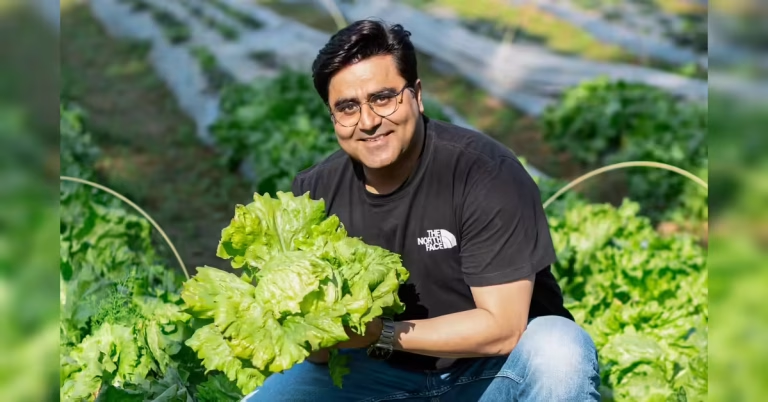
Jack Leung, founder of the urban farm Agrician, believes vertical farming can produce food efficiently and bring city residents together as a community.
Leung started his business in one of Hong Kong’s industrial areas. He decided that a vertical farm inside an abandoned bicycle warehouse would breathe new life into the neighborhood and become a place where people meet and learn about urban farming.
Leung says the team wanted an indoor farm that would bring people together and draw attention to agriculture, which is why they picked such an unusual location.
Agrician covers 200 square meters, 100 of which are used for growing. The farm currently produces leafy greens, herbs and edible flowers. They are sold by subscription, with ten kinds of herbs and greens in each box. Leung believes that selling by subscription, instead of through retail chains, lets an urban farmer talk to customers directly, with no middlemen.
Hong Kong has great potential for vertical farming because it depends on imported food and has little land for agriculture. Very few local suppliers sell fresh vegetables and greens.
When there are few local farmers, Leung says, city people become cut off from how food is produced. Food is something they buy at the supermarket, so they know little about the quality of what they buy. That makes urban farms more important.
Agrician runs community events to promote vertical farming. The company recently held a salad-making workshop for schoolchildren, who saw how greens grow and harvested them for their salads themselves.
In the future, Leung hopes to build a platform that encourages Hong Kong residents to take up urban farming and to bring vertical farming into residential and commercial buildings.