Ukraine’s Cabinet Resolution No. 1092 lets businesses without a shelter keep working during a yellow air alert for no more than three months from the day it took effect. The Ministry of Economy puts the end date at December 4, 2026. The resolution’s text adds a condition that the ministry’s announcement leaves out: agreement from the workforce.
What the resolution allows during a yellow alert
Resolution No. 1092 of September 4, 2026 splits the “Air Raid Alert” signal into two levels. Red means a missile, missile-and-drone, or mass drone threat. Yellow means a drone threat. The rule for business is written for the yellow level and covers any business entity regardless of ownership type.
During a yellow alert a business may operate where there is a protective structure, or a temporary or permanent shelter for staff and visitors, as well as in dual-purpose structures and in buildings that have a safe space. The last two cases were added by Resolution No. 1128 of September 15, which has applied since September 18.
Premises without a shelter fall under a different clause: operating is allowed “by agreement with the workforce until a shelter is built, but no longer than three months from the day this resolution took effect.” The Ministry of Economy counts the period from September 4 and gives December 4 as the end. From October 25 that leaves 40 days. Visitors in such premises are there at their own discretion.
Where the ministry’s announcement and the text diverge
The ministry’s October 13 announcement says that businesses without a shelter “can continue working in the normal mode” during the transition period. The workforce condition is not there, but it is in the resolution. The resolution does not say what form the agreement takes. It also does not address a sole proprietor with no employees: there is no workforce to ask, and the text is silent on what counts as agreement.
The second gap is distance. A presentation from the Interior Ministry on the resolution, posted on the Ministry of Economy site on October 5, counts another business’s accessible shelter as yours if it is within 300 m (about 980 ft) for buildings of three floors or 9 m (30 ft) and taller, and within 500 m (about 1,640 ft) for lower ones. The resolution itself has no radius: it speaks of premises, buildings, and territories where a shelter is “present.” A tenant counting on a neighboring building’s shelter is relying on guidance, not on the rule.
By the same presentation, work stops during a red alert, and during a yellow alert it stops after three months if staff and visitors have no collective protection. The resolution’s text contains no red-level rule for business and names no fines.
Safe spaces: what Resolution No. 1128 added
The resolution defines a safe space as the “most protected zones” in rooms designated by the building’s balance holder, meaning the owner or manager that carries the building on its books. The zones are set up within the existing layout so as to shield staff and visitors from the secondary effects of conventional weapons and from a maximum excess blast pressure, in kilopascals. The Ministry of Defense and the General Staff are to set that figure, and the balance holder backs it with its own calculations. Either the balance holder or the business “declares” a safe space by informing visitors and staff.
If a building is not a dual-purpose structure and has no safe space, the businesses in it must create one. Resolution No. 1092 gave the Ministry of Defense ten days to set the pressure figure, which is mid-September. No published kilopascal value turned up at the time of writing, so what a calculation is checked against is unknown.
A 100 × 60 cm (39 × 24 in) sign is required at entrances and on exterior walls or fences, reading one of three things: “The facility has a shelter,” “The facility has a safe space,” or “The facility has no shelter.” The business must also set a staff procedure for the alert and make sure the signal reaches staff and visitors. A yellow-level signal lasts 30 seconds and is issued by district; a red one lasts 1 minute.
What it means for a rented grow room

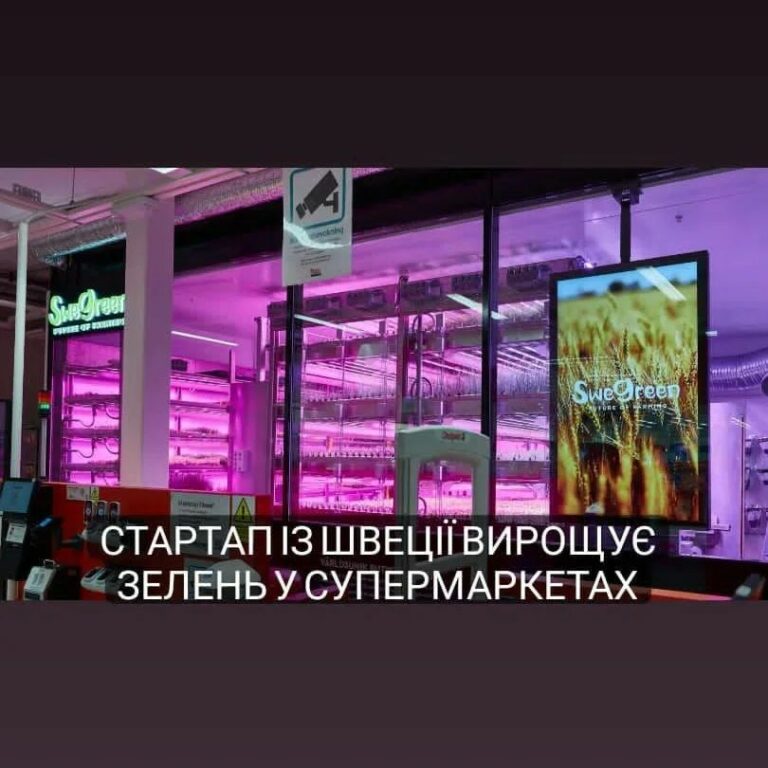
The resolution does not single out agriculture and does not exempt a farm or greenhouse: the rule counts staff and visitors, not floor area. For a vertical farm in a rented room, the key party is the balance holder, which is the landlord. The landlord determines whether the building has a shelter, counts as a dual-purpose structure, or can designate a safe space, and does the calculations. A greenhouse on open ground falls under the words “on territories,” but the resolution does not explain where its shelter would be.
One more promise: the particulars for “some business entities” are to be set by a separate Cabinet decision. Whether it has been issued, and for whom, could not be checked.
Read literally, a safe space falls in the same clause as a shelter, with no three-month limit. But the next clause still talks about premises where a shelter is “absent,” and the resolution does not try to separate the two cases. That is a reading of the text, not guidance from an authority.
What to check before December 4
- Ask the landlord in writing whether the building has a protective structure or a shelter, counts as a dual-purpose structure, or has a safe space, and where it is.
- If none of that exists, the choice is a safe space backed by the balance holder’s calculations, or workforce agreement for the period up to December 4. The form of agreement is not defined, so a written document is safer than a verbal yes.
- Post a 100 × 60 cm sign with the right wording at the entrance and on the exterior wall or fence.
- Write the staff procedure for the alert and decide how the signal reaches everyone in the premises.
After December 4, by the same Interior Ministry presentation, a business that has not given its staff and visitors collective protection stops work during a yellow alert.