
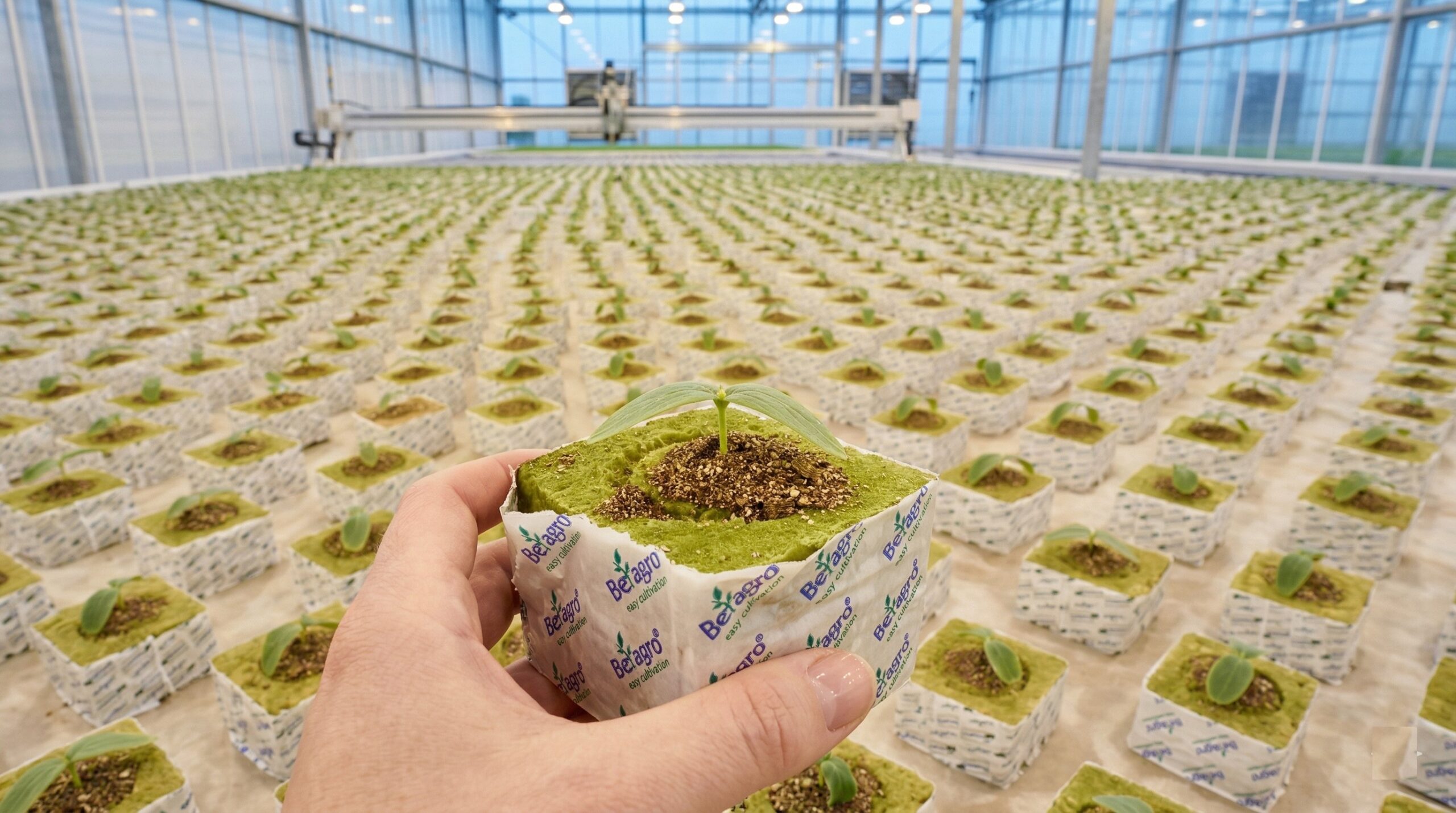
No light, no growth. That is not a metaphor — it is literal plant physiology. Among all the microclimate factors on a city farm, light stands apart. It does not just matter; it defines how active all the other parameters can be. Temperature, humidity, irrigation, CO₂ uptake — all of these adjust to the light regime, not the other way around.
Light — the Foundation of Everything
In indoor growing, artificial lighting is the only source of light energy. The more intense the lighting, the more actively a plant can absorb water, nutrients, and carbon dioxide — and the higher the temperature it can tolerate. The more it can be irrigated.
One fundamental point worth understanding from the start: all microclimate factors are equally important and none replaces another. Miss the temperature target and good lighting will not save you. Push humidity too high and problems will come regardless of perfect temperature. This is a system where every element must be in sync.
How Light Intensity and Temperature Interact
Two scenarios play out on farms constantly.
Good Light + Low Temperature
Illuminance of 100 W/m² and above is a serious resource for a plant. But if the temperature is too low, the plant simply cannot use that energy. Photosynthesis runs and products are formed, but the chemical reactions in cells are slowed by cold. You are giving the plant fuel while not letting it move. The result: wasted resource and slow growth.
Low Light + High Temperature
Illuminance below 80 W/m² means photosynthesis is producing little “raw material.” But high temperature accelerates all cellular processes — so the plant begins spending what it cannot produce fast enough. Stems stretch, leaves are small and pale, the plant looks sick. This is the classic picture of heat stress under insufficient light.
Specific Numbers for Microgreens and Greens
At illuminance of 80–90 W/m², the optimal temperature for microgreens and greens is 20–22 °C by day and 17–19 °C at night. At 25 °C under that light level, you are already clearly over the limit. The better the light, the higher the temperature the plant can handle without harm. Dutch agronomists derived these norms over decades — there is no need to reinvent the wheel.
Tip: If you want to raise the temperature in the growing zone, raise the light intensity first.
Different Growth Stages, Different Temperature Requirements
One of the most common mistakes is holding the same temperature across all growth stages. But the plant needs something different at each step.
Seed Germination
Most crops begin germinating at 13–14 °C. Peak germination activity occurs at 24–25 °C. Here, high temperature genuinely helps: it stimulates growth processes, and seeds germinate evenly and quickly.
After Emergence — Drop the Temperature
This is the counter-intuitive point that many growers skip. After seedlings emerge, the plant needs a lower temperature than during germination. Why? Young seedlings do not yet have enough chlorophyll and are still feeding mainly on seed reserves. High temperature at this stage accelerates growth processes — and the above-ground part shoots up while the root system develops slowly.
For microgreens, this is normal and even desirable: they germinate, stretch, open a leaf — that is your microgreen. But for mature greens and vegetable crops, stretched seedlings are a problem. Such plants are weaker, more susceptible to disease and pests, and slower to produce.
With vegetable crops, temperature is genuinely “pressed down” for the first three days after emergence. With mature greens, the aim is to keep the germination chamber below 22 °C — so plants do not launch too rapidly.
After the First True Leaves Appear
When the first true leaves appear and the plant begins absorbing CO₂ in earnest, the growth rate can jump sharply. This is where both good light and elevated temperature are needed.
A standard seedling zone for greens: illuminance 14,000–15,000 lux (100–110 W/m²), daytime temperature 22–22.5 °C. For comparison, mature greens grow well at 10,000–12,000 lux. A dedicated seedling zone with higher-intensity lighting is not a luxury — it is a real quality factor: compact transplants, strong roots, fast establishment after moving.
Root Zone Temperature: What Even Experienced Growers Forget
Air temperature is what everyone watches. Substrate and nutrient solution temperature is what is often forgotten — and that is a mistake.
Root zone temperature directly determines the rate of nutrient uptake. In hydroponics, the optimal nutrient solution temperature is +16 °C to +24 °C. Here is what happens outside that range:
- At 15 °C and below: phosphorus and nitrate nitrogen uptake drops sharply. Calcium and potassium are absorbed better than others — creating a nutritional imbalance. If you have ever seen purple tomato seedlings after a spring cold snap, that is it: slowed phosphorus uptake from a cold root zone.
- During brief drops to 10–15 °C: growth processes weaken sharply. Prolonged drops lead to root system dieback.
- Above +24 °C: dissolved oxygen falls below 8 mg/L, solution evaporation increases and nutrient concentration rises — salt stress sets in.
- Above 29 °C: growth slows; leaf necrosis is possible.
- At 38–40 °C: water and nutrient uptake stops entirely.
Important: A classic sign of root overheating — healthy root mass, sufficient solution, well-moistened substrate, but the plant top wilts anyway.
Why Containers Must Not Sit Directly on the Floor
The floor in a grow room is a source of cold in winter or heat near radiators. A container sitting on the floor quickly adopts the floor’s temperature. The fix is simple: insulating material under containers, or raising them 10 cm on any kind of stand. The same principle explains why houseplants do better on a wooden stand than directly on a windowsill.
Solution Overheating in Summer
In hot weather, nutrient solution temperature can become a serious problem. What actually helps: insulating reservoirs and pipes, cooling the room air, and running lights only at night when air temperature drops. Industrial chillers for solution cooling are expensive and generally not cost-effective in most contexts. Simpler solutions — air conditioning and sinking drain collection tanks into the ground — deliver better results for less.
Irrigation and Temperature — a System That Must Be Coordinated
This is one of the most common causes of problems on farms — not a technical fault, not a disease, but simply irrigation that has not been adjusted alongside a temperature change.
Plants absorb water more actively at higher temperatures and more slowly at lower ones. If irrigation frequency does not change with temperature, two classic situations arise:
Summer arrives — irrigation frequency unchanged — substrate begins drying between waterings — salt concentration rises — salt stress — root dieback. Or the reverse: temperature dropped — irrigation not reviewed — substrate always wet — overwatering — root dieback. Both scenarios lead to the same outcome, just by different routes.
Tip: Any change to the temperature regime is a signal to review irrigation frequency and volume.
Practical Tips: How to Monitor Microclimate
Modern city farms have plenty of equipment for temperature control. But there is a nuance that rarely gets discussed: electronic sensors do not always show the real picture.
Hang simple mechanical hygrometers at several points around the room — close to the plants. They are straightforward, reliable, and difficult to miscalibrate. It is common to find that the readings from the electronic control system diverge noticeably from reality. For example, a greenhouse climate-control system may consistently read 1–1.5 °C below actual temperature due to the specifics of its measurement process. This is a known phenomenon — it simply has to be accounted for.
Key Takeaways
- Light is the primary factor; all other parameters adjust to it.
- At 80–90 W/m², the optimal temperature for greens is 20–22 °C by day, 17–19 °C at night.
- After seedling emergence, lower the temperature — so the root develops faster than the above-ground part.
- Nutrient solution and substrate temperature are just as important as air temperature.
- Optimal nutrient solution temperature in hydroponics: +16 °C to +24 °C.
- Any temperature change is a prompt to review the irrigation schedule.
- Cross-check electronic sensors with mechanical hygrometers at multiple points.
Light and temperature are not two separate parameters you can set independently. They are a linked system. Change one and you must review the other. And do not overlook root temperature and irrigation coordination — that is the part of the system most often ignored, and the one that costs the most in lost yield.