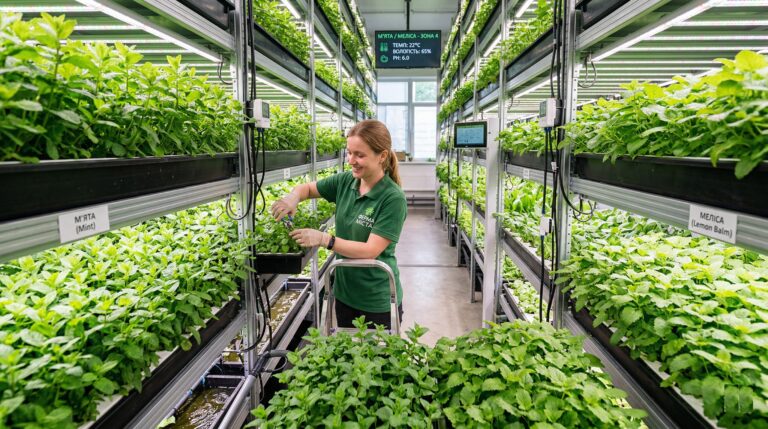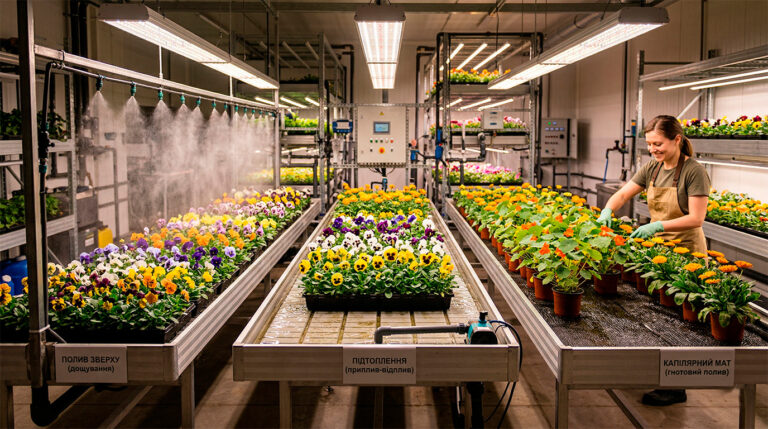

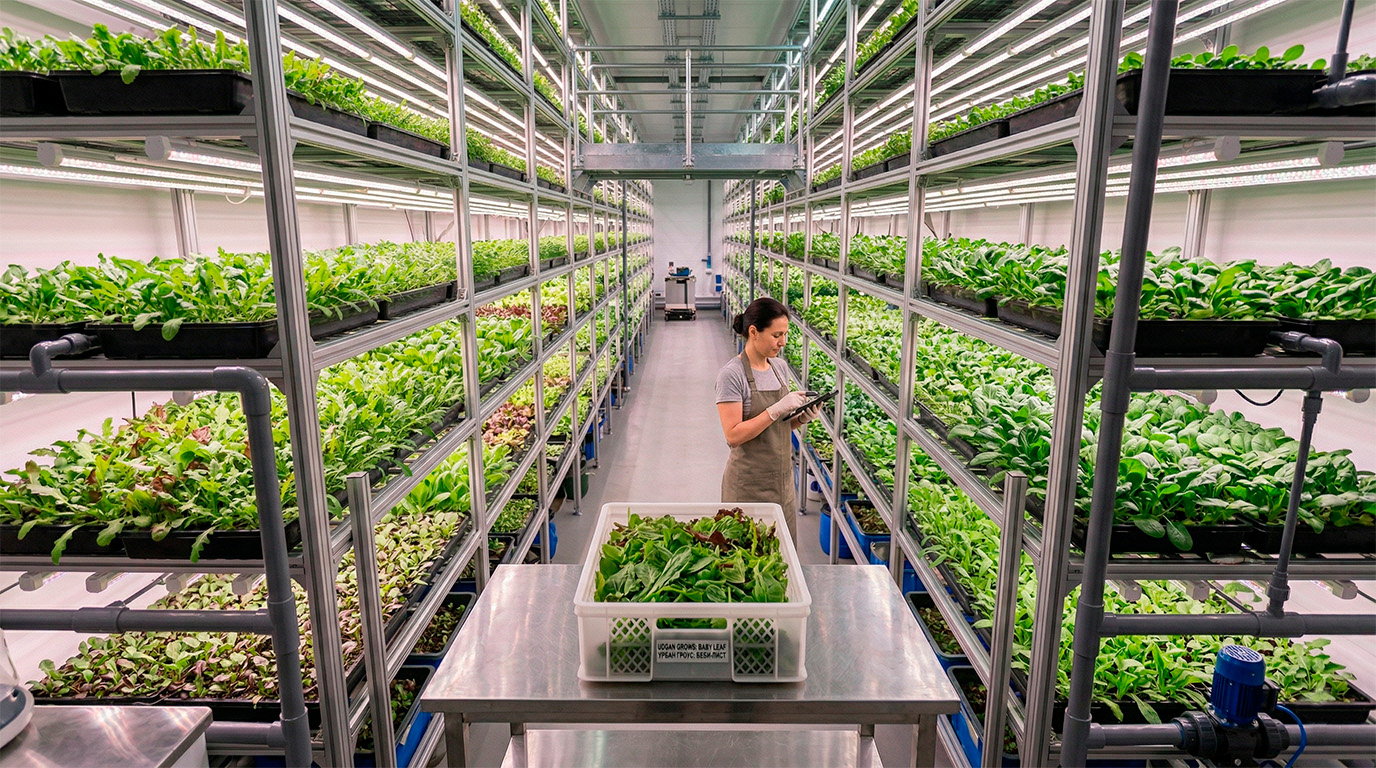
The cut-and-come-again method is gaining ground in protected cultivation for a simple economic reason: one planting, multiple harvests. Seed, substrate, and pot costs are spread across three to five or more cuts instead of one. But the method has its own discipline — sanitation protocol, cutting technique, and root protection after each harvest. Get those right and you can harvest from a single planting for months.
Why Multi-Cut Is More Profitable than Single-Cut
The economics are straightforward: one planting, several harvest cycles. Seed, substrate, and pot costs are shared across three to five or more cuts instead of one. The interval between harvests is shorter than a full new growing cycle — the plant already has a developed root system and restores leaf mass much faster than it grows from seed.
Research confirms the pattern: the second cut is often more productive than the first, because by that point the root system is well established and efficiently absorbs water and nutrients. Yield per cut does not fall over time — it rises, up to a point, until the plant starts to bolt.
One important caveat from practitioners: “baby leaf in a cut-and-come-again system does not always look its best.” After several cycles the plant looks quite battered. If your market demands a perfect-looking potted plant, multi-cut is not for you. If you sell cut weight or packaged product, it works perfectly.
Which Crops Work — and Which Do Not
Not every crop handles multiple cuts equally well. The essential condition: the plant must produce leaves of varying sizes continuously (so at any given moment there are both large and small leaves present), and it must have cotyledon leaves — these are the starting point for regrowth of lateral shoots or new foliage after a low cut.
Excellent Multi-Cut Crops
Chard, basil, rocket, pak choi, tatsoi, romaine lettuce, loose-leaf iceberg, shiso, green sorrel — these crops recover well after cutting and maintain leaf quality for a long time. Under a correct temperature regime, spinach can sustain 12–15 cuts.
With Limitations
- Mizuna — after 2–3 cuts the leaf toughens and bolting begins.
- Batavia, lollo rossa, lollo bionda — technically viable, but the short petiole makes cutting awkward and risks damaging adjacent leaves. Elevated fungal infection risk.
- Spinach — prone to bolting after 2–3 cuts if temperature is not kept in range.
- Kale — leaf quality deteriorates with each cut; becomes progressively tougher.
Not Suitable
Onion — fundamentally unsuitable for multi-cut due to its growth habit.
Fact: Spinach that has already gone through 8 cuts at 18 °C by day and 16 °C by night can still deliver another 12–15 cuts without noticeable quality loss. But break the temperature regime once and bolting begins.
Tool Disinfection and Microbiological Safety
This is the section that gets the least attention — and that is a mistake. Leafy vegetables are not heat-treated before consumption. Everything you transfer to the cut surface via your tool or hands goes straight to the end consumer. Leafy greens rank among the highest microbiological risk categories in fresh plant foods.
Gloves — Non-Negotiable
Nitrile gloves at harvest are not a nicety — they are basic hygiene. Skin, even after washing, carries a significant load of microorganisms, including ones that are potentially pathogenic for humans. The smooth surface of a nitrile glove disinfects far more effectively than skin. And a glove prevents contamination from being transferred directly to the cut surface.
One practical note: choose gloves that fit your hand exactly. An oversized glove creates a cutting hazard and risks pinching skin against the tool.
Tool Disinfection Protocol
Before starting work: wash the tool, air-dry, wipe with alcohol or 3 % hydrogen peroxide, leave in open air for 30 minutes — then cut. Critical point: treat only a dry tool. Drops of moisture shelter microorganisms and reduce disinfection effectiveness.
After treatment, let it air-dry again — drops of alcohol or peroxide on leaves can cause minor burns and damage the marketable appearance of the product.
During extended work sessions: every hour, or when moving from shelf to shelf, wipe blades and gloves with peroxide. Alcohol is not suitable for regular use — it can leave an odour on the leaves.
Tip: A standard spray bottle filled with disinfectant solution makes tool treatment quick, even, and effortless — no hunting for a cloth every time.
On Health Certification
If you employ hired workers, require valid official health certificates — not purchased ones. And do not skip regular check-ups yourself. Fresh greens eaten without cooking are a direct responsibility the grower bears toward the end consumer.
Cutting Technique: Where to Cut and With What
Cut as Low as Possible
This is fundamental. The cut line must pass as close to the substrate surface as possible. Do not leave stumps above the surface, and absolutely do not leave any leaf material on the stem.
Why it matters: the lower part of the stem is thick, with a high density of vascular tissue. A scar takes time to form at the cut surface, and any stem left above the substrate becomes an ideal environment for phytopathogenic fungi. The lower the cut, the less surface area for infection, and the longer the plant stays healthy.
At the same time, the lowest leaves and cotyledons must be preserved — they are the origin point for new lateral shoots and fresh foliage.
Note: Batavia, lollo rossa, and lollo bionda are awkward to cut because of the short petiole — there is a real risk of damaging adjacent leaves, and small leaves are particularly vulnerable.
What to Cut With
Short, sharp scissors — the type known as “fishing scissors” — have proven themselves well. Short blades avoid damaging adjacent and small leaves while cutting cleanly through even a thick petiole. Sharpness and regular disinfection are everything.
Cut Only Marketable Leaves
Define a minimum leaf size for each crop before it goes into the cut. For rocket, for example, that is 10 cm in length. Do not cut smaller: leaves below that size add negligible weight and exhaust the plant. If you employ hired workers, post the cut standard above every shelf and enforce it continuously. Experience shows that without oversight, workers cut everything regardless of size — and there is no harvest.
For romaine and loose-leaf iceberg the logic is different: gradually remove the whole rosette from top to bottom as leaves grow to full size. Stimulating new growth is not necessary — the plant produces new leaves on its own.
Protecting the Root System After Cutting
After a cut the root system goes through stress: transpiration changes, nutrient flow from leaves to roots decreases. Some root hairs may die, and fungi and bacteria immediately activate on that organic matter. This cannot be ignored.
What to do:
- Biopesticides — Trichoderma or Fitosporin added to the nutrient solution suppress pathogen development in the rhizosphere.
- Hydrogen peroxide — 100 ml of 3 % peroxide per 100 L of solution. Oxygenates the solution and suppresses anaerobic pathogens.
- Seaweed-based root stimulants — accelerate root system recovery.
- Previcur Energy or Agricur — once every two months after a cut, 80 ml per tonne of solution. An effective preventive measure against root rots.
Foliar Feeding After Cutting
Immediately after a cut, the plant needs to stimulate the growth points in the axils of the lower leaves and on lateral shoots. Foliar feeding handles this well — with one important exception.
Working solutions (per 10 L):
- 10 g calcium nitrate + 0.5 g boric acid
- 10 g urea
- 10 g of any complete NPK complex (20-20-20 or 18-18-18)
Important: Foliar feeding must NOT be used on lettuce. Droplets that get inside the rosette trigger rot — nitrogen, phosphorus, and potassium in solution only accelerate the growth of pathogenic fungi. Lettuce does not need stimulation; it grows new leaves on its own.
Monitoring Plant Condition — and When to Discard
Continuous visual monitoring of plant health is an essential part of multi-cut growing. A plant that has been through several cuts is more vulnerable to infection than a young one.
If symptoms of botrytis, white mould, or mildew appear in the planting, remove affected plants immediately. Do not attempt to treat them; do not wait. It is cheaper to discard a few diseased plants than to risk infecting neighbours. This is especially critical with botrytis — it spreads extremely fast in a greenhouse environment.
When to stop the cycle and replace the planting:
- Leaves become tough or bitter — a sign that bolting is beginning.
- A flower stalk appears — the plant has left its productive cycle.
- Leaf quality has deteriorated to the point where it no longer meets market standards.
- Widespread signs of root disease that preventive treatments are not resolving.
Key Takeaways
- Multi-cut is more economical than single-cut: less seed, less substrate, shorter intervals between harvests.
- The second cut is often more productive than the first — the root system is already well developed.
- Nitrile gloves and tool disinfection are a non-negotiable standard for products consumed without cooking.
- Cut as low as possible; preserve the cotyledon leaves — they drive regrowth.
- Protect the root after cutting: Trichoderma, peroxide, root stimulants.
- Foliar feeding for all crops except lettuce.
- Remove diseased plants immediately — do not treat, do not wait.
- Temperature discipline is critical: for spinach and mizuna, any temperature breach triggers bolting.
Multi-cut baby leaf is not just “cut and wait.” It is a distinct agronomic discipline with its own sanitation protocol, cutting technique, root protection, and plant monitoring. Follow the full protocol and you get a stable harvest from a single planting for months. Skip the microbiological safety steps or leave long stumps, and rot appears after the very first cut.