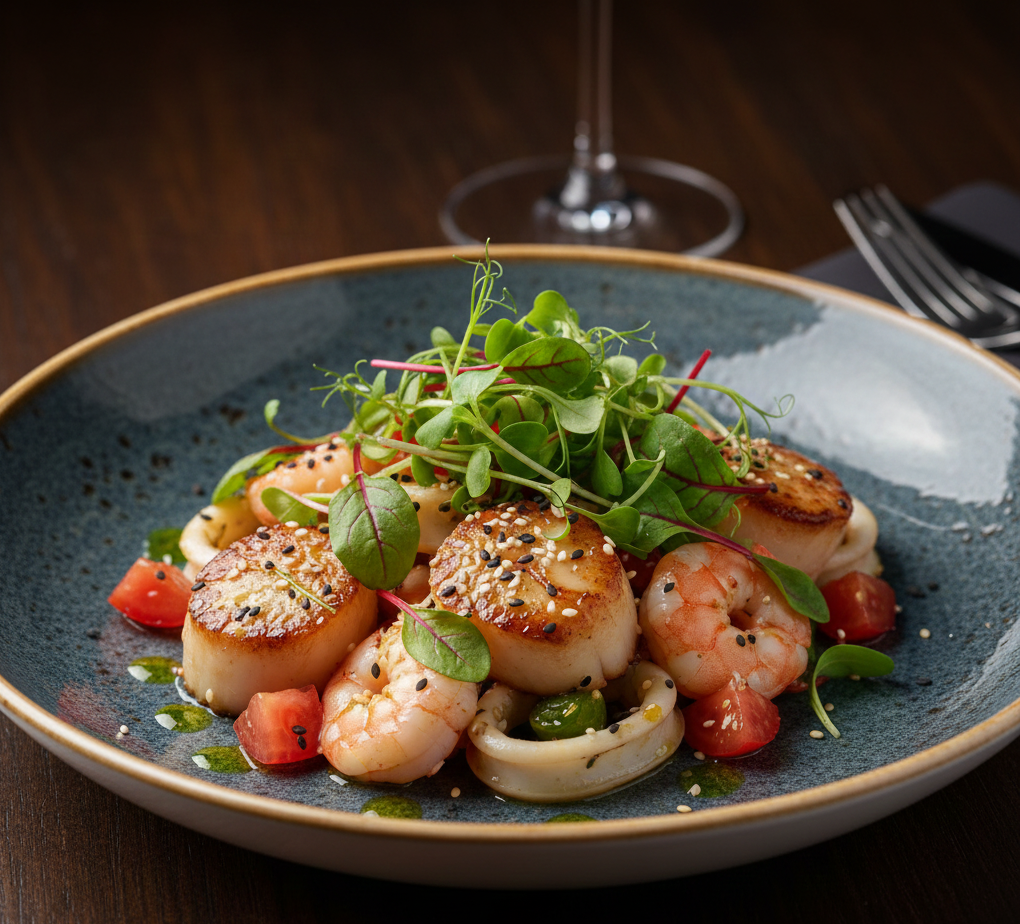
Squid or shrimp seared at maximum heat with tomato concasse and ponzu sauce, finished with chard microgreens — half wilted into the warm sauce, half fresh on top. Restaurant quality in 10 minutes.
INGREDIENTS
- 150 g — squid or tiger shrimp (cleaned)
- 50 g — tomato concasse (blanched, peeled, deseeded, diced)
- 20 g — chard microgreens
- 1-2 tbsp — ponzu sauce
- 1 tbsp — olive oil
- 1 tsp — sesame seeds (white or black)
- to taste — salt and freshly ground black pepper
STEPS
- Prepare the seafood. If using squid, clean and cut into diamond shapes or rings about 7-8 mm thick. If using shrimp, peel and leave whole. Pat completely dry with paper towels — surface moisture creates steam instead of a sear.
- Make the tomato concasse: score the base of a tomato in a cross, blanch in boiling water for 30 seconds, peel. Halve, scoop out the seeds with a spoon, and dice the flesh into 1 cm cubes.
- Heat olive oil in a pan or wok over maximum heat until lightly smoking. Add the seafood in a single layer — do not stir for the first 30 seconds. Let a crust form.
- Cook for no more than 90 seconds total. Squid is done when opaque and lightly golden at the edges; shrimp when firm and pink throughout. Overcook and you get rubber. Remove from heat.
- Add the tomato concasse and ponzu sauce to the hot pan (off the heat). Stir — the residual heat will warm the tomato and open up the ponzu's citrus notes without cooking them away.
- Fold in half the chard microgreens into the warm sauce — they will wilt slightly and absorb the flavor of the ponzu.
- Plate onto a warm dish. Scatter sesame seeds and the remaining fresh chard microgreens on top. Serve immediately.
Why Chard Microgreens and Seafood Work So Well Together
Chard is a plant with a pronounced earthy, slightly mineral flavor. Its microgreens are more delicate and aromatic than the mature leaf, but carry that same characteristic note that pairs naturally with seafood — a combination deeply rooted in Mediterranean and Asian cuisines. When chard microgreens hit a warm sauce they wilt gently, becoming silky and releasing their aroma into the dish in a way that raw greens cannot. The second half of the microgreens stays fresh on top, providing contrasting texture and a burst of raw flavor.
Ponzu — the Japanese citrus-soy sauce — ties everything together. It is simultaneously salty, acidic, and faintly sweet, perfectly complementing the iodine-sweet taste of seafood and the earthiness of chard.
The 90-Second Rule
Seafood is the only ingredient where overcooking is more dangerous than undercooking. Squid turns rubbery after 2 minutes. Shrimp the same. The entire flavor relies on high heat: a very hot, dry surface creates the Maillard reaction — the caramelization that builds taste. Wet seafood or a cold pan produces steam instead, with no color and no crust.
Two mandatory steps before cooking: 1) pat the seafood bone-dry with paper towels; 2) heat the oil until just smoking. Only then add the seafood in a single layer, and resist stirring for the first 30 seconds.
Tomato Concasse: Why It Matters
Concasse is the French technique of blanching, peeling, deseeding, and dicing a tomato. The skin is tough and doesn’t heat evenly; the seeds release excess water. Without both, you get clean, concentrated tomato flesh that holds its shape on the plate and doesn’t thin the sauce. A standard in professional cooking, easy to do at home.
Short on time? Use cherry tomatoes halved — thinner skin, fewer seeds, close enough result for a weeknight version.
Ponzu: One Sauce Doing Five Jobs
Classic ponzu combines soy sauce, citrus juice (yuzu, lemon, or lime), mirin, and rice vinegar. It handles salt, acid, umami, sweetness, and a hint of fermentation all at once. No ponzu available? Make a quick substitute: 1 tbsp soy sauce + 1 tsp lemon or lime juice + 0.5 tsp honey. Not identical, but balanced in the same way.
Add ponzu off the heat — extended cooking evaporates the citrus aromatics and leaves only saltiness.
Variations
- With scallops — cook exactly like squid: 60 seconds per side on maximum heat for a caramelized crust and creamy interior.
- With octopus — pre-cooked, chilled octopus, seared 30-40 seconds for texture. The earthiness of chard balances the intensity of octopus beautifully.
- Spicy version — add a few drops of rice vinegar and finely chopped chili to the ponzu.
- With avocado — half an avocado, diced, placed under the seafood. Creaminess plus citrus ponzu plus chard is a strong combination.
- Without ponzu — teriyaki or oyster sauce gives a sweeter, richer version of this dish.
Chard Microgreens: Nutritional Profile
Chard (leaf beet) is a close relative of beetroot. Its microgreens are particularly rich in betalains — pigments with antioxidant and anti-inflammatory properties that give the stems their characteristic pink-red or yellow color. They also provide vitamins K and C, folate, and magnesium. Among common microgreens, chard has one of the highest iron contents.
The pairing with seafood isn’t just culinary: the vitamin C from the microgreens increases absorption of non-heme iron from plant sources, while the iodine and zinc from the seafood complete a nutritionally well-rounded plate.