
Ukraine’s Law No. 4921-IX on organic production was reported as bringing the country in line with EU rules. The document card on the parliament’s own site carries a different date: the law takes full effect on July 21, 2029. What did come into force on July 22, 2026 has almost nothing to do with organic production.
Four dates from the document card
All of it takes a minute to check on the page for Law No. 4921-IX. Passed June 30, 2026. Published in Holos Ukrainy on July 21, 2026, issue 141, and in Uriadovyi Kurier on July 29, issue 157. Selected provisions took effect July 22, 2026. The law takes full effect July 21, 2029, because the final provisions grant three years from the date of publication. The status field still reads: partially in force.
What actually took effect
Point 1 of the final provisions lists the exceptions by subpoint number, with no titles attached. Map those numbers onto the text of point 8 and the list in force since July 22, 2026 comes out as:
- Water Code: ponds moved from one list to another
- Land Code and the land lease law: servitude and sublease contracts in writing, with a qualified electronic signature
- Grain market law: a new version of the article on warehouse documents
- Laws on urban planning, property rights registration, privatization and animal protection
- Laws on food contact materials, on grapes and wine, on geographical indications for spirits, and on plant protection
Four subpoints were held back until 2029. Subpoint 5 writes the terms “organic product” and “in-conversion product” into the advertising law. Subpoint 10 covers seed and planting material from organic holdings, subpoint 14 the labeling of organic feed, subpoint 16 organic labeling in the consumer food information law. The organic provisions are precisely the ones deferred. What went live is a bundle of amendments to water, land and grain legislation.
The old law runs until 2029, and it already has teeth
Point 2 of the final provisions repeals the 2018 law No. 2496-VIII as of the day the new law takes full effect. That keeps the old law operating through July 21, 2029.
Article 40 of that old law penalizes the use in labeling of the words “organic”, “biodynamic”, “biological”, “ecological”, along with any cognates or derivatives carrying the prefixes “bio-” or “eco-“, in any language, without a certificate. The fine is fixed: eight minimum wages for a legal entity, five for a registered sole trader. At the 2026 minimum wage of 8,647 hryvnia, that is 69,176 and 43,235 hryvnia, roughly $1,548 and $968 at the September 21, 2026 central bank rate of 44.6743. A word like “eco-microgreens” on a label without certification falls under that rule as written.
Operator groups: the small-producer mechanism, three years out
The substantive change for a small holding is Article 18, which allows certification as a group rather than one by one. It sets the bar for membership:
- individual certification costs more than 2 percent of turnover or of the value of organic product in circulation
- annual organic turnover up to EUR 25,000, or value of product in circulation up to EUR 15,000 a year
- or farmland up to 5 hectares, up to 0.5 hectare for greenhouses, up to 15 hectares for hay meadows and pasture
- geographic proximity, a shared sales system, an internal control system, no more than 2,000 members
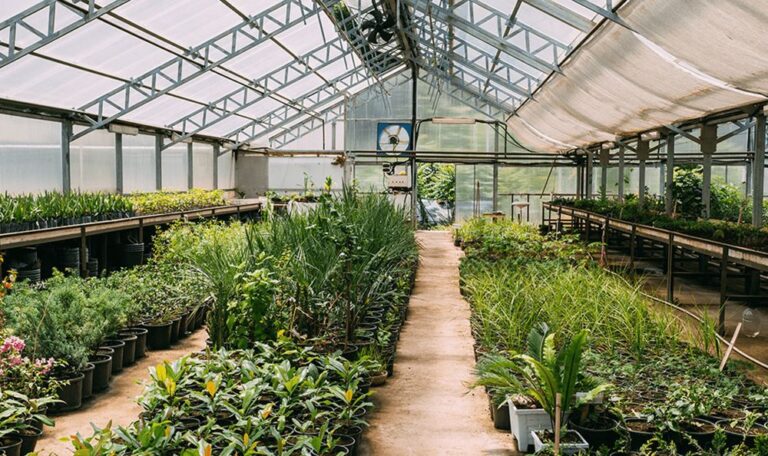
Half a hectare of protected growing area is 5,000 square meters, which covers every microgreens operation in Ukraine several times over. Euro figures convert at the central bank average rate for the calendar year preceding the reporting year, so the exact threshold shifts annually.
The thresholds come almost verbatim from Article 36 of EU Regulation 2018/848: the 2 percent test, both euro figures and all three area limits match. The 2,000-member cap is not in Article 36 itself and arrives from the EU delegated rules. One thing changed in transit. Where the European text reads “standard output”, a calculated measure of a holding’s output, the Ukrainian law writes “value of organic product in circulation”. Those are different quantities, and which one gets counted will depend on an implementing act that does not exist yet.
Penalties: the floor drops, the repeat ceiling climbs
Article 39 of the new law replaces the fixed sum with a range for the same labeling offense: five to eight minimum wages for a legal entity, three to five for a sole trader. For a sole trader the floor drops from a fixed five to three. In exchange, a separate tier appears for a repeat offense within one year: eight to twenty four minimum wages for a legal entity, five to sixteen for a sole trader.
In 2026 money the ceiling for a repeat sole trader offense works out to 138,352 hryvnia, about $3,097, against the 43,235 hryvnia fixed today. The 2029 minimum wage will differ, so treat that as a comparison of scale rather than a forecast of the amount.
The wording shifted too. The old law penalizes labeling “in the absence of a certificate”; the new one penalizes labeling of “product that is not organic”. Inspectors will be checking different things.
What this means now
For anyone selling produce in Ukraine without a certificate, nothing has changed and nothing will until July 2029. Stripping “eco” and “bio” roots out of labels, websites and social posts was already required under the old law, and it remains the one action worth taking today. Another gap between a ministry release and the act it describes sits in the grant program: 70 percent in the news, 50 percent in the resolution. If a certificate is already on your roadmap, the steps, certification bodies and real costs are collected in the wiki: organic certification in Ukraine. For soilless farms the certification answer is the same under both laws: hydroponic methods are banned from organic production in the 2018 law and in the new one, so hydroponics, aquaponics, and bioponics all stay outside the label.
Buyers and exporters get one practical assurance from the transitional provisions: certificates issued under the 2018 law stay valid to the end of their term, or until they are revoked. State registers migrate within three months of the 2029 date. Every implementing act is due within those same three years, and point 9 of the final provisions sets no earlier deadline. A nearer deadline sits in a different resolution: A second dated obligation landed in September: decree 1144 ends the family farm contribution subsidy after a single late quarter.