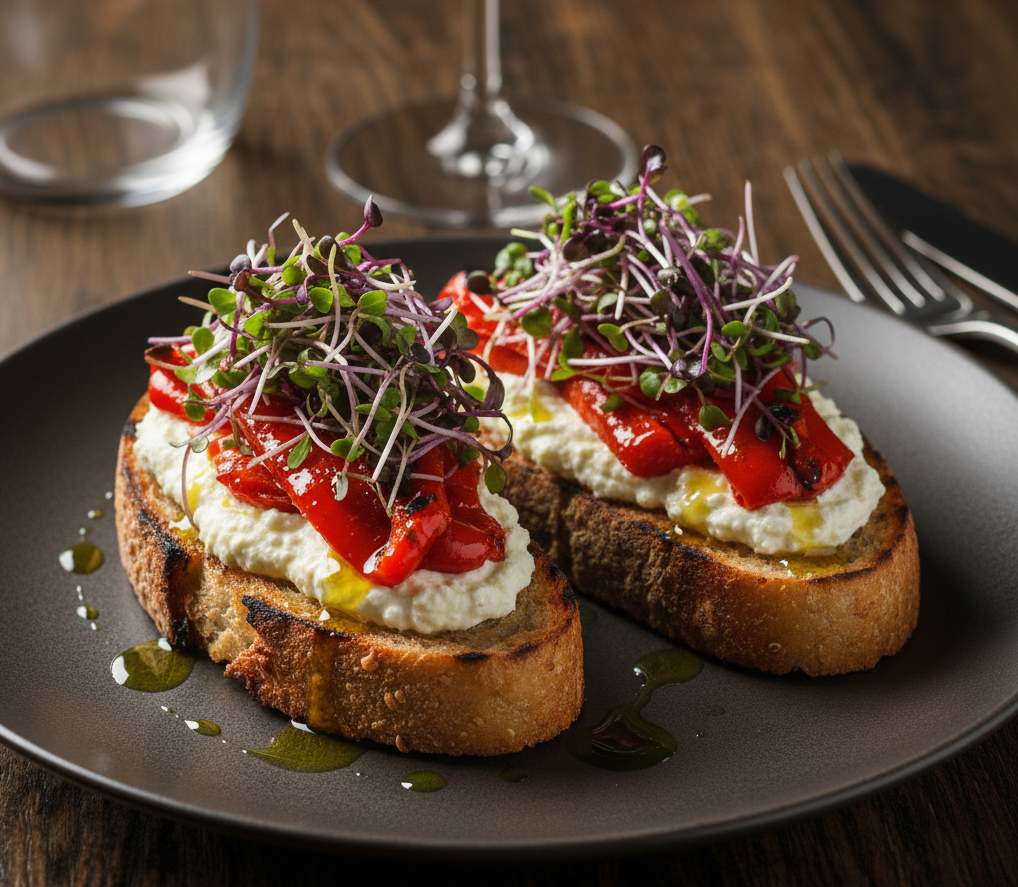
Crispy bruschetta with whipped feta-yogurt cream, sweet smoky roasted pepper, and peppery violet Sango radish microgreens. Three colors, three textures, ten minutes.
INGREDIENTS
- 2 slices — baguette or ciabatta
- 50 g — feta cheese
- 1 tbsp — Greek yogurt
- 2-3 strips — roasted bell pepper
- 10-15 g — Sango radish microgreens
- 1 tbsp — extra virgin olive oil
- optional — black pepper, honey
STEPS
- Roast the bell pepper: place whole in a 220°C oven for 25-30 minutes, or char directly over a gas flame, turning until blackened all over. Transfer to a zip-lock bag or cover with a bowl for 10 minutes — the steam loosens the skin so it peels off easily. Peel, deseed, slice into strips. Let cool completely.
- Toast the bread in a toaster or dry pan until golden and crisp on both sides. While still warm, optionally rub the surface with a cut clove of garlic — the classic Italian move.
- Make the feta cream: crumble feta into a bowl, add Greek yogurt, and whip with an immersion blender or whisk until smooth and spreadable. Feta is already salty — taste before adding any seasoning. Add a crack of black pepper if you like.
- Spread the feta cream generously over the toasted bread. Do not be shy — this is the flavor base.
- Lay the cooled roasted pepper strips over the cream. Make sure the pepper is fully at room temperature — warm pepper will melt and thin the cream.
- Top with a generous layer of Sango radish microgreens. Drizzle with extra virgin olive oil. A small drop of honey adds a sweet counterpoint to the salt and heat. Serve immediately.
Sango Radish: The Microgreen That Changes How a Dish Looks
Sango is a Japanese radish variety with an intense purple-violet color that carries through into the microgreen. That color comes from anthocyanins — powerful antioxidants that are also natural pigments. Against the white feta cream and deep red of roasted pepper, Sango microgreens land like a final brushstroke: three colors, three textures, each with a distinct role.
The flavor is sharp and peppery with a classic radish bite. It contrasts with the creamy saltiness of feta and the caramelized sweetness of roasted pepper, creating the kind of balanced tension that makes a dish memorable rather than just pleasant.
How to Roast Pepper Properly
Roasted pepper is the flavor engine of this bruschetta. Raw bell pepper is sweet but neutral. Under high heat, the sugars caramelize, the skin chars and imparts a smoky depth, and the flesh becomes silky and concentrated. It’s an entirely different ingredient.
Three methods:
- Oven at 220°C, 25-30 minutes — the simplest. Turn once halfway through.
- Over a gas burner — fastest (5-7 minutes), most pronounced smoky flavor. Hold with tongs, rotate evenly.
- Grill or grill pan — ideal for larger batches, gives attractive char marks.
After roasting, always steam the pepper in a sealed bag or under an upturned bowl: the steam lifts the skin so it peels off in seconds. Cool completely before slicing — warm pepper releases liquid that will thin and melt the feta cream.
Feta Cream: Technique and Variations
Feta plus Greek yogurt is a classic Greek pairing. The yogurt softens the saltiness of feta and gives the cream a lighter, airier texture. Proportion matters: too much yogurt and the cream becomes runny and acidic; too little and it is dense and overwhelming. One tablespoon per 50 g of feta is the balance point.
Variations:
- With lemon juice — a teaspoon brightens and amplifies the salt.
- With garlic — one clove pressed in adds pungent depth.
- With olive oil instead of yogurt — whip feta with 2 tbsp oil for a richer, silkier result.
- With fresh herbs — dill or mint blended into the cream gives a Mediterranean character.
The Purple Oil Trick
A bonus technique from the original recipe’s “secrets”: Sango microgreen oil. Blend 30 g of Sango microgreens with 80 ml of olive oil for 30-60 seconds. Strain through cheesecloth. The result is a vivid violet-pink aromatic oil that can replace plain olive oil as the finishing drizzle. Restaurant visual impact, minimal effort. Keeps refrigerated for 3-4 days.
What to Serve Alongside
- With olives, sun-dried tomatoes, and ricotta — a complete antipasto platter
- As a starter before pasta or risotto
- On a brunch board with poached eggs and a dressed green salad
- With a glass of dry white — Vermentino or Pinot Grigio pair naturally with feta and roasted pepper
Why Sango Anthocyanins Matter
Anthocyanins are among the most potent plant antioxidants. They protect cells from oxidative stress, have documented anti-inflammatory effects, and support microcirculation. Sango radish microgreens concentrate them at levels significantly higher than the mature vegetable. Critical detail: anthocyanins break down under heat — which is precisely why Sango is always added last, cold, never cooked into a sauce or warmed through.
CHEF'S TIPS
Never heat Sango microgreens — anthocyanins break down with heat and the purple color disappears. The roasted pepper must be fully cooled before assembly. Bonus: blend Sango with olive oil (30 sec) for a stunning violet finishing oil.