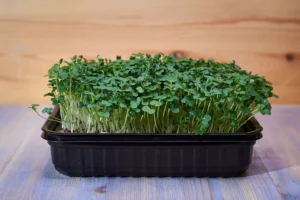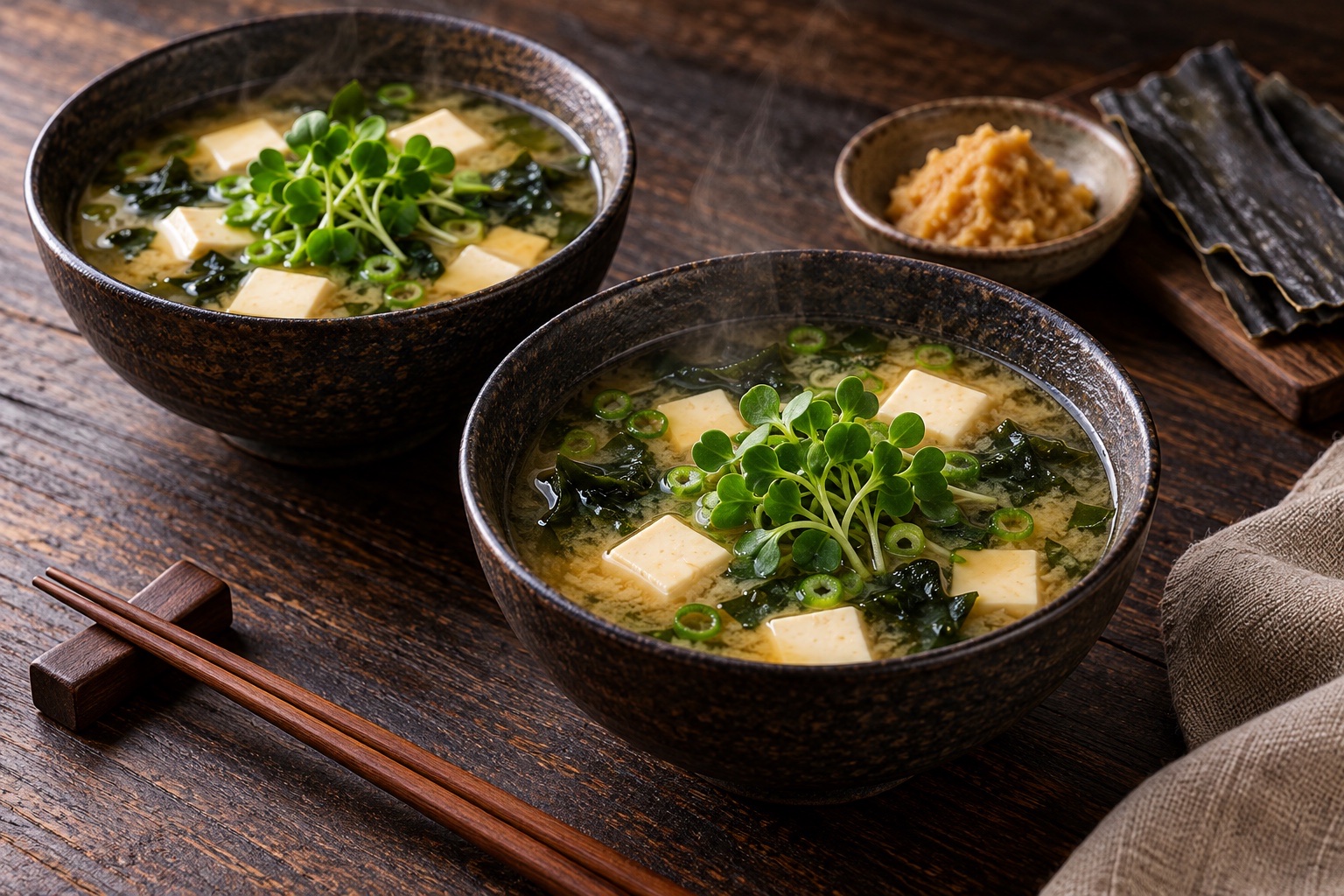
Japanese miso soup on homemade dashi with tofu and wakame. Tatsoi microgreens go into the bowl after ladling, and they stay crisp in the hot broth.
INGREDIENTS
- 1000 ml - cold water (about 1 quart)
- 10 g - kombu (dried kelp)
- 15 g - katsuobushi (dried bonito flakes)
- 5 g - dried wakame
- 200 g - silken or soft tofu (7 oz)
- 60 g - white (shiro) miso (about 3 1/2 tbsp)
- 2 - green onions (30 g)
- 30 g - tatsoi microgreens
STEPS
- Wipe the kombu with a dry cloth, leaving the white powder on it. Cover with 1 quart (1 l) of cold water and soak for 30 minutes.
- Set the pot over medium heat and warm it for about 10 minutes. When small bubbles appear around the edge, take out the kombu without letting the water boil.
- Bring the water to a boil, add the katsuobushi, and take the pot off the heat. After 5 minutes, once the flakes sink, strain through a cheesecloth-lined sieve without pressing. You should have about 3 3/4 cups (900 ml) of dashi.
- Soak the wakame in cold water for 5 minutes and squeeze it dry. Cut the tofu into 1/2 inch (1.5 cm) cubes and slice the green onions thinly. Rinse and dry the tatsoi microgreens.
- Return the dashi to the heat and bring it to a bare simmer. Add the tofu and wakame, warm for 2 minutes, and turn the heat to the lowest setting.
- Whisk the miso in a ladle of hot broth until smooth and pour it into the pot. Stir and take the pot off the heat before it boils.
- Ladle the soup into four bowls, sprinkle with green onion, and add about 7 g of tatsoi microgreens to each. Serve at once.
Why Tatsoi Microgreens Here
In Japan, miso soup comes with finely sliced green onion, and usually no other greens. The onion brings aroma, but the bowl still lacks freshness and crunch: the tofu is soft, the wakame is slippery, and the broth is hot. Tatsoi microgreens add exactly that. Their flavor is mildly sweet and creamy with no bitterness, so they do not overpower the miso. The culture card lists tofu and miso among its pairings.
The leaves are what matter here. They are dense, glossy, and waxy, and in hot broth they hold their shape longer than most microgreens. Add a handful to the bowl after ladling in the soup: the leaves warm through a little and stay springy. Pea or radish microgreens would wilt within a minute or drown out the miso.
About the Ingredients
Dashi. The base of the soup, a broth of kombu and katsuobushi (dried bonito flakes). Both are sold in Asian grocery aisles. For a vegetarian version, steep kombu and 3 dried shiitake in cold water. Instant dashi granules work too, 1 tsp per quart (liter).
Miso. White shiro miso is milder and sweeter, and the 60 g here assume it. Red aka miso is saltier, so use a quarter less.
Tofu. Silken or soft. Firm tofu works, but the soup comes out coarser.
Tatsoi microgreens. About 7 g per bowl. If you cannot find them, use pak choi or komatsuna microgreens, which are mild as well.
Variations
- More filling: add 50 g of cooked rice noodles or buckwheat soba to each bowl.
- With mushrooms: simmer 100 g of sliced shiitake or button mushrooms in the dashi for 3 minutes before the tofu.
- With egg: beat 1 egg and pour it in a thin stream into the barely simmering broth before you add the miso.
- With salmon: simmer 150 g of diced salmon for 2 minutes along with the tofu.
Serving and Storage
Eat right away while the microgreens are crisp. A bowl of rice and pickled ginger go well with it. Dashi without miso can be made ahead and kept in the fridge for up to 3 days. Reheat finished miso soup until hot but do not boil it, and add fresh microgreens. Cut tatsoi keeps in the fridge longer than most crops, and the numbers are in our wiki on shelf life.
Another Japanese soup with microgreens: chicken ramen with pak choi microgreens.
CHEF'S TIPS
Do not boil the soup once the miso is in. Boiling dulls the aroma of the paste and clouds the soup.
Dissolve the miso separately in a ladle. A spoonful dropped straight into the pot breaks up into lumps.
Put the microgreens in the bowl, not the pot. Tatsoi handles hot broth for half a minute, but after a few minutes on the stove it yellows and wilts.
Stir the tofu gently with a ladle rather than a spoon, as silken tofu falls apart easily.