
Flavor profile
Taste & aroma
Sweet, neutral, creamy - that's why tat soi is equally well received by both children and adults who do not like sharp tastes. Fresh, herbal aroma.
that is why tat soi is equally well received by both children and adults who do not like sharp tastes
Fresh, herbal, barely perceptible. It does not dominate and does not distract from the main components of the dish. When lightly touching the leaves, a subtle cabbage aroma is felt, which completely disappears when combined with other ingredients.
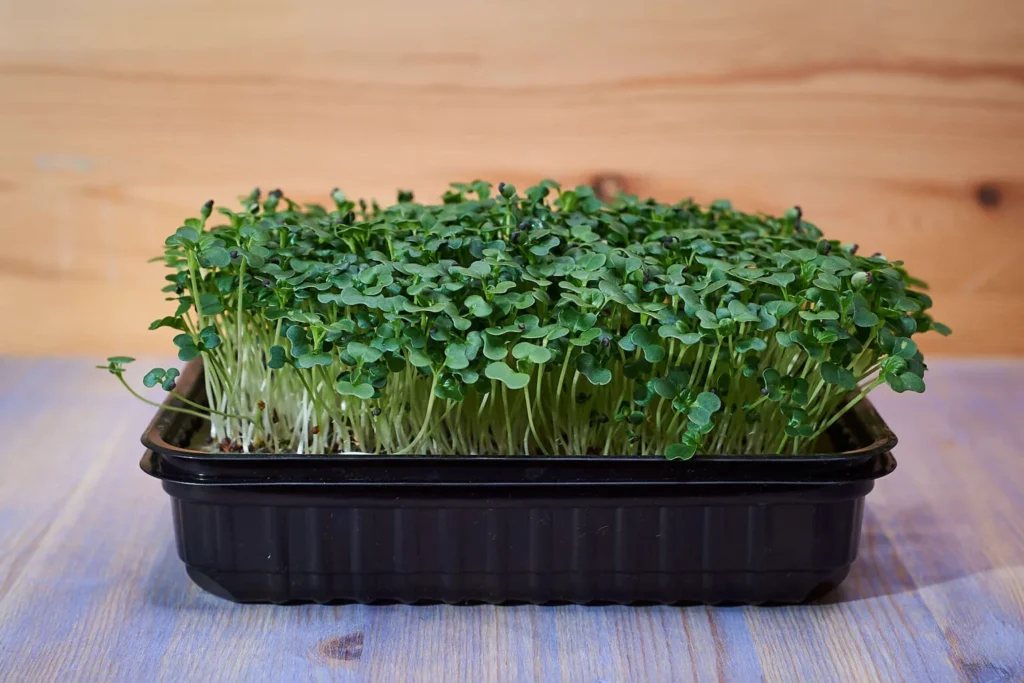
The leaves are glossy, dense, elastic - with a pleasant crunch when bitten. The shape is rounded, slightly concave inward, like a small spoon
Ripening and optimal harvest time
The cotyledons are opened, the taste is the most tender and sweetest, the leaves are small.
Optimal moment: dark green color, maximum gloss, pronounced crunch.
A large real leaf appears, tat soy becomes similar to ordinary cabbage, delicacy goes.
Why flavor may vary batch to batch
Tat Soy is one of the most tender cabbage dishes. The taste depends on the temperature: at cool cultivation (+14...+18°C) sprouts are denser, the taste is more pronounced with a light mustard note. At warm (+22°C and above) - more tender, almost without bitterness. This makes tat soi one of the most versatile cabbages in terms of taste - suitable even for those who do not like spicy greens.
Culinary use
How to use
Tat Soi is a great culinary accent. Add fresh at the end of cooking or directly on the plate.
Asian Bowl
tat soi as a base + rice or buckwheat + salmon or tofu + sesame dressing - ready meal in 10 minutes
Miso soup
add a handful to a plate after pouring - the leaves will warm slightly from the broth, but will retain their shape and crunch
Ramen
put on top just before serving — tat soi holds its shape even in hot broth longer than most microgreens
Sandwich or roll
the flat, rounded shape of the leaves fits perfectly between the layers — it does not slip or deform under the weight of the ingredients
Citrus salad
soy sauce + orange or grapefruit + avocado + sesame — a fresh and bright result without complex dressings
Side dish for meat
sprinkle on baked chicken or pork just before serving - the green glossy carpet looks spectacular and adds a fresh contrast
Perfect pairings
Tat soy is a universal neutral base
Classics of Asian cuisine: tat soy + salmon + sesame + soy sauce
A sesame-soy or miso dressing brings out the Asian character of tat-soy better than any other
- Do not keep in hot dishes for more than 30-40 seconds - the leaves are tender, although durable, but with prolonged heating they wither and become yellowish-olive
- Do not combine with very sharp flavors (horseradish, wasabi, spicy mustard) - the neutrality of tat-soy cannot withstand competition with aggressive accents
- Do not season with too acidic sauces in advance - after 20-30 minutes the gloss disappears and the leaves stick together
- Do not store near products with a strong smell - tender leaves absorb extraneous aromas well
Home storage
How to store
Tat soy is one of the leaders in terms of shelf life among microgreens. Dense glossy leaves with a wax coating retain moisture and do not wilt as quickly as basil or dill.
Keep in the refrigerator at +2...+5°C. Cut as needed - the rest stays fresh for up to 14 days. Do not water the tray: the humidity of the refrigerator is sufficient.
Put in a closed container and take it to the refrigerator. At +2...+5°C, the term is up to 14 days. The glossy surface of the leaves protects well from moisture loss even when cut.
Don't wash until ready to eat. Wet greens spoil much faster. Rinse just before serving.
Pro tip: Tat soy is one of the record holders for shelf life in cut form. The glossy wax coating on the leaves naturally protects against moisture loss. This is convenient when planning sales: you can cut a batch and sell it without haste within 10-14 days.
Nutrients & health
Benefits & composition
Tat Soi is valued for its rich vitamin-mineral composition and bioactive compounds typical of microgreens.
Like most microgreens, tat soi contains a concentrated amount of nutrients relative to its weight — many times more than the mature plant.
| Protein | 2.5 g — building material for cells |
|---|---|
| Calories | ~20 kcal |
| Vitamins | C, A |
| Minerals | Calcium, Potassium, Iron |
| Fiber | is present |
- Tat soy is one of the most neutral and safe cultures in microgreens; there are practically no specific contraindications
- If you have an individual intolerance to cruciferous vegetables (cabbage), start with small portions
- For people taking blood thinners: due to the vitamin K content, it is worth keeping a stable amount of greens in the diet and consult a doctor
This information is general in nature and is not medical advice. Composition data: USDA FoodData Central.
Worth knowing
Vitamin C
is contained in tat soy in a significant amount - comparable to citrus fruits in terms of weight. This makes the culture an interesting addition to the diet during the cold season, especially for those looking for plant sources of this vitamin outside of fruit.
Calcium
present in tat soy in the form characteristic of cruciferous plants. All representatives of the cabbage family are traditionally considered one of the plant sources of calcium.
Chlorophyll
the pigment responsible for the dark green color of the leaves. The dark green color of tat soy is a natural indicator of chlorophyll density, which is traditionally associated with the plant's antioxidant properties.
Low calorie
(~20 kcal per 100 g) makes tat soy one of the lightest cultures in the assortment - suitable as part of a varied diet for those who monitor the calorie content of their diet.

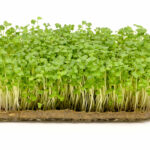
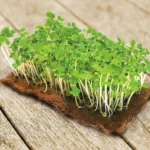
Tat Soi: how to grow — step-by-step guide
Growing parameters, agronomy, common mistakesGrowing parameters
Small, round (like cabbage or radish)
Step-by-step guide
Seed preparation
Tat-soy seeds are small and round - they behave in the same way as cabbage, broccoli or turnip seeds. No special preparation is required.
Check before sowing:
- The seeds are dry, without lumps and the smell of dampness
- Not treated with fungicides (poisoned garden seeds are not suitable)
- The batch is fresh - small cabbage seeds remain viable for 2-3 years under the right conditions
Soaking is not required and is not recommended - small seeds stick together after soaking and are unevenly distributed over the substrate.
Sowing
- Evenly moisten the substrate - moist, but without puddles on the surface
- Spread the seeds evenly over the entire surface of the tray
- The norm of 4 g is the correct density for a dense, uniform carpet. The seeds can slightly touch each other, but do not lie in heaps
- Press with the palm of your hand or a flat board for tight contact with the substrate
Why is the norm important: less than 3 g — a liquid uneven carpet with openings. More than 5 g — a zone of air stagnation appears in the center of the tray, where the root neck rots with insufficient ventilation.
Tat soy has small seeds that easily "run away" to the edges of the tray from breath or hand movement. Sow over the tray slowly and close to the surface of the substrate - so the seeds lie more evenly without extra effort.
Clamp
Required weight: 1–2 kg.
The clamp for tat-soy performs two functions: it fixes small seeds on the substrate (without it, part of the seeds "hang" on the roots of neighbors and dry out) and aligns the seedlings in height.
How to organize:
- An empty tray on top + an even load of 1–2 kg
- The load must lie flat - even a slight skew gives a noticeably uneven step at the edges
Darkness (Blackout) — 3–4 days
The pile stands in the dark at +18...+24°C. Tat soy germinates quickly and amicably - one of the most reliable starters among the entire assortment.
What is normal:
- On the 2nd day, uniform sprouts are visible under the load
- Pale or yellowish color - turns green in the light in 1-2 days
- Slight unevenness at the edges
What is not normal:
- Dark or slimy spots → excess moisture or lack of ventilation. Ventilate, check drainage
- The sprouts "lay down" and do not rise → too long a blackout (more than 4 days) or the temperature is higher than +26°C. Expose to light immediately
Watering during a blackout: usually not needed. If the temperature is higher than +24°C, spray from a sprayer on the 2nd day.
Vegetation in the light — 6–8 days
Expose to the light when the sprouts reach 2–3 cm. Do not delay in the dark: tat soy when kept in a blackout gives long weak stems ("vermicelli"), which then fall and do not restore turgor.
Lighting:
- LED phytolamps: 16–18 hours a day, distance 20–30 cm
- Natural windowsill: OK, but turn the tray daily
- In the light, tat soy quickly acquires a characteristic dark green color and gloss - this is a sign of proper lighting. With insufficient light, the leaves remain light green and pale
Temperature: +18...+22°C is optimal. At +25°C and above, the leaves become harder and less juicy. Tat soy is cold-resistant - a cool farm gives better results than a warm one.
Watering:
- The bottom through the pallet is the main method
- 1 time a day, moderately
- Do not allow the mat to dry out: if the plant "lies down" from a lack of moisture, it is almost impossible to restore turgor. A sign: the leaves lose their elasticity and lie on their neighbors
Ventilation: moderate With thickening of the crop and stagnant air, the root neck rots - the first sign: black or dark brown spots in the lower part of the stems.
Watering
- Water it 1-2 times a day (in the morning - necessarily, in the evening - if necessary)
- Lower watering is better; the upper one is allowed carefully
- Tat soy is a moderate water consumer similar to pak choy
- A sign of lack: dark green leaves slightly dull and droop → pour through a tray
Storage
| Uncut in tray | Fridge +4...+6°C | up to 3 weeks |
|---|---|---|
| Cut in container | Refrigerator | up to 7 days |
| Room temperature | 1–2 days |
Harvest
- Open dark green glossy cotyledons
- Height 5–7 cm
- The leaves are elastic, dense, shiny - they spring back when pressed with a finger
- The true leaf has not yet appeared or is just beginning to form
The appearance of a large true leaf is a signal for immediate collection. Tat soy when overgrown becomes similar to ordinary small cabbage and loses its delicacy.
Sharp knife under the root. The stems are juicy and dense - cut easily and cleanly. A blunt tool will dislodge the stems and accelerate the darkening of the cut.
Seasonal adjustments
- The quality decreases: at temperatures above +25°C, the leaves become harder, less juicy and darker - this is the norm, not a defect
- Reduce blackout to 3 days: when the plant is warm, it stretches faster, the delay gives "vermicelli"
- Cut earlier: for 1–2 days before the standard term, while the leaves are still tender and have not grown
- Increase the frequency of watering: up to 2 times a day - the mat dries quickly, and the loss of turgor is irreversible
- Ventilation: in the heat, the risk of rotting of the root neck increases - ensure air movement over the trays
- Coolness is the perfect season for tat soy: maximum gloss, higher density, longer storage
- The cycle is extended by 2-3 days: growth slows down, but quality is better - take your time with the cut
- Water with water at room temperature: cold water at low temperatures inhibits growth and reduces absorption
Water pH and EC
Optimal range for Tat Soy: 6.0–7.0. Tat soy grows optimally in a weakly acidic-neutral environment. Well tolerates ordinary tap water of most regions.
Optimal range: 1.0–1.8 mS/cm. Moderate mineralization is ideal for the delicate taste of tat soy. High EC can make growth difficult in cool temperatures.
Experienced grower tips
Gloss is an indicator of readiness
Don't count the days - look at the leaves. Dark green, uniform gloss over the entire surface - the greens are ready. Matte or uneven color - another 1-2 days under the lamp.
Coolness = quality
Of all fast-growing crops, soybeans benefit most from growing at the lower end of the temperature range (+18°C). If it is possible to keep the farm cool, Tat Soy will be one of the best products in the assortment.
Mix tat soy + radish
Dark green glossy leaves of tat-soy and bright red stalks of radish are one of the most spectacular visual mixes. Both cultures have a similar cycle and the same conditions. Sold as a premium mix with no extra effort.
Do not dry before harvesting
Some growers stop watering 12-24 hours before cutting to keep the greens drier for packing. This is a risk for tat-soy: leaves without moisture quickly lose turgor and gloss. Water as usual until harvest.
Sell live tray
Due to its record shelf life, Tat Soy is an ideal crop for sale "alive". Buyer cuts at home within 2 weeks, each cut fresh. It is convenient for the buyer and reduces your logistics.
Agronomy notes and common mistakes
- Sowing: No soaking. Small round seeds should be sown evenly from the norm of 4 g per standard tray - with a denser sowing of more than 5 g, the center of the tray is prone to rotting.
- Clamp: Mandatory, 1–2 kg, 3–4 days. Small seeds without a clamp "hang" on the roots of their neighbors and dry out before germination.
- Temperature: +18...+22°C is optimal. Tat soy is a cold-resistant culture: when cool (+16...+18°C), it gives better taste and a darker color. At +25°C and above, the leaves harden.
- Watering: The lower one through the pallet, 1 time a day. When the mat dries out, the leaves wither and do not restore turgor — this is irreversible.
- Ventilation: It is important. Dense small leaves with stagnation of air and excess moisture are prone to fungal lesions of the root neck - the first sign: dark spots in the lower part of the stems.
- Stay in the dark (>4 days) → Long weak stems, "vermicelli", greens fall → Expose to light at a height of 2–3 cm, no later than the 4th day
- Seed thickening (>5 g) → Rotting of the root neck in the center of the tray → Observe the norm of 4 g, do not exceed
- Mat drying → Leaves wither and lie down, turgor is not restored → Bottom watering 1 time a day, do not allow drying out
- Collection of overgrown greens → A large coarse leaf, similar to cabbage → Cut until a real leaf appears
- Insufficient lighting → Pale, light green leaves without gloss → Phytolamps or move closer to the light source
- High temperature (>25°C) → Hard leaves, less juiciness → Maintain +18...+22°C, tat soi likes coolness
- Uneven clamping → Uneven sprouts, part of the seed hung → Even load over the entire surface of the tray
Variety selection
Tat-soy is classic
Brassica narinosa standard
The only main species. Dark green rounded leaves, cabbage-mustard taste, stable germination.
Tat-soy is organic
Organic Tatsoi, Heirloom
The same for agricultural technology. The lack of treatment with fungicides is important — seeds without a color coating.
Що далі?
More crops in the catalog
Explore similar and contrasting flavors — from basil to amaranth