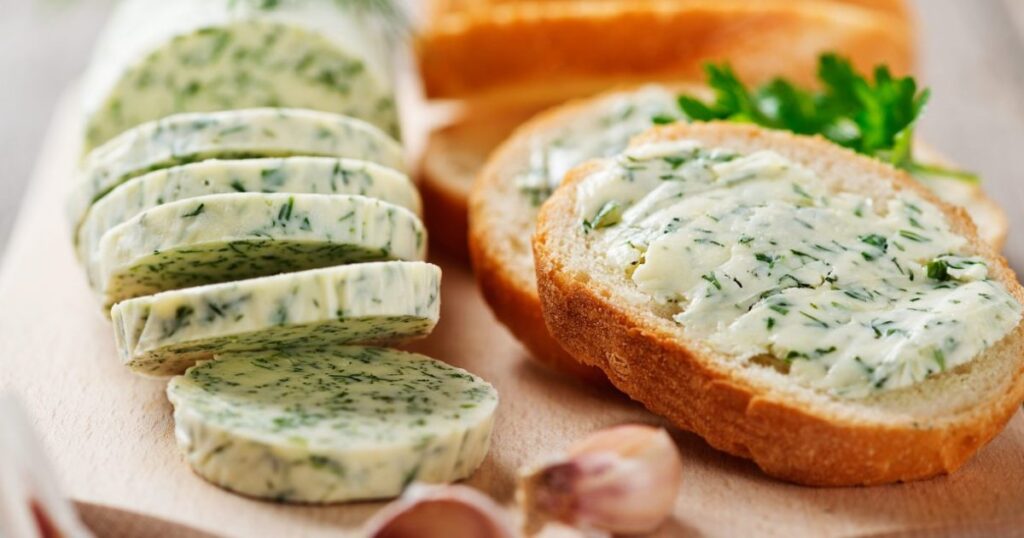
Aromatic Microgreen Butter
Creamy compound butter folded with fresh microgreens — a simple way to preserve greens for months and gain…

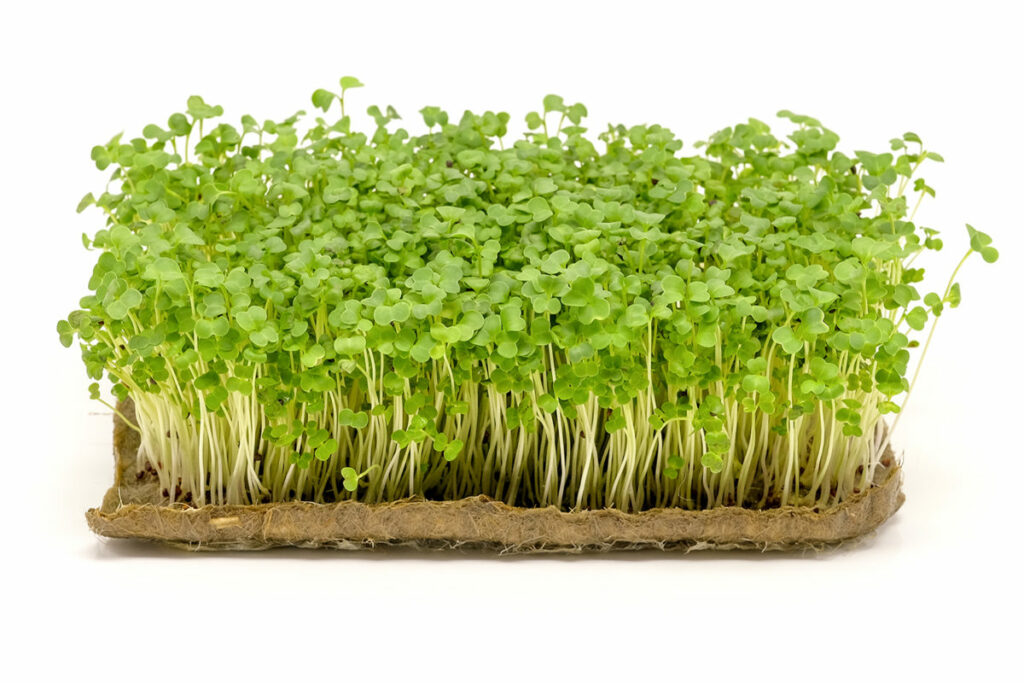
Brassica oleracea var. italica
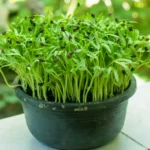
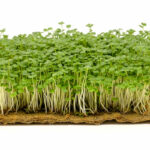
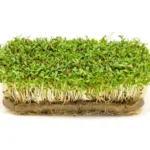
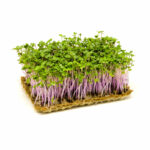
Broccoli in microgreen format is not the same vegetable, only a small one. The taste here is softer and fresher, without the characteristic bitterness of adult cabbage, and the concentration of useful substances, on the contrary, is higher. This culture rarely becomes the main focus of the dish - it plays the role of a reliable base that can be added anywhere without changing the overall taste.
Flavor profile
Fresh, grassy, sweet - that's why broccoli is so good in mixes and smoothies. Barely perceptible aroma.
this is why broccoli is so good in mixes and smoothies
Barely noticeable, neutral. Unlike adult broccoli when cooked, microgreens do not give a characteristic cabbage smell - it appears only when heated for a long time.
Juicy, tender. The stem is thin and soft, the cotyledons are easy to chew
Ripening and optimal harvest time
The cotyledons have opened, the taste is fresh and clean, the texture is delicate.
The optimal moment of collection: dense carpet, uniform color, maximum juiciness.
The first real leaf appears, the taste becomes more grassy and slightly bitter, the stem becomes stiffer.
Why flavor may vary batch to batch
The concentration of sulforaphane, the main phytochemical in broccoli, depends on growing conditions. At cool cultivation (+16...+18°C) the plant accumulates more glucoraphanin (precursor of sulforaphane). At warm (+22°C and above) the cycle is faster, but the concentration is lower. Mild stress from cold or short drying of the substrate before cutting also increases the content of useful compounds.
Culinary use
Broccoli is a great culinary accent. Add fresh at the end of cooking or directly on the plate.
a handful of broccoli between an avocado and an egg — volume, color and freshness without too much flavor
broccoli together with spinach, cucumber and apple is an inconspicuous but essential part of the green base
add to the plate after cooking - the heat of the dish will slightly "open" the greens, but will not destroy the texture
a few stems on top before serving—a fresh accent on top of the plate
broccoli as part of the green component does not dominate, but gives volume and freshness
finely chopped microgreens added before serving - a way to subtly enrich the dish for children who refuse vegetables
Perfect pairings
The neutral taste does not compete with the egg, and the freshness contrasts with the warm dish
Green broccoli does not give a strong taste and does not interrupt the fruit component - an inconspicuous but essential part of the green base
Toast with avocado, ricotta, hummus - the neutral freshness of broccoli complements fatty and creamy textures without competing with taste
Home storage
Broccoli keeps longer than most microgreens. Follow simple rules to keep it fresh for up to 12–14 days:.
Keep at +4...+6°C in the refrigerator. The term is up to 12–14 days: broccoli is one of the lightest crops and tolerates cold storage well. Cut as needed just before use.
Hermetic container at +4...+6°C. The term is up to 10–12 days. Broccoli retains turgor and freshness much longer than most microgreens. Do not wash before use - moisture in the package accelerates decomposition. ---
Don't wash until ready to eat. Wet greens spoil much faster. Rinse just before serving.
Pro tip: **A practical tip for the grower:** Broccoli is one of the most convenient crops to sell both in a tray and cut. A long storage period reduces risks and gives time to sell without haste. It is well packaged in containers together with other cabbage crops for assortment sets.
Nutrients & health
Broccoli is valued for its rich vitamin-mineral composition and bioactive compounds typical of microgreens.
Like most microgreens, broccoli contains a concentrated amount of nutrients relative to its weight — many times more than the mature plant.
| Protein | 3.5 g — building material for cells |
|---|---|
| Calories | ~36 kcal |
| Vitamins | C, K |
| Minerals | Calcium, Magnesium, Iron |
This information is general in nature and is not medical advice. Composition data: USDA FoodData Central.
Worth knowing
Broccoli is a source
Broccoli is a source of vitamins C and K, as well as folic acid, a nutrient that is traditionally included in the diet during pregnancy and during increased physical activity.
Sulforaphane is an item
Sulforaphane is the subject of active scientific research. Today, it is considered one of the most studied phytochemical compounds of plant origin. An important detail: sulforaphane is formed only when cells are mechanically damaged, so it is better to eat broccoli microgreens fresh and chopped, rather than whole.
Culture fits as
The culture is suitable as part of a varied diet for those who focus on plant-based nutrition and are looking for basic neutral greens for daily consumption.
Antioxidants and biologically active substances
Microgreens are a concentrated source of antioxidants — compounds that are being studied in the context of protecting cells from oxidative stress. Regular consumption of a variety of microgreens is part of a balanced plant-based diet.
Small, round, cabbage
Step-by-step guide
Broccoli is not soaked. The seeds are small and germinate quickly if the substrate is properly moistened.
Small broccoli seeds are easy to distribute unevenly - they gather in piles with sudden movements. Hold the hand with the seed low over the box and sprinkle in a slow, even motion from edge to edge.
A clamp for broccoli is not needed to fight "helmets" (as with borago), but so that the root quickly grows into the substrate. Without clamping, small seeds "hang" above the surface and give "helicopters" - sprouts with seeds on the head that fall to the side.
Rate: 0.5–1 kg. Heavier pressure is not necessary for this culture and can damage the tender seeds.
Conditions:
Important: on the 2nd or 3rd day in the clamp, the roots are covered with a white fluffy coating. These are root hairs — thin outgrowths of roots to search for moisture. This is a healthy sign of active development, not mold. The difference is simple: root hairs disappear when sprayed with water, mold does not.
A sign of readiness: the sprouts have confidently raised the clamp, the height is 3–4 cm.
Remove the clamp, transfer to the light. Broccoli turns green quickly - in 1-2 days the cotyledons acquire a bright green color.
Lighting: standard Broccoli does not need intense light to develop color, like basil, but with too little light, the stem stretches out, becomes thin and fragile - such a product spoils quickly after cutting.
Watering: moderate, lower. Broccoli does not drink as actively as borago or sunflower. Overflow at room temperature provokes "black leg" - rotting of the stem at the base.
Smell: in a closed room, broccoli can give off a slight sulfur smell - this is a characteristic feature of all cruciferous plants. Not a sign of problems, but the room should be ventilated.
Watering
Storage
| Uncut in tray | Fridge +4...+6°C | up to 3 weeks |
|---|---|---|
| Cut in container | Refrigerator | up to 7 days |
| Room temperature | 1–2 days |
Harvest
With a sharp knife under the root or above the substrate. The cut should be clean and dry - moisture on the cut accelerates decomposition.
Rinse in cold water before serving. Broccoli tolerates washing well and does not darken as quickly as basil. Dry with a paper towel or in a salad spinner.
Seasonal adjustments
Optimal range for Broccoli: 6.0–7.0. Broccoli, like most cruciferous vegetables, grows optimally in a weakly acidic to neutral environment. At a pH higher than 7.5, a slight slowdown in growth is possible due to the deterioration of the assimilation of trace elements.
Optimal range: 1.0–2.0 mS/cm. Cruciferae are average consumers of minerals. Regular tap water in most regions is perfect. With an EC above 2.5, it is possible to protect the leaf edges.
Experienced grower tips
Broccoli is the best first crop
Forgives mistakes with watering, is not demanding on temperature and light, grows quickly. If you are starting to grow microgreens, start with broccoli.
Sowing rate is more important than density
The temptation to sow thicker to get more often ends up with mold in the center of the box by day 4. 3–4 g is a proven norm, where each sprout has space for aeration.
Root hairs are your health indicator
Their appearance on the 2nd or 3rd day means that the root system is actively developing. The absence of hairs when the substrate is dry is a signal to add moisture.
A mixture of broccoli with radish or arugula
Broccoli gives volume and neutral freshness, radish or arugula - sharpness and character. This mix is well marketed as "basic greens for those who want more flavor."
Cut broccoli tolerates packaging well
Unlike basil, broccoli does not darken or wilt quickly after cutting. This allows pre-packing and storage of stock in containers without the risk of loss of appearance.
Variety selection
Classic green varieties
Coronado, Marathon, Packman
The most common choice for microgreens. Even, dense growth, neutral taste, stable similarity.
Dense-leaved varieties
Monaco, Fitona, Marathon
They give a denser leaf and a greater yield of mass. The taste is identical, but the texture is slightly juicier.
Що далі?
More crops in the catalog
Explore similar and contrasting flavors — from basil to amaranth
Creamy compound butter folded with fresh microgreens — a simple way to preserve greens for months and gain…