
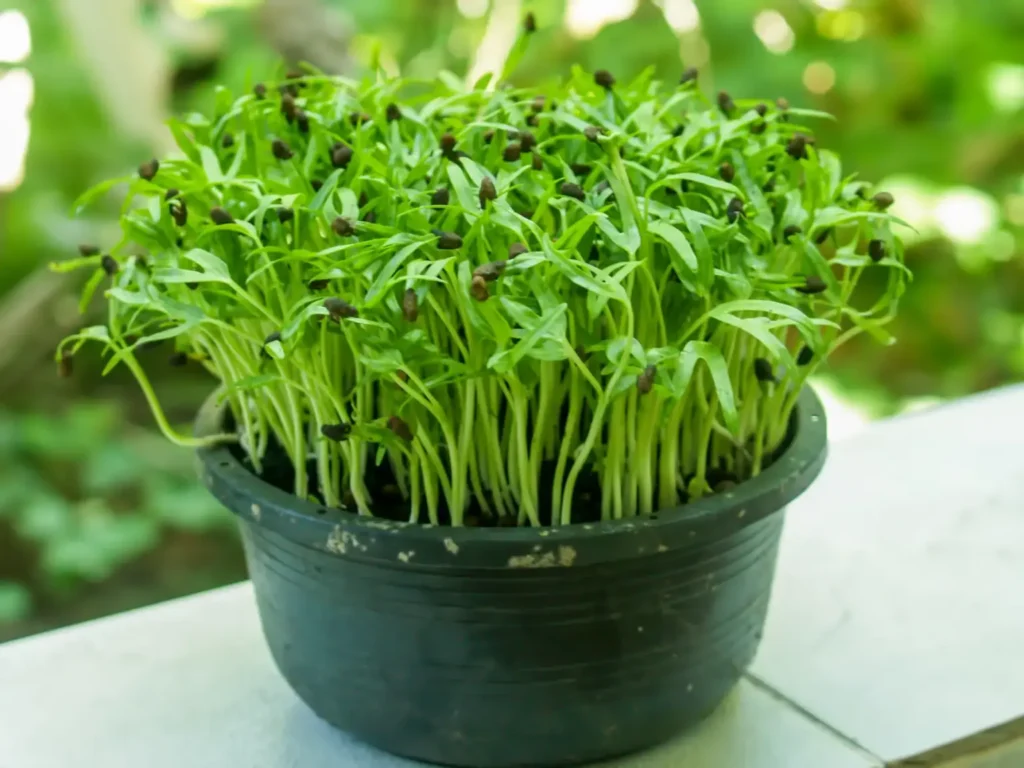
Flavor profile
Taste & aroma
Gentle, grassy, sweet - without the sourness and earthy aftertaste that overgrown leaves have. Fresh, grassy aroma.
without sourness and earthy aftertaste, which are found in overgrown leaves. Light sweetness, some nuttiness in the finish
Fresh, grassy, unobtrusive. It resembles the smell after the rain in the garden. It is not felt as a separate component - spinach "dissolves" in the general aroma of the dish.
Elongated, narrow cotyledons do not look like the usual round leaf of adult spinach. Soft, juicy, without fiber
Ripening and optimal harvest time
The cotyledons are open and bright green, the taste is the most delicate, the texture is optimal.
The taste is a little richer, the first real leaf appears.
True leaves dominate, cotyledons turn yellow and wither, quality declines.
Why flavor may vary batch to batch
The content of oxalic acid in spinach (which gives a slight acidity and "viscosity" in the mouth) depends on the temperature. At warm cultivation (+22°C and above) more oxalic acid. At cool (+14...+18°C) - less, the taste is gentler and sweeter. Spinach is a cool-loving culture; best quality in autumn and winter. The summer batch may be more sour in taste.
Culinary use
How to use
Spinach is a great culinary accent. Add fresh at the end of cooking or directly on the plate.
Green smoothie
spinach is a classic base. Gives color and benefits, it is almost indiscernible in the taste among banana, apple and ginger
Eggs Florentine
toast + cream cheese + spinach + poached egg — a simple breakfast that looks like a restaurant
Children's omelet
mix finely chopped greens into eggs before frying - spinach "hides" and does not irritate even picky eaters
Pasta in the final
add a handful to the finished hot pasta after turning off the heat - the leaves will slightly wilt from the heat and become part of the dish
Salad bowl
spinach as a base 50-70% of the volume, on top - any vegetables, cereals, protein and dressing
Potatoes or porridge with greens
sprinkle hot boiled potatoes or oatmeal - the spinach will wilt slightly from the heat and give a fresh note
Perfect pairings
Spinach goes well with everything
Classic: Eggs Florentine (poached on toast with spinach)
Lemon-olive is the most neutral and always suitable, emphasizes the natural taste of spinach
- Do not cook spinach in hot dishes for a long time - it instantly wilts and becomes gel-like, losing both color and texture
- Do not combine with very acidic dressings in advance - after 20-30 minutes the leaves stick together and darken
- Do not freeze the cut - after thawing, the structure is completely destroyed
- Do not expect a bright independent taste from spinach - it supports, and does not act as a soloist
Home storage
How to store
Spinach keeps longer than most microgreens. Follow simple rules to keep it fresh for up to 10–12 days.
Keep in the refrigerator at +2...+5°C. Cut as needed - the rest stays fresh for up to 10-12 days. Do not water: the humidity of the refrigerator is sufficient.
Put in a closed container and take it to the refrigerator. Spinach keeps its shape well in a closed environment - without air access, the leaves do not darken. At +2...+5°C, the term is up to 10–12 days.
Don't wash until ready to eat. Wet greens spoil much faster. Rinse just before serving.
Pro tip: Spinach is well stored in a closed container - tender leaves do not dry out and do not darken without access to air. Important: keep dry, without residual moisture after washing.
Nutrients & health
Benefits & composition
Spinach is valued for its rich vitamin-mineral composition and bioactive compounds typical of microgreens.
Like most microgreens, spinach contains a concentrated amount of nutrients relative to its weight — many times more than the mature plant.
| Protein | 3.5 g — building material for cells |
|---|---|
| Calories | ~26 kcal |
| Vitamins | K, A |
| Minerals | Iron, Magnesium, Potassium, Calcium |
| Fiber | is present |
- For people with a tendency to form kidney stones: spinach contains oxalates - as part of a varied diet with sufficient fluid intake, this is not critical, but if you have such a tendency, you should not exceed reasonable portions
- For people with high uric acid levels: moderate use, as with other leafy crops
- People taking blood thinners: due to the vitamin K content in greens, it is worth keeping a stable amount of greens in the diet and consult a doctor
This information is general in nature and is not medical advice. Composition data: USDA FoodData Central.
Worth knowing
Iron and folic acid (B9)
Spinach is one of the known plant sources of these two elements. Folic acid is traditionally associated with supporting hematopoiesis and is especially recommended as part of a balanced diet when planning pregnancy. Vegetable iron is better absorbed in combination with vitamin C - add lemon juice or cherry tomatoes to dishes with spinach.
Vitamin K
is contained in the leafy greens of spinach in significant quantities. This is a fat-soluble vitamin - for better absorption, add olive oil or avocado to spinach.
Lutein and zeaxanthin
carotenoids contained in dark green leaves. Traditionally associated with eye health and can be an interesting addition to the diet for those who spend a lot of time in front of the screen.
Low calorie
(~26 kcal per 100 g) and high nutritional value make spinach one of the most profitable crops in terms of the ratio of calories and nutrients.

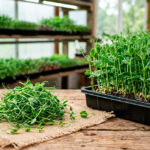
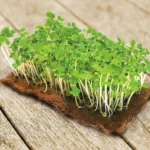
Spinach: how to grow — step-by-step guide
Growing parameters, agronomy, common mistakesGrowing parameters
Large, faceted, in a hard shell
Step-by-step guide
Seed preparation
Spinach seeds are large, grainy, with a hard multi-layered shell - it is this that is the main source of problems during cultivation. This shell ("helmet") holds firmly on the sprout and does not come off on its own without the right conditions.
Soaking according to the standard table of norms is not provided. However, some experienced growers practice a short soak (4-6 hours) for batches with reduced germination or old seeds - this speeds up germination, but is not a required step.
Check before sowing:
- The seeds are fresh, without mold and extraneous smell
- Not painted (poisoned seeds for the garden - categorically not suitable)
If you want to increase the uniformity of seedlings, slightly moisten the seeds in a net, cover with a damp cloth and leave for 2-3 hours at room temperature before sowing. Do not soak completely - just activate the top layer.
Sowing
- Evenly moisten the substrate - wet, without puddles on the surface
- Spread the seeds in an even, dense layer over the entire surface
- The norm of 8–9 g gives the correct density - the seeds lie tightly, but without significant accumulation
- Press with the palm of your hand or a flat board for tight contact of each seed with the substrate
Why uniformity is important: uneven distribution is one of the main reasons for uneven stairs and local suffocation zones. Allow 2-3 additional minutes to seed for even distribution.
Clamping is critical for spinach
Required weight: 1–2 kg.
Spinach has a hard seed coat. Strong pressure and constant friction against the substrate is the only mechanical way to help most sprouts shed the "helmet" on their own. Without clamping, the proportion of sprouts with seeds on the leaves will be much higher.
How to organize:
- An empty tray on top + an even load of 1–2 kg
- The load must press evenly over the entire surface - skewing leads to uneven steps and uneven wear of "helmets"
Do not remove the clamp until the light comes out - even if the sprouts are already visible. Every extra day under the weight increases the percentage of sprouts that shed the shell on their own.
Darkness (Blackout) — 4–5 days
The pile stands in the dark at +18...+24°C. Spinach sprouts more slowly than radishes, but surely.
What is normal:
- On the 2nd-3rd day, sprouts are barely visible under the load
- Part of the seed still holds the shell on the top - this is normal, it will be solved later
- Slight unevenness of height
What is not normal:
- Soft brown spots → local rot due to excess moisture or poor substrate drainage
- Pungent smell → the seeds are spoiled or there is no ventilation. Ventilate
Watering during a blackout: usually not needed with proper initial hydration. If after 3 days the substrate is significantly dry, spray from below through the pallet.
Vegetation in the light — 8–12 days
Before exposure to the light is a key moment for fighting "helmets".
Procedure before light:
- Remove the clamp
- Moisten the sprouts abundantly from the atomizer
- Cover with film or a lid for 1-2 hours ("bath")
- The shell will soften from moisture and most of the sprouts will drop it on their own
- Only after that expose to light
This step significantly reduces the percentage of spinach with "helmets" in the final product.
Lighting:
- LED phytolamps: 16–18 hours a day, distance 20–30 cm
- Natural windowsill: suitable, but with an excess of direct sun, the leaves become stiffer
- Spinach does not like too much light - moderate lighting gives a more tender leaf
Watering:
- The bottom through the pallet is the main method
- 1 time a day, less often than for radish or peas
- Spinach has thin, sensitive roots — stagnation of water in the substrate causes root rot. Do not overmoisturize
Ventilation: moderate Spinach is not as demanding on ventilation as lentils or barley, but stagnant moist air is still undesirable during dense sowing.
Watering
- Water it 1-2 times a day (in the morning - mandatory)
- Lower watering through a pallet is better; the upper one is allowed carefully
- Spinach is cool - at +16°C it needs less watering
- A sign of lack: juicy leaves will slightly wither and darken → pour through a tray
Storage
| Uncut in tray | Fridge +4...+6°C | up to 3 weeks |
|---|---|---|
| Cut in container | Refrigerator | up to 7 days |
| Room temperature | 1–2 days |
Harvest
- Long, bright green cotyledons 5–8 cm high
- The leaf is soft, juicy, without stiffness
- The first real leaf has not yet appeared or is just beginning to form
- There are no (or minimal) remains of the seed coat on the leaf
The appearance of real leaves is a signal to act immediately. At the same time, the cotyledons begin to turn yellow and wither, the quality drops sharply.
Scissors or a sharp knife. The greens are tender - a dull tool will remove the stems.
Seasonal adjustments
- The quality decreases: at +26°C and above, the leaves become harder and darker - spinach does not like heat
- Cut earlier: shorten the growing season by 1-2 days, cut while the leaves are still tender and have not had time to coarsen
- Watering: increase the frequency - the substrate dries faster at a higher temperature
- Ventilation: ventilate more often - humid warm air increases the risk of mold
- Expect: a shorter cycle and a less pronounced delicate taste compared to autumn-winter cultivation
- Perfect season for spinach: at +14...+16°C it grows more slowly, but the taste becomes noticeably sweeter and more tender
- Cycle extends for 3-5 days - take your time, let the leaves develop fully
- Watering: use water at room temperature — cold water slows down root formation
Water pH and EC
Optimal range for spinach: 6.5–7.5. Spinach prefers a neutral or slightly alkaline environment — unlike most microgreens. At a pH below 6.0, leaf chlorosis may appear.
Optimal range: 1.2–1.8 mS/cm. Spinach is moderately demanding on nutrition. Hydroponics requires a balanced solution — magnesium deficiency is manifested by yellowing between the veins of the leaves.
Experienced grower tips
"Banya" in front of the light is a systemic solution to the helmet problem
Do not try to remove the shells by hand or wait for them to fall off on their own. Abundant hydration + a film for 1–2 hours — and most of the sprouts drop the helmet on their own. It takes 5 minutes and solves the main problem of culture.
Press to the very end of the blackout
Do not remove the load prematurely - each additional day of mechanical friction between the seed and the substrate increases the percentage of clean sprouts without a shell.
Moderate light - a more delicate leaf
Unlike radish or tat-soy, spinach does not like excessive lighting. With bright lamps, the leaves become darker and tougher. Keep the lamp a little further or reduce the hours - the quality will improve.
A mix with spinach is always a win
Spinach in a mix with brighter cultures (radish, mustard, tat-soy) plays the role of a neutral base that softens the overall taste and increases the volume. A 40-50% share of spinach in the mix is the golden ratio.
Do not rush to sell after washing
Wet spinach clumps together and looks bad. Allow to drain and dry a little (10-15 minutes) before packing - and the product will look much more appetizing.
Agronomy notes and common mistakes
- Sowing: Soaked (8–12 h) and washed spinach — in one dense layer.
- Clamp: Medium press (1.5 kg), 2 days.
- Temperature: +15...+20°C. Spinach is a cool crop. At +24°C and above, it is prone to slow burning.
- Watering: 1–2 times a day, lower. When cool — once a day.
- Ventilation: It is important. Spinach at warm temperatures and without ventilation is prone to stem rot.
- Sale with "helmets" → Hard seeds on the leaf, inedible → "Bathroom" before light + strong pressure during blackout
- Weak or uneven grip → Many "helmets", uneven steps → Even load of 1–2 kg over the entire surface
- Late cut → Cotyledons turn yellow, true leaves appear → Cut immediately when the first true leaf appears
- Overwetting of the substrate → Root rot, pink or brown roots → Bottom watering 1 time a day, without water stagnation
- Uneven sowing → Local areas of suffocation and mold → Carefully distribute the seeds before pressing
- Excess light → Hard, dark leaves → Moderate lighting, do not place under the brightest spotlight
- An attempt to remove "helmets" manually → Damage to sprouts, loss of time → "Banya" solves the problem systematically, without manual work
Variety selection
Spinach is ordinary
Matador, Virofle, Lagos
Standard selection. Tender juicy leaves, neutral taste, even germination.
Large leaf spinach
New Zealand, Perpetual Spinach
Larger leaf and mass output. A slightly softer taste - suitable as a basis for mixes.
Що далі?
More crops in the catalog
Explore similar and contrasting flavors — from basil to amaranth