Roasted Cauliflower Cream Soup with Pea Microgreen Silk
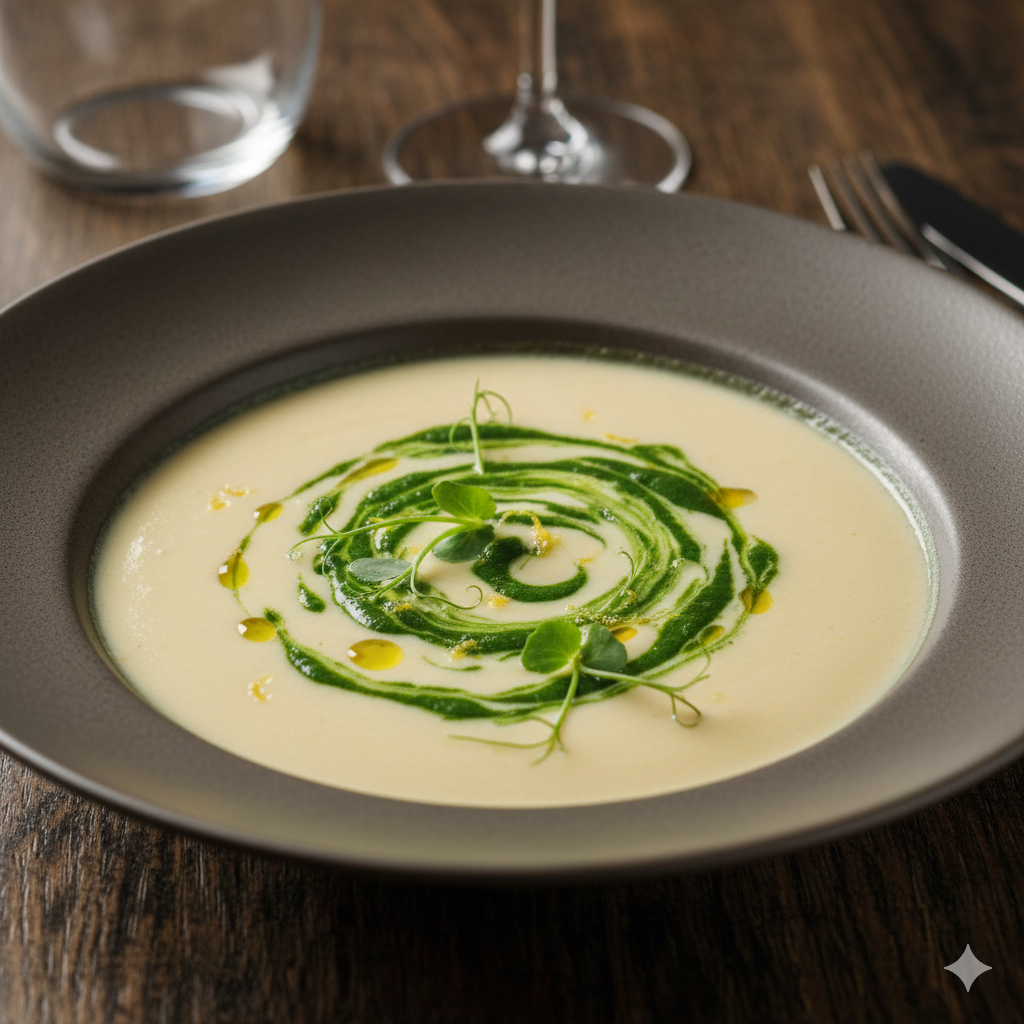
A velvety roasted cauliflower cream soup finished with a thick emerald paste of blended pea microgreens. Caramelized sweetness…

Flavor profile
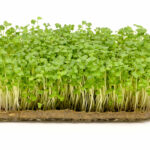
Sweet milk taste without bitterness - like green peas straight from the garden. An unobtrusive garden aroma and the main advantage is a pronounced crunch that persists even after refueling.
like green peas plucked straight from the garden. Without bitterness and sharpness
Unobtrusive, grassy, "garden" - awakens the appetite, but does not interrupt the aroma of other ingredients.
The main advantage of peas. The stems are dense, juicy, with a pronounced crunch
Ripening and optimal harvest time
Maximum sweetness, delicate stem, refined taste.
More volume and tendrils, a richer, "pea-grassy" taste.
The stem begins to become woody, the taste becomes more neutral, the crunch goes away.
Why flavor may vary batch to batch
The growing temperature directly affects the result. At cool cultivation (+16...+18°C) the plant accumulates more sugars - the stem is denser, the crunch is more pronounced. This is a typical picture of winter parties. At warm growing (+22...+26°C) growth is faster, the stem is more delicate and juicy, the taste is milder - typical for summer or warm rooms. Both options are delicious, just different. If a pronounced sweet taste and a dense crunch are important to you, ask the grower about the growing conditions.
Culinary use
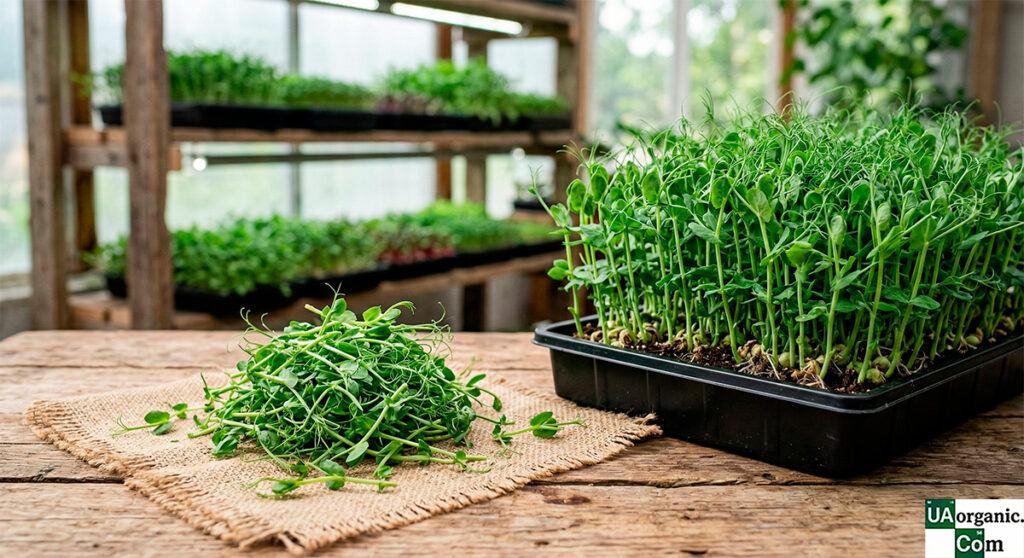
Pea is a great culinary accent. Add fresh at the end of cooking or directly on the plate.
toast with cream cheese, avocado and a handful of peas - complete and beautiful in 5 minutes
peas as a base instead of lettuce - gives more saturation
put a handful of peas on a plate before serving hot pea or spinach soup - textural contrast and aesthetics
add to warm pasta with a creamy sauce at the very end - the stems will shrivel a little, but they will retain their crunch
just eat with your hands as a snack - hearty and tasty
pea tendrils are a spectacular final touch, they look photogenic and do not wither on the plate
Perfect pairings
A neutral base that can be combined with almost everything
Peas add freshness and textural contrast to any protein
The dressing determines the mood of the dish - peas go well with classics and Asian motifs
Home storage
A few simple rules that prolong the freshness of microgreen peas at home.
Do not cut more than you plan to eat at once. Keep the tray in the refrigerator at +4...+6°C — the peas stay fresh for up to 3 weeks. No need to water: natural humidity in the refrigerator is enough.
Place in an open container or on a plate, cover with a damp paper towel and refrigerate. Do not seal - without air, greens turn yellow faster. The term is up to 5–7 days.
Don't wash until ready to eat. Wet greens spoil much faster. Rinse just before serving.
Pro tip: Sell peas in a tray ("alive") - the buyer cuts them at home himself. Greens stay fresh for several weeks, and the tray looks appetizing on the counter.
Nutrients & health
Pea is valued for its rich vitamin-mineral composition and bioactive compounds typical of microgreens.
Like most microgreens, pea contains a concentrated amount of nutrients relative to its weight — many times more than the mature plant.
| Protein | 4 g — building material for cells |
|---|---|
| Calories | ~35 kcal |
| Vitamins | C, A, B9 |
| Minerals | Potassium, Iron, Calcium |
| Fiber | high |
This information is general in nature and is not medical advice. Composition data: USDA FoodData Central.
Worth knowing
Vegetable protein in a light form
Peas are one of the leaders in terms of protein content among microgreens. It is suitable as part of a varied and balanced diet, including a vegetarian and sports diet.
Folic acid (B9)
a vitamin that is traditionally considered an important element of the diet during pregnancy planning and in the first trimester. Peas are one of the vegetable sources of this vitamin.
Fiber
provides a long-lasting feeling of satiety. A small portion of peas can satisfy hunger for a long time - this is a useful quality for those who want to eat consciously.
Antioxidants
are part of most microgreens — peas are no exception.
Large bean (varieties: Madras, Petsila)
Step-by-step guide
For microgreens, edible peas are suitable - any sold for sprouting or sowing. The grain must be whole, not chopped, without treatment with fungicides (when buying seeds for the garden, always specify).
Soaking is a mandatory stage:
If the seeds are old or of poor quality, pour boiling water over them for 30 seconds, drain and soak in cold water. Such "overturning" accelerates germination.
The norm is 50 g dry = ~100–110 g soaked is the correct density. Too rarely - an uneven "forest". Too thick - risk of rotting in the center of the stack.
Required weight: 2 kg.
Peas have a powerful growth energy. Without pressure, the roots do not go into the substrate, but lift the whole plant up — the sprouts hang in the air ("helicopters"), dry up and die.
How to organize:
Stack 5 trays in a row and place the load on top. The bottom trays get the maximum even pressure — and give the best result.
The stack stands in the dark at room temperature (+18...+24°C). Sprouts stretch out and gain height.
What is normal during this period:
What is NOT normal:
Watering during pressing: usually not needed. If the temperature is high or the substrate is dry, spray from a sprayer on the 2nd day.
Lighting:
Watering:
Peas are real "water bread". It uses much more water than radish or basil.
Temperature: +18...+24°C. At +26°C and above, the stems thin out. At +16°C and below, growth slows down, but the taste becomes sweeter and richer.
Ventilation: moderate Peas tolerate ventilation well, but do not like cold drafts.
Lift the tray - it should feel heavy. If it is light, it is time to water.
Watering
Storage
| Uncut in tray | Fridge +4...+6°C | up to 3 weeks |
|---|---|---|
| Cut in container | Refrigerator | up to 7 days |
| Room temperature | 1–2 days |
Harvest
Scissors or a knife as close as possible to the substrate. There will be no regrowth.
Rinse in cold water immediately before use or sale. Wet peas are stored worse.
Seasonal adjustments
The optimal range for peas: 6.0–7.0. Peas are relatively undemanding, but at a pH above 7.5 (hard tap water in many regions of Ukraine), yellowing of the leaves may appear on the 10th to 12th day — not because of a disease, but because of blocking the assimilation of iron and manganese in an alkaline environment.
Optimal range: 0.8–1.5 mS/cm. For microgreens on a substrate without additives, EC is less important than in hydroponics. But very hard water (EC above 2.0) with frequent watering can lead to the accumulation of salts in the substrate and a bitter aftertaste in the finished product.
Experienced grower tips
White fluff is not mold
Root fluff on legumes scares beginners, but this is normal. After exposure to light, it dries up and disappears. True mold is black or green, with an unpleasant smell.
Antennae are the most accurate indicator
Don't count the days - look at the tendrils. Long, curly, keep their shape - can be cut.
Mix with sunflower
Peas + sunflower 50/50 — an ideal pair. Both are sweet and crunchy. Pea tendrils and sunflower "caps" together look very appetizing.
Without a substrate - on a grid
Peas grow perfectly on a plastic net without any mat. Roots grow down through the cells. Pros: savings on mats, convenient cutting. Minus: more frequent watering.
Temperature trick
2 days before collection, place the tray in a cool place (+14...+16°C). Low temperature stimulates the accumulation of sugars - the taste becomes more pronounced, the tendrils are denser.
Variety selection
Field varieties
Madras, Pecilla and the like
The optimal choice for microgreens. They give a large output of mass, expressive tendrils, stably germinate. The taste is rich, "pea-grassy".
Sugar and vegetable varieties
Saxon, Vinka and the like
They give a sweeter and more delicate taste, but a smaller yield of mass and a shorter shelf life after cutting. Suitable for those who value taste above volume.
Що далі?
More crops in the catalog
Explore similar and contrasting flavors — from basil to amaranth
A velvety roasted cauliflower cream soup finished with a thick emerald paste of blended pea microgreens. Caramelized sweetness…
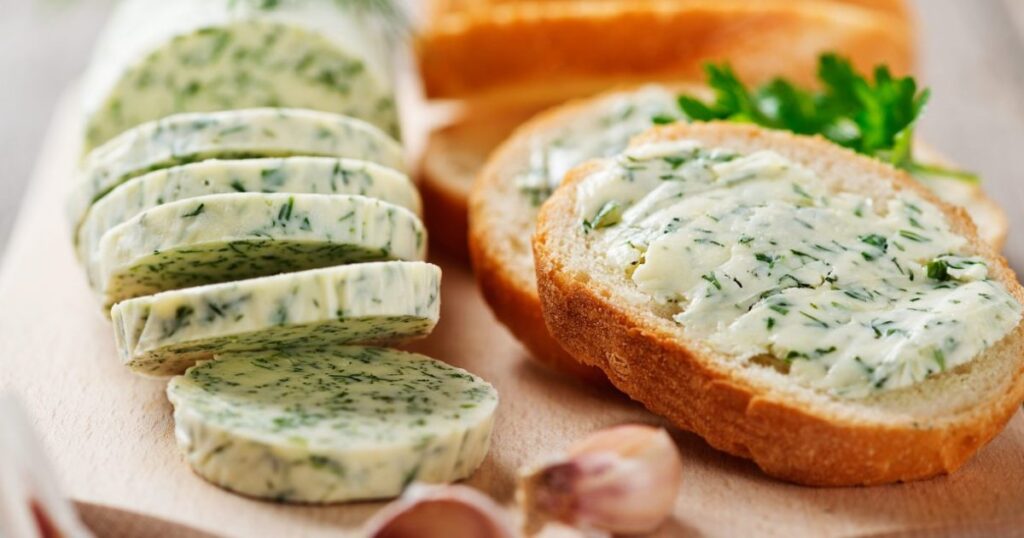
Creamy compound butter folded with fresh microgreens — a simple way to preserve greens for months and gain…
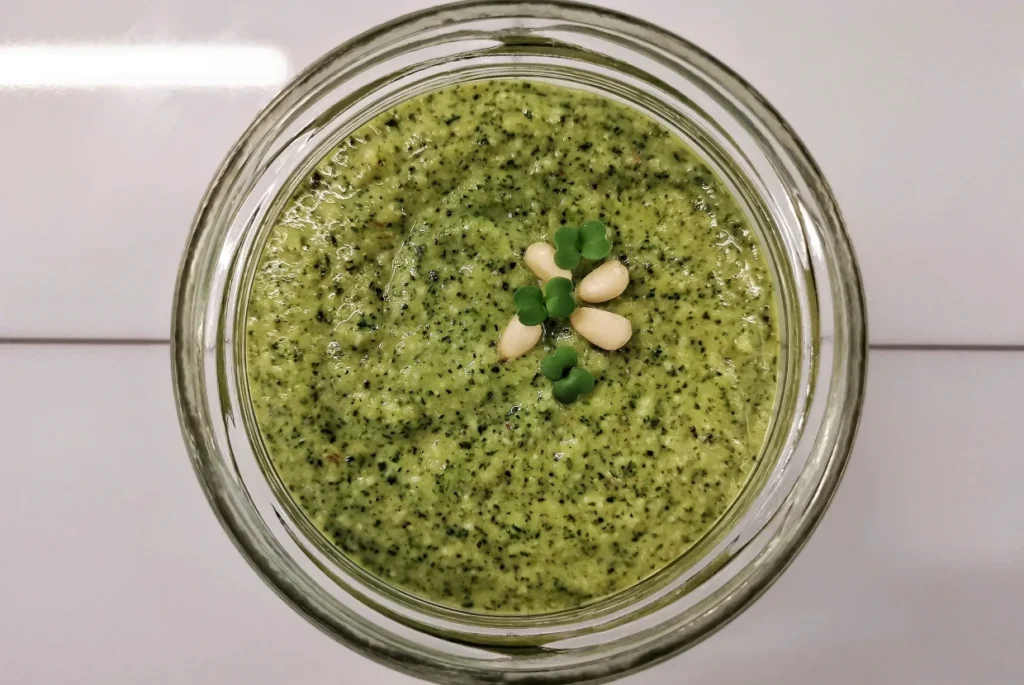
A vibrant green pesto made from fresh pea microgreens, toasted pine nuts, and Parmesan with a gentle kick…