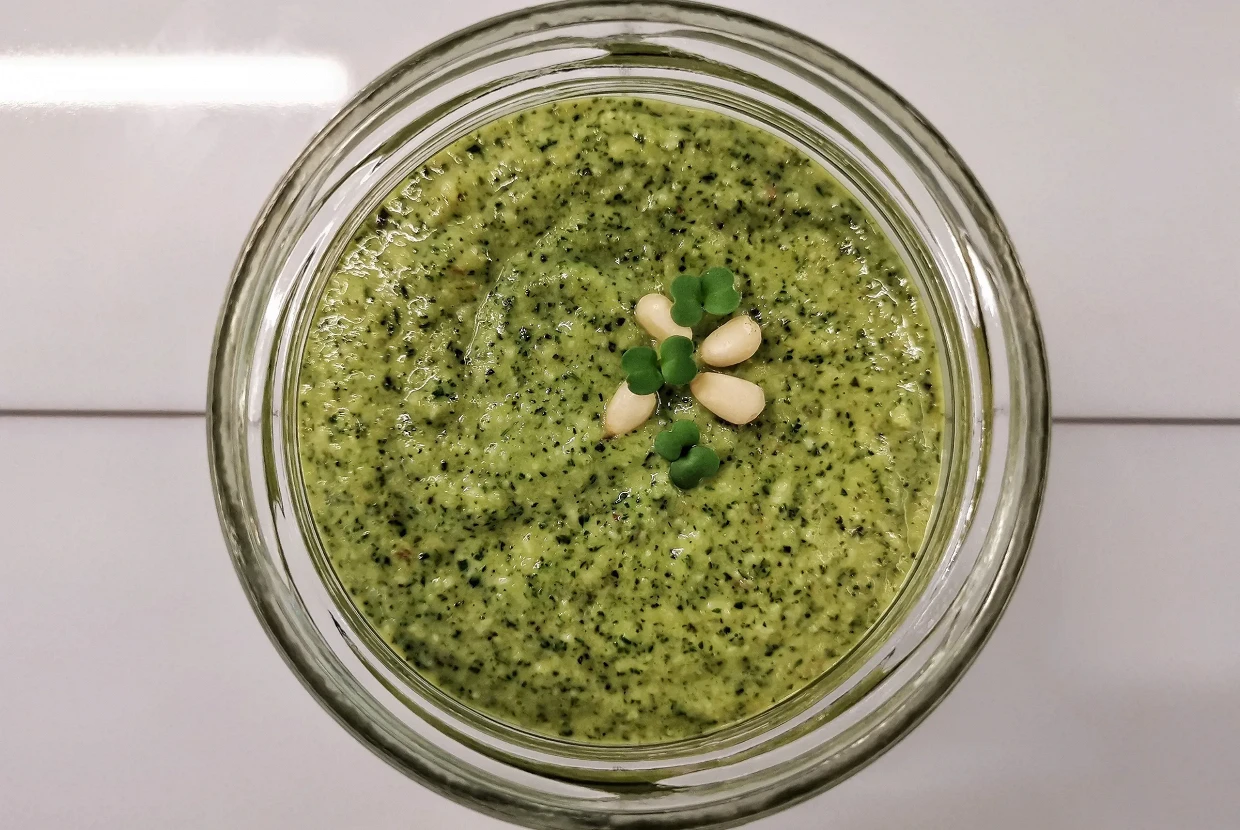
A vibrant green pesto made from fresh pea microgreens, toasted pine nuts, and Parmesan with a gentle kick of jalapeño. Ready in 10 minutes and endlessly versatile.
INGREDIENTS
- 35 g — pea microgreens
- 2 tsp — radish sprouts
- 4 — garlic cloves
- 75 ml — refined olive oil
- 40 g — Parmesan cheese
- 45 g — pine nuts
- 5 g — white sesame seeds
- 1/2 — jalapeño pepper
- 1 tsp — red wine vinegar
- 1 wedge — lime
- 2 tsp — sea salt
STEPS
- Toast pine nuts and sesame in a dry skillet over medium heat until golden. Remove from heat and let cool — toasting unlocks deep, nutty aroma.
- Rinse and dry pea microgreens. Roughly chop them so they blend evenly into the sauce.
- Cut Parmesan into small chunks or grate coarsely. Deseed the jalapeño and slice — adjust the quantity to your heat preference.
- Add garlic, toasted nuts, sesame, microgreens, jalapeño, and Parmesan to a blender.
- Pour in olive oil and red wine vinegar. Squeeze in lime juice. Add sea salt.
- Blend until smooth and creamy. If the pesto is too thick, add a splash of olive oil or cold water and blend again.
- Taste and adjust salt and acidity. Transfer to a glass jar. Refrigerate for up to 5 days.
Why Pea Microgreen Pesto Is Worth Making
Classic Genovese pesto calls for basil, pine nuts, and Parmesan. But modern cooks have long discovered that any fresh, flavorful green can step into basil’s role. Pea microgreens are one of the best candidates: mild, slightly sweet, with a subtle nuttiness and a vivid green color that holds up even after blending.
Unlike mature peas, microgreens retain peak levels of chlorophyll, vitamins C and K, and amino acids. That’s why this homemade pesto is not just a delicious sauce — it’s a concentrated source of nutrients that your body actually uses.
What Makes This Pesto Different
Three non-obvious moves elevate this recipe. First: toasting the pine nuts and sesame in a dry pan. Heat releases the essential oils trapped inside the nuts, developing a deep caramel-like aroma that transforms the final sauce. Just two minutes on the stovetop is enough.
Second: jalapeño. Even half a pepper adds a gentle, building heat that contrasts beautifully with the sweetness of pea and the richness of Parmesan. Skip it for kids or heat-sensitive guests — but leave it in if you want a sauce that lingers.
Third: radish sprouts. They add a peppery sharpness and slight bitterness that balances the sauce’s richness. Blend them in or use them as a garnish on top.
Ways to Use Pea Microgreen Pesto
This sauce is remarkably versatile:
- Pasta — toss with freshly cooked spaghetti or tagliatelle. Add a splash of pasta water to help the sauce coat every strand.
- Bruschetta and crostini — spread on toasted bread and top with fresh mozzarella or ricotta.
- Grilled vegetables and proteins — drizzle over zucchini, eggplant, or chicken straight off the grill.
- Pizza base — replace tomato sauce for a vibrant green pizza topped with mozzarella and arugula.
- Salad dressing — thin with lemon juice and a little extra olive oil for a bright, herby vinaigrette.
Storage and Freezing
Keep the pesto in an airtight glass jar in the refrigerator for up to 5 days. To prevent oxidation and browning, pour a thin layer of olive oil over the surface before sealing.
For longer storage, freeze in an ice cube tray. Once solid, transfer the cubes to a zip-lock bag. They keep for up to 3 months and can be dropped directly into hot pasta — they melt within seconds.
Nutritional Value of Pea Microgreens
Pea microgreens are among the most studied microgreens for their nutritional profile. Compared to mature peas, they contain several times more vitamin C and carotenoids. The 35 grams used in this recipe alone covers roughly 30% of the recommended daily intake of vitamin K.
Pine nuts contribute monounsaturated fats, magnesium, and iron. Olive oil brings polyphenols with antioxidant properties. Parmesan supplies calcium and complete protein. Together, they create a sauce you can genuinely call functional food.