
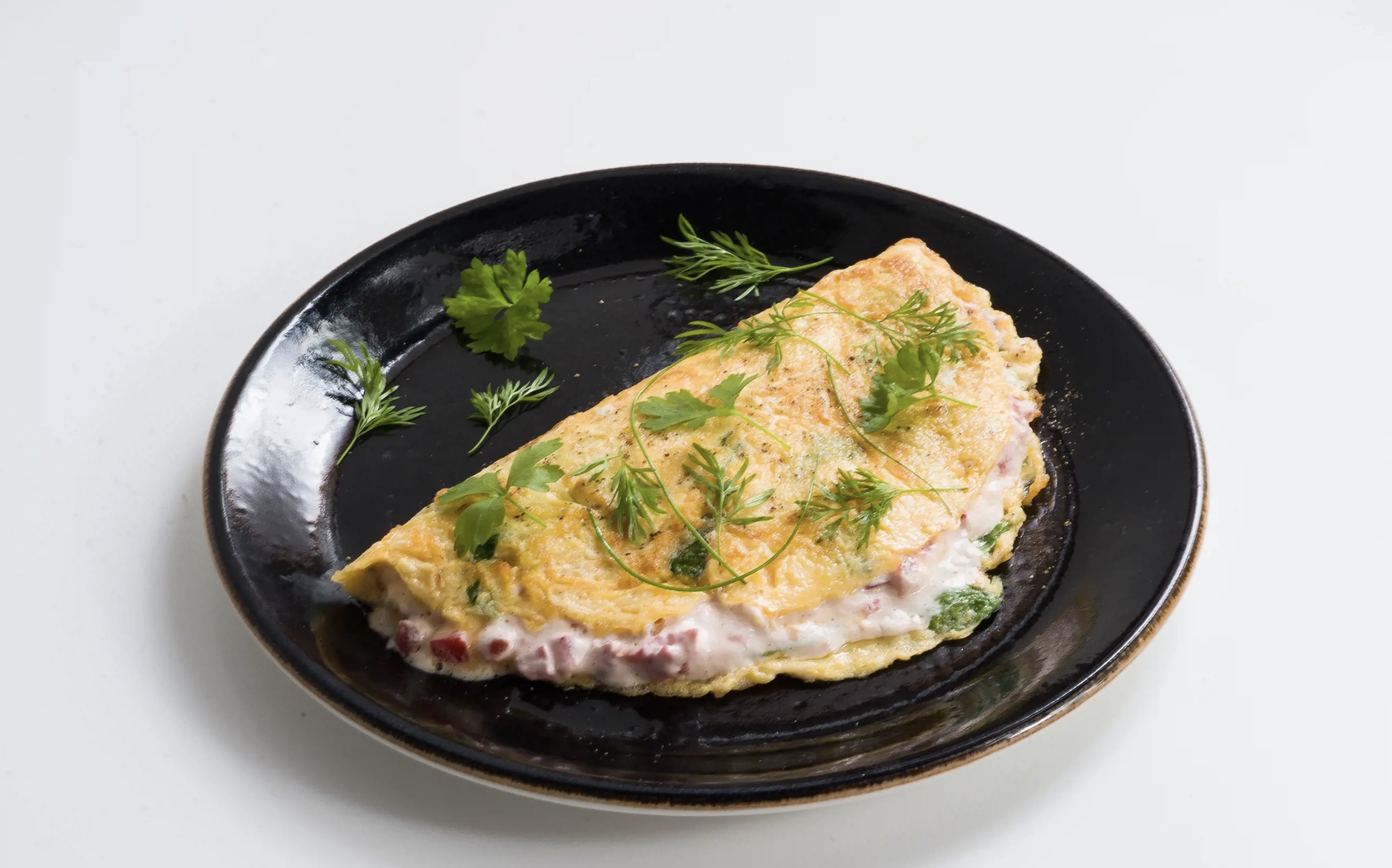
A classic French-style omelet with a creamy tomato and curd cheese filling, topped with fresh microgreens. Ready in 5 minutes, packed with protein, endlessly adaptable.
INGREDIENTS
- 2 — eggs
- 20 g — butter
- 1 — tomato
- 2 tbsp — fresh curd cheese (quark or ricotta)
- microgreens — a handful inside + some for topping
- to taste — salt and black pepper
STEPS
- Prepare the filling. Halve the tomato and scoop out the seeds and juice with a spoon — this prevents the filling from releasing water into the omelet. Dice the flesh into 5 mm cubes.
- Mix diced tomato with curd cheese. Season with salt and pepper. Set aside at room temperature so it does not cool the omelet when added.
- Beat the eggs with a fork until yolk and white are fully combined — no foam, just a smooth, even mixture. Season with salt and pepper, add a small handful of microgreens (reserve some for topping). Stir together.
- Melt butter in a non-stick pan over medium heat. When the butter begins to foam, pour in the egg mixture.
- Let the eggs sit for 5-7 seconds, then stir briskly with a spatula in circular motions so the eggs and microgreens distribute evenly. Cook for another 40 seconds until just set but still slightly creamy inside.
- Spoon the filling in an even layer over one half of the omelet. Lift the empty half with the spatula and fold it over the filling. Hold for 10 seconds to set the shape.
- Slide onto a plate and immediately scatter the reserved fresh microgreens on top. Serve at once.
Why This Omelet Is More Than Just Breakfast
An omelet is one of the fastest ways to get quality protein in the morning. Add microgreens and fresh curd cheese, and you turn a simple egg dish into a nutrient-dense, restaurant-quality meal. In this recipe, microgreens appear twice: inside the egg mixture, where they gently warm and release their aroma, and on top — fresh, vibrant, and slightly crisp. Two textures, one dish, five minutes.
The classic French omelet technique matters here. The eggs should not be overcooked — the interior needs to stay creamy, not rubbery. A non-stick pan and good timing are the only tools you need. Once you’ve nailed this technique, you’ll have a café-level breakfast on rotation.
Which Microgreens Work Best
The original recipe calls for “mixed microgreens to taste” — and that flexibility is genuine. But some varieties pair better than others:
- Radish — peppery and sharp, contrasts beautifully with the creamy curd and soft egg.
- Pea — mild and sweet, complements without overpowering.
- Sunflower — nutty flavor, sturdy texture that holds up well as a topping.
- Basil or cilantro microgreens — for a fragrant, herby accent.
- Beet — earthy, visually striking; deep red against the golden egg.
Avoid very delicate varieties like amaranth for the inside — they wilt instantly. Use those as garnish only.
The Key Step: Remove the Tomato Juice
The detail most people skip: before dicing the tomato, scoop out the core with a spoon. Most of the liquid and seeds sit there. Leave them in and the filling turns watery, the omelet softens, and the cheese spreads. Dry tomato flesh plus curd cheese equals a compact, flavorful filling that stays in place.
Curd cheese (quark, ricotta, or fresh farmer’s cheese) is not the same as hard cheese. It’s soft, slightly tangy, and blends with the tomato without fully melting — it adds creaminess without heaviness. Alternatives: feta (saltier), goat cheese, or cream cheese.
Variations to Try
- With avocado — replace the tomato with mashed avocado, salt, and lemon juice. Minimal and creamy.
- With smoked salmon — thin slices of lightly cured salmon, curd cheese, and pea microgreens. Restaurant-level in 7 minutes.
- Vegetarian upgrade — wilted spinach, sautéed mushrooms, feta, and radish microgreens.
- With pesto — spread pea microgreen pesto on one half before adding the tomato filling.
Nutritional Value
Two eggs provide roughly 12-14 g of complete protein with all essential amino acids. Butter supplies fat-soluble vitamins A and D, which help absorb the carotenoids in microgreens. Curd cheese adds another 5-6 g of protein and a dose of calcium. Together, this is an excellent high-protein breakfast for anyone tracking their macros.
Microgreens serve a double role here: inside, they contribute vitamins and chlorophyll that survive mild heat; on top, they deliver fiber and active enzymes preserved in their raw state. Even 20-30 g makes a measurable nutritional difference to an otherwise standard omelet.