The biggest pain for a microgreens producer is not the growing itself — it is consistency. Today the harvest is perfect; tomorrow it is too humid and half the trays are covered in mould. Or you forgot to water on time and ended up with a stressed crop the day before harvest. This is exactly where IoT technologies make a real difference — and 2025 was the year they became accessible even to small farms.
What specifically gets automated
The minimum useful setup for microgreens: a substrate moisture sensor, an air temperature and humidity sensor, and a lighting timer or controller. These three elements address 80% of the causes of inconsistent harvests.
A substrate moisture sensor automatically triggers irrigation when the moisture level drops below a set threshold and stops it when the optimum is reached — no more “overwatering” or “underwatering” due to being busy or forgetful. Air temperature and humidity sensors alert you when conditions go out of range — for example, when humidity is too high and risks triggering fungal disease.
Beyond sensors: AI analysis and forecasting
A study by Turkish researchers from Tekirdağ University, published in Frontiers in Sustainable Food Systems in August 2025, showed that a fully automated microgreens growing cabinet produces more consistent vitamin C content and total antioxidants compared to a standard laboratory environment. In other words, automation is not just convenience — it is product quality.
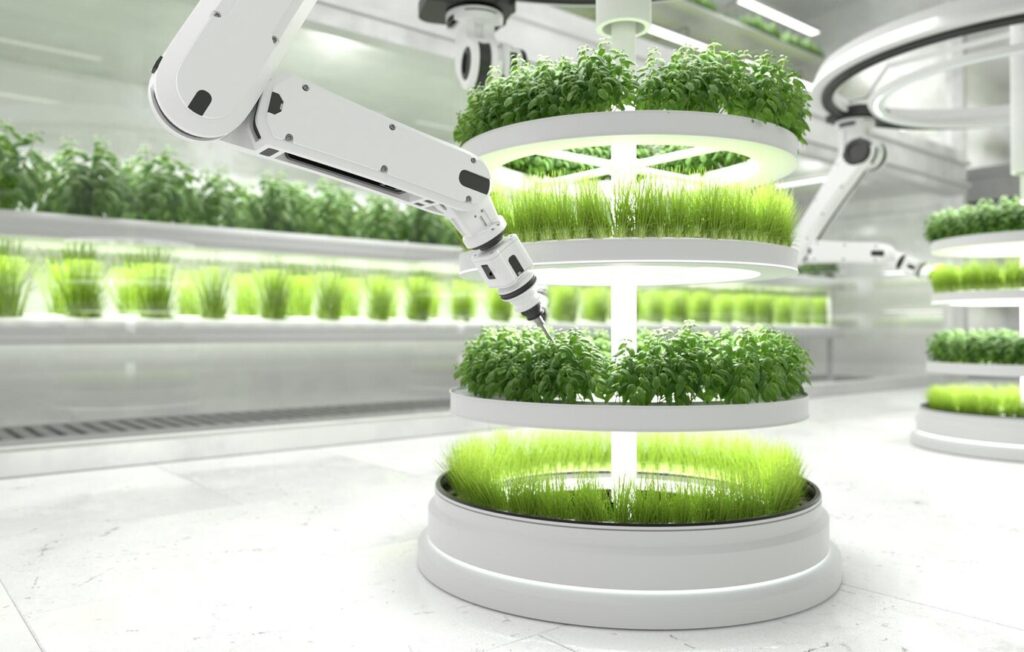
Next-generation AI platforms go further: they analyse data across multiple growing cycles, identify patterns, and optimise parameters automatically — without any operator input.
What is available now and at what cost
A basic IoT kit for microgreens (sensors + controller + mobile app) costs $50–$200 depending on the manufacturer. It pays for itself within 1–2 growing cycles through reduced crop losses alone.
More advanced systems with AI analytics and cloud integration start from $500. Even at that level, a small farm of 20–30 trays can operate with minimal labour and reliably supply restaurants or shops without daily manual monitoring.