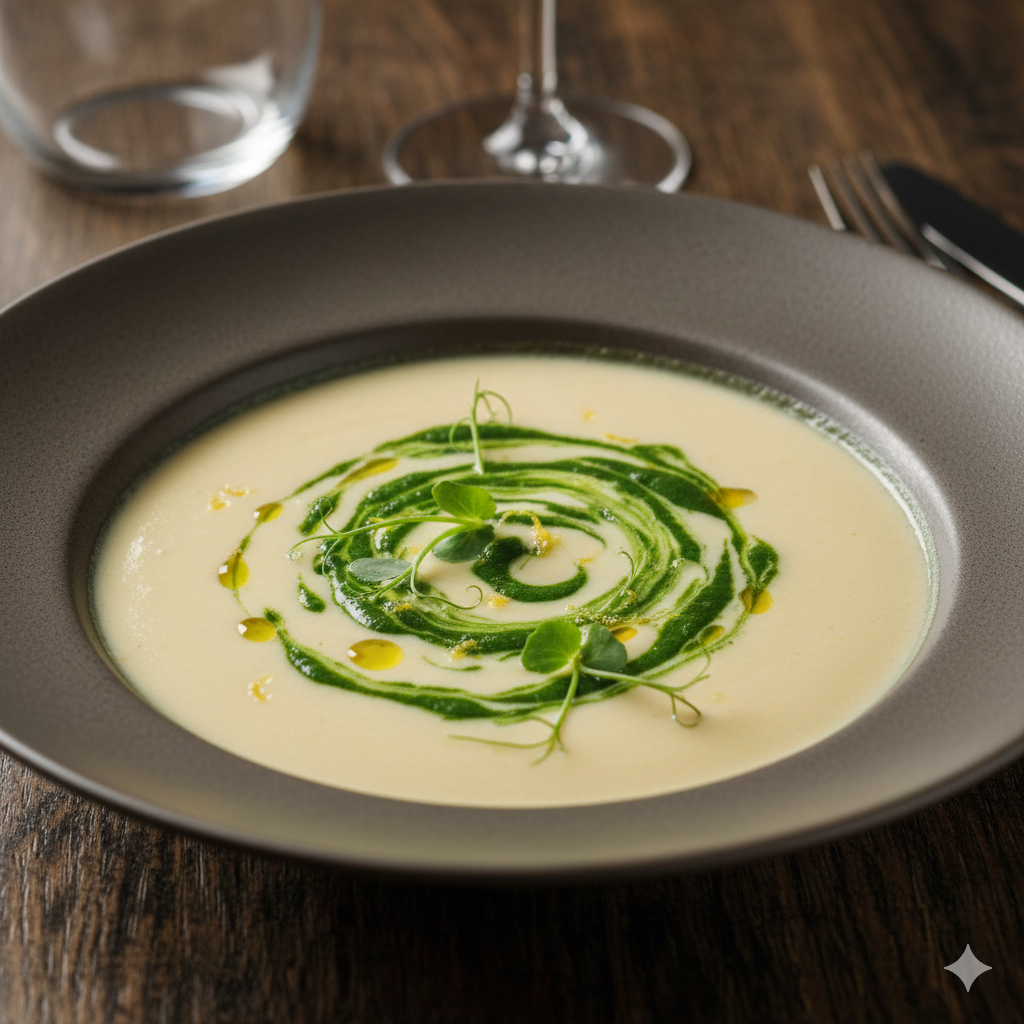
A velvety roasted cauliflower cream soup finished with a thick emerald paste of blended pea microgreens. Caramelized sweetness meets clean green freshness — restaurant plating at home.
INGREDIENTS
- 300 g — cauliflower
- 100 ml — light cream (20%)
- 20 g — butter
- 30-40 g — pea microgreens
- 2-3 tbsp — warm water or cream (for the green silk)
- 1 tsp — lemon zest or lemon oil
- to taste — salt and white pepper
STEPS
- Preheat oven to 200C. Break the cauliflower into florets, toss lightly with melted butter, season with salt and white pepper. Spread in a single layer on a baking tray with space between pieces. Roast 20-25 minutes until the edges are golden and caramelized — this step builds the nutty sweetness that defines the soup.
- Transfer the roasted cauliflower to a blender. Add the cream and butter. Blend until completely smooth and silky. If too thick, add a splash of warm water or vegetable stock. Taste and adjust salt and white pepper.
- Make the green silk: place pea microgreens in a separate blender or small food processor. Add 2-3 tbsp of warm (not hot) water or cream — liquid temperature must not exceed 70C to preserve the bright chlorophyll color. Blend to a thick, smooth emerald paste.
- Ladle the hot soup into warmed bowls. Spoon or pipe the green silk on top — a few drops in a circle, or one stripe across the center. For the classic web effect, draw a toothpick from the center outward through the drops.
- Finish with a pinch of lemon zest or a drop of lemon oil. Add a few reserved roasted florets on top for texture if desired. Serve immediately.
Why Roasting Cauliflower Before Blending Changes Everything
Boiled cauliflower is neutral and slightly watery. Roasted cauliflower is entirely different: caramelized edges bring a nutty, sweet depth that cannot be achieved any other way. Roasting is what turns a simple cream soup into a dish with real character. The step takes 25 minutes, but it determines the entire flavor profile — do not skip it.
The key to even browning: spread florets in a single layer with space between them. Crowded florets steam rather than roast. High heat and breathing room are both necessary.
The Green Silk: Technique and Temperature Control
Pea microgreens deliver a rich emerald color from chlorophyll. But chlorophyll is heat-sensitive — above 70°C it degrades and the green turns olive-brown. This is why the green silk is always made separately and never heated beyond that threshold.
Two ways to plate it:
- Pattern on top — drop dots in a circle, then draw a toothpick or skewer from the center outward through each dot. The classic restaurant “web” finish.
- Swirled through the soup — fold half the green silk directly into the soup for an even emerald color, use the rest to garnish the surface.
Adding 10-15 g of fresh spinach to the microgreens when blending intensifies and stabilizes the color — spinach has more chlorophyll and acts as a buffer that keeps the green bright longer.
Cream: Fat Content and Alternatives
20% cream gives the right balance between richness and lightness. 33% makes the soup richer but heavier and less fresh-tasting. 10% is too thin — the soup loses body.
Alternatives for different diets:
- Coconut milk — vegan, full-fat (17-19%) gives similar texture with a faint tropical note.
- Vegetable stock only — no cream at all. Lighter, but needs more butter for roundness.
- Cashew cream — soaked cashews blended with water. Neutral, creamy, vegan.
Variations
- With curry — add 1 tsp of curry powder or turmeric before roasting. Golden soup with green silk is visually dramatic.
- With roasted garlic — roast a whole head of garlic alongside the cauliflower (top sliced off, drizzled with oil). Squeeze the caramelized cloves into the blender — deep, sweet complexity.
- With crispy bacon — crumbled crispy bacon on top instead of roasted florets. The saltiness sharpens the sweetness of cauliflower.
- With truffle oil — a drop instead of lemon oil for a luxurious version.
- Cold version — serve chilled with extra green silk. A refreshing option for warmer months.
Lemon Zest vs Lemon Juice
Lemon juice thins the soup and can cause cream to split when added hot. Zest delivers only the essential oils — bright citrus aroma without acidity or extra liquid. If you have no lemon oil, simply grate a little zest directly over the bowl just before serving. The effect is the same: a fragrant lift that cuts through the richness without changing the texture.
Nutritional Value
Cauliflower is one of the richest vegetable sources of vitamin C — roasting retains up to 60%. It also contains choline (essential for brain function) and sulforaphane, a compound with documented anti-cancer properties in clinical research. Pea microgreens add vitamins C and K, folate, and plant protein. Butter helps absorb the fat-soluble vitamins present in both components.
One serving is roughly 250-300 kcal — satisfying without being heavy, suitable for both lunch and dinner.
CHEF'S TIPS
Keep the pea microgreen puree below 70°C — higher temperatures destroy chlorophyll and the color turns olive. Add 10-15 g of spinach to the microgreens for a more intense, stable green. Swap cream for full-fat coconut milk for a vegan version.