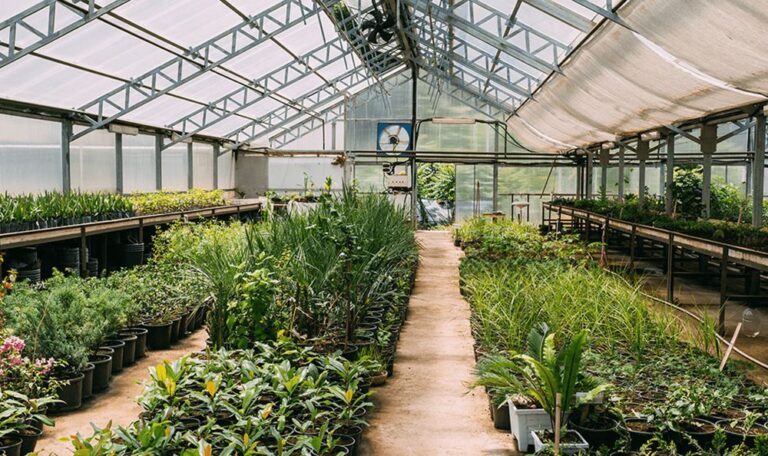


Ukrainian scientists have published a review of the economic efficiency of urban “smart” farming: hydroponics, vertical farms, IoT monitoring, and controlled lighting. The authors compare field models with indoor growing and show that through higher planting density and controlled environments, yields in vertical systems can reach orders of magnitude above those in open soil.
A dedicated section covers water: in recirculating systems, consumption per unit of output drops significantly thanks to closed-loop cycling and precise dosing. This matters for regions with irregular rainfall or a shortage of quality water. Energy costs and their impact on production expenses are also analysed.
From a practical standpoint, the research notes that the viability of urban projects depends on sound initial design: correct space planning, selecting short-cycle crops (microgreens, salads), and standardising the post-harvest processing chain. For payback, local sales channels are critical — school canteens, cafés, HoReCa.
The authors stress that investment in sensors and analytics only delivers tangible results when the team keeps disciplined records and regularly adjusts growing regimes. Otherwise even a “smart” farm becomes an expensive set of equipment with no planned profit.
For microgreen operators the core idea is simple: run first pilots small, but with closed processes — logging all parameters, running control batches, and following step-by-step quality maps.