
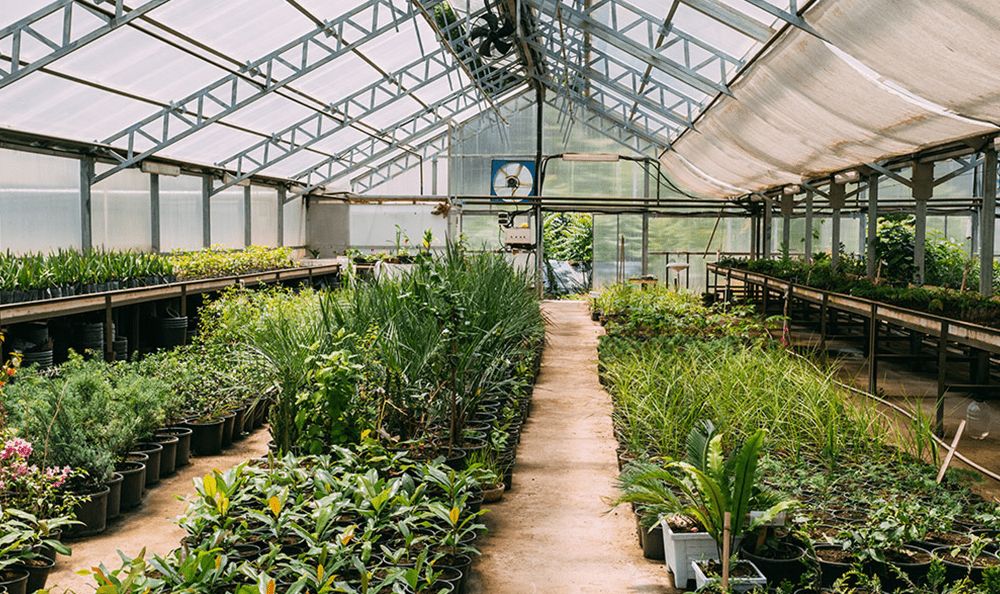
Five years ago, “smart greenhouse” sounded like something from a science fiction film. Today it is an ordinary commercial reality for thousands of producers in the Netherlands, Israel, Japan, and increasingly — everywhere in the world. And here is what is telling: in 2025, smart greenhouses moved from expensive pilot projects to scalable solutions where every dollar invested counts.
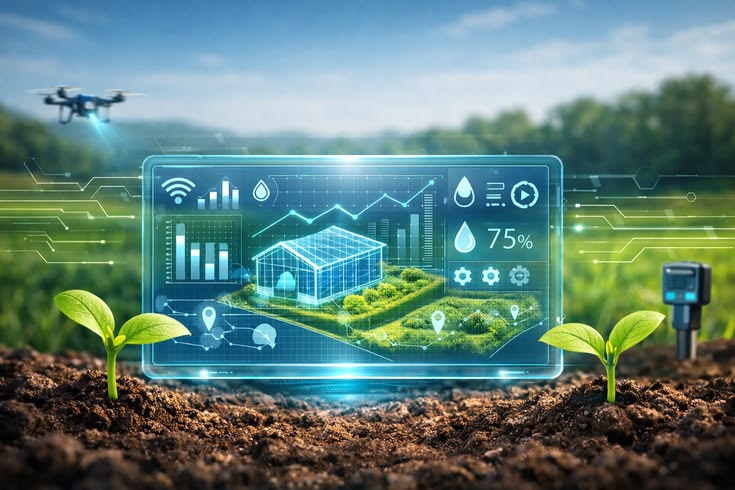
What a smart greenhouse actually is
In short: a greenhouse where all key parameters — temperature, humidity, CO₂ levels, light intensity, EC and pH of the nutrient solution — are measured in real time by IoT sensors, and the system adjusts the microclimate automatically without human involvement.
Artificial intelligence analyses the data streams and makes decisions: when to open ventilation, change the LED light spectrum, or adjust fertiliser concentration. That is the “intelligence” — not just automation, but adaptive management.
Numbers that speak louder than words
Industry data for 2025 tells the story clearly: automated irrigation systems cut water use by up to 30%, precision climate management increases yields by 20–30%, and energy-efficient LEDs with adjustable spectra allow lighting to be fine-tuned to each phase of plant growth.
One case study is particularly striking: IBM, in partnership with a California farm, deployed an AI-powered disease forecasting system and cut fungicide use by 50%, saving $100,000 per year.
What a Ukrainian greenhouse grower can take from this
A fully “smart” greenhouse requires significant investment. But you can start small: one climate controller, a few wireless temperature and humidity sensors, a basic drip irrigation system with a timer. This already delivers a noticeable effect and costs far less than it might seem.
Then build from there — step by step, a smart greenhouse becomes a reality even for small operations.