
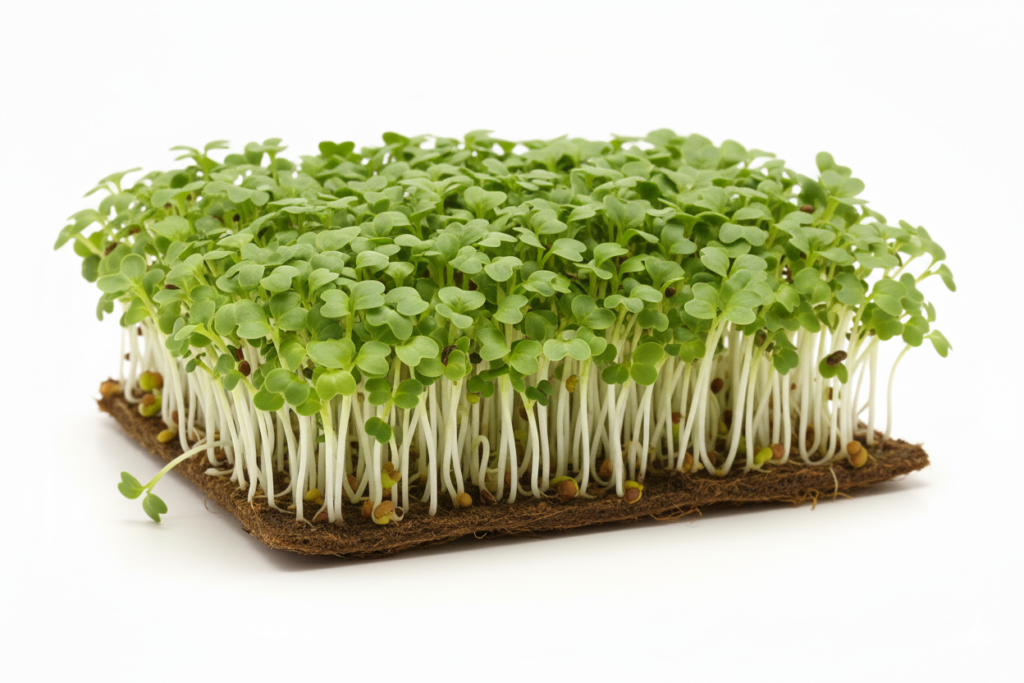
Flavor profile
Taste & aroma
Gentle, sweet, fresh - without bitterness and sharpness. Fresh, almost grassy aroma.
without bitterness and sharpness. It resembles the core of a young cabbage, the part that is usually eaten first
Fresh, slightly grassy, almost absent. It does not give a characteristic cabbage smell - this aroma appears only during heat treatment of adult leaves.
Juicy, tender - the stems give a pronounced crunch and keep their shape even under dressing. They don't get soggy as quickly as lettuce — valuable in sandwiches and tacos
Ripening and optimal harvest time
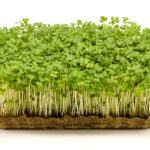
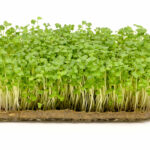
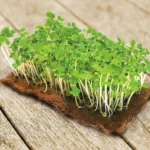
The cotyledons have opened, the taste is as delicate and sweet as possible.
Optimal: bright green color, crunch at its peak, sweetness is present.
The first real leaf appears, the taste becomes more "cabbage" and a little coarser.
Why flavor may vary batch to batch
The intensity of the taste depends on the growing temperature. At cool cultivation (+16...+18°C) sprouts are denser, the taste is more pronounced with a light cabbage bitterness. At warm (+22°C and above) — more delicate and juicier, but less intense. The concentration of glucosinolates is higher when it is cool.
Culinary use
How to use
Cabbage is a great culinary accent. Add fresh at the end of cooking or directly on the plate.
Tacos and shawarma
a handful instead of shredded cabbage - does not fall out, keeps its shape and looks neat
Coleslaw of a new generation
microgreens + carrots + apple + yogurt dressing — a gentler version of the classic salad
Sandwich with chicken
between the toast and the chicken is a crunch of cabbage without a sharp taste
Bowl
base + avocado + egg + any dressing — neutral greens give volume and do not compete with toppings
Side dish for steak or meatballs
a handful of fresh cabbage nearby — refreshes and balances fatness
Smoothies
in combination with apple, cucumber and lemon - does not give a cabbage taste, but adds nutrition
Perfect pairings
More convenient to use, more delicate in taste, looks neater
It does not get soggy between layers and remains crispy longer
Instead of shredded cabbage, it is softer and juicier
- Do not subject to heat treatment - the typical smell of boiled cabbage appears from heating and the crunch disappears
- Do not combine with very sharp or spicy flavors - neutral cabbage is simply lost, it is better to leave it in moderate combinations
- Do not cut after the appearance of a true leaf - the taste becomes noticeably rougher
Home storage
How to store
Cabbage keeps longer than most microgreens. Follow simple rules to keep it fresh for up to 14 days.
Refrigerator +4...+6°C. Cabbage is one of the hardiest crops. The term in the tray is up to 14 days.
Place in an open container or plate, cover with a damp paper towel. Don't seal — without air, greens yellow faster.
Don't wash until ready to eat. Wet greens spoil much faster. Rinse just before serving.
Pro tip: Cabbage is one of the easiest microcultures. Good for selling cut with a week's supply.
Nutrients & health
Benefits & composition
Cabbage is valued for its rich vitamin-mineral composition and bioactive compounds typical of microgreens.
Like most microgreens, cabbage contains a concentrated amount of nutrients relative to its weight — many times more than the mature plant.
| Protein | 2.5 g — building material for cells |
|---|---|
| Calories | ~28 kcal |
| Vitamins | C, K |
| Minerals | Potassium, Calcium, Magnesium |
- People taking blood thinners — because of the vitamin K content, should stick to a moderate amount and consult a doctor
- With diseases of the thyroid gland - cruciferous vegetables in large quantities in raw form can be relevant; moderate use is not a problem for most people, but for specific purposes, check with your doctor
This information is general in nature and is not medical advice. Composition data: USDA FoodData Central.
Worth knowing
Vitamin C
is contained in microgreen cabbage in a higher concentration than in adult leaves - young sprouts are traditionally richer in this vitamin.
Methylmethionine (vitamin U)
a compound that is specific to cabbage crops and practically does not occur in other plants. It is traditionally associated with the support of the mucous membrane of the gastrointestinal tract.
Glucosinolates
a class of antioxidants specific to cruciferous plants. The concentration in young sprouts is much higher than in an adult plant.
Vitamin K
is found in leafy green cabbage and is traditionally associated with the support of blood vessels and bone tissue.
Similar crops
Similar by taste microgreens
If you are looking to complement or replace Cabbage:
Cabbage: how to grow — step-by-step guide
Growing parameters, agronomy, common mistakesGrowing parameters
Small, round, dark brown
Step-by-step guide
Seed preparation
The seeds are small, round, without soaking. Sow dry.
Sowing
- Moisten the substrate evenly
- Spread the seeds in an even layer — 5 g gives a dense carpet with good ventilation
- Spray liberally on top from a spray bottle
- Press lightly with the palm of your hand
The norm of 5 g is slightly higher than the standard for cabbage (4 g in kale and broccoli). White cabbage has a slightly lower yield of mass and a smaller leaf, so denser sowing gives a better marketable appearance.
Clamp — 0.5–1 kg
Clamping is mandatory - without it, the stems grow crookedly and unevenly, the roots do not sink into the substrate properly.
- Empty tray on top + 0.5–1 kg
- Evenly over the entire surface
Darkness (Blackout) — 3–4 days
What is normal:
- On the 2nd to 3rd day, white thick fluff appears on the root — it's not mold. These are root hairs, characteristic of all cruciferous plants. They increase the area of moisture absorption. They dry up in the light and become invisible
- Equal friendly steps already on the 2nd day
What is NOT normal:
- True mold: black or green, with an unpleasant odor, appears on stems and leaves, not just on the roots
- Decay of the base of the stem → waterlogging. Reduce watering, improve ventilation
Watering: usually not needed. When drying out, lower watering through a pallet.
Vegetation in the light — 5–7 days
Lighting:
- LED phytolamps: 16–18 hours a day
- Natural light (windowsill): acceptable, but in the absence of it, the stems stretch out and turn pale
- In good lighting, the cotyledons are bright green, the stem is strong
Temperature: +18...+22°C. Cabbage is cold-resistant and grows in a wide range. At +24°C and above, growth accelerates, but stems may thin out.
Watering: 1 time a day, lower through the pallet. Avoid "swamp" - the substrate is moist, but without standing water.
Ventilation: daily ventilation is mandatory. Like all dense crucifers, it is prone to mold on the roots when the air stagnates.
Watering
- Water it 1-2 times a day (in the morning - necessarily, in the evening - if necessary)
- Lower watering is better; the top is permissible, but do not pour on the leaves
- Cabbage is a moderate water user similar to broccoli
- A sign of lack: the leaves will slightly wither and acquire a matte shade → pour through the tray
Storage
| Uncut in tray | Fridge +4...+6°C | up to 3 weeks |
|---|---|---|
| Cut in container | Refrigerator | up to 7 days |
| Room temperature | 1–2 days |
Harvest
- The cotyledons have fully opened and have a rich green color
- Height 6–8 cm
- The first real leaf has not yet appeared is a signal to cut immediately or already too late
With a knife or scissors under the root. The stems are juicy and easy to cut.
Immediately before use or sale.
Seasonal adjustments
- Soaking: reduce by 2–3 hours from the standard - the seeds are active in the heat
- Ventilation: open more often in the blackout phase to avoid excess moisture
- Watering: increase the frequency - the substrate dries faster at a higher temperature
- Expect: shortening of the cycle by 2–3 days, a more tender stem
- Soaking: increase by 2-3 hours from the standard - cold water is absorbed more slowly
- Placement: keep the trays in a warmer place (next to the battery, but not close to it)
- Watering: use water at room temperature—cold slows growth
- Expect: lengthening the cycle by 2-4 days, denser and more fragrant result
Water pH and EC
The optimal range for white cabbage: 6.0–7.0. Cabbage grows optimally in a slightly acidic-neutral environment. Like other crucifers, it is sensitive to pH above 7.5, where development may slow down.
Optimal range: 1.0–2.0 mS/cm. Regular tap water in most regions is perfect. High EC (>2.5) during long-term cultivation can cause browning of leaf edges.
Experienced grower tips
Ideal educational culture
Cabbage white-headed grows amicably, grows predictably and forgives the mistakes of a beginner. If you are teaching someone how to grow microgreens, start with it.
Fluff on the root - show it to the buyer
When selling a live tray, explain to the buyer that the white fluff on the root is a sign of a healthy plant. This increases trust and removes the question "is she not spoiled?"
Cabbage + mustard in a mix
70% white cabbage + 30% mustard green — a neutral base gets a spicy accent. Both cultures are identical in terms of agricultural technology and readiness at the same time.
Fast cycle to fill the assortment
8–11 days is one of the shortest cycles. When planning a weekly supply, cabbage fills well the "windows" between crops with a longer cycle.
Agronomy notes and common mistakes
- Sowing: No soaking. High density - uniform filling ensures an even carpet.
- Clamp: Light pressing (0.5 kg) for 1 day or without it at all.
- Temperature: +16...+22°C. At +24°C, the cabbage is extracted; at +14°C — grow slowly, but very tenderly.
- Watering: 1-2 times a day. At a cool temperature, once a day is enough.
- Ventilation: Mandatory. Chrysanthemums without air movement are prone to fungal lesions.
- Scared from root fluff → Considered moldy, throw away the tray → White fluff on the roots is the norm for cruciferous plants, not moldy
- Excessive sowing rate (>6 g) → Thickening, poor ventilation, rotting of the center → Observe the norm of 5 g
- Overflow → Rotting of the base of the stem → Bottom watering 1 time a day, without "swamp"
- Poor ventilation → Mildew with dense sowing → Daily airing
- Harvest delay → Harder leaf, cabbage taste → Cut with open cotyledons, to a real leaf
Variety selection
White-headed cabbage is early
Slava, Ditmarska, Rynda
Standard selection. Even shoots, neutral cabbage taste, stable germination.
Cabbage is medium ripe
Amager, Kolobok, Aggressor
Similar result. The difference between them for microgreens is minimal — the freshness of the seeds is important.
Що далі?
More crops in the catalog
Explore similar and contrasting flavors — from basil to amaranth