
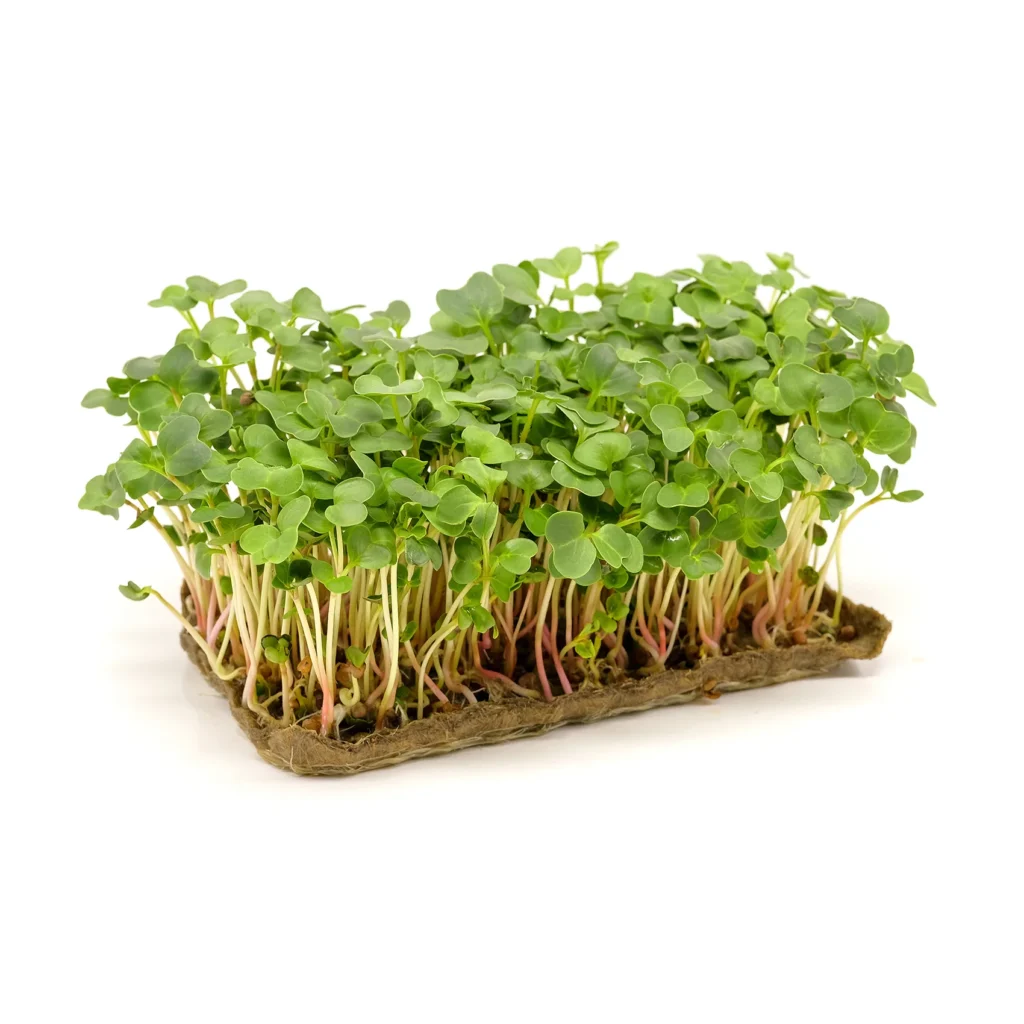
Flavor profile
Taste & aroma
Refreshing, spicy, sweet - identical to a young radish root. fragrance without earthy notes.
identical to a young radish root. The sharpness is distinct, but not burning: it invigorates and stimulates the appetite
The cheerful smell of spring salad. Clean, without earthy notes — a concentrated aroma of fresh radish.
Very elastic, crunches loudly. The stem is the most juicy and "meaty" among all radishes - thicker and denser than colored varieties
Ripening and optimal harvest time
The cotyledons are opened, the juicy white stem, the balanced sharpness is the optimal moment.
The first leaf appears, the sharpness intensifies, the stem lengthens.
Outgrows: it becomes "flaky", the taste loses its tenderness, the stem becomes coarse.
Why flavor may vary batch to batch
The intensity of the peppery taste of radish depends on the temperature and lighting. At cool cultivation (+14...+18°C) glucosinolates are concentrated higher — the taste is sharper and more pronounced. At warm (+22°C and above) - more tender and less spicy. The stage of the cut is also important: an early cut (5–6 days) is more tender, a late one (8–9 days) is sharper.
Culinary use
How to use
Radish (Green) is a great culinary accent. Add fresh at the end of cooking or directly on the plate.
Spring salad
green radish + cucumber + egg + green onion + sour cream — a classic in the format of microgreens without cutting
Okroshka on kefir or kvass
a handful of radish greens instead of chopped radishes—less work, same flavor
Sandwich or toast
a whole bunch instead of lettuce — "character" and crunch instead of a neutral base
Burger with cutlet
green radish between the meat and the bun — spiciness + texture that doesn't get soggy
For barbecue or barbecue
a handful of green radishes on the plate next to the meat instead of pickled onions
Gazpacho or cold borscht
green radish on top - spiciness and crunch in cold soup
Perfect pairings
Toast, sashimi, soup are the best combinations
Green radish replaces sliced radishes year-round — giving the same spiciness in a micro format
A bunch of green radish instead of a chopped root vegetable — a softer texture and more convenient serving
- Do not add to hot dishes - the spiciness disappears with the crunch from the heat
- Do not expect a decorative effect - if you need a bright color on the plate, choose China Rose, Red Koral or Sango
- Do not overdo it - one extra day and the green radish becomes "flaky" and too spicy
Home storage
How to store
Radish (Green) keeps longer than most microgreens. Follow simple rules to keep it fresh for up to 14 days.
Keep at +2...+5°C in the refrigerator. The term is up to 14 days. One of the lightest cultures — crunch and juiciness are preserved even after 2 weeks.
Hermetic container at +2...+5°C. The term is up to 12–14 days. Do not wash before storing. Wash immediately before use. ---
Don't wash until ready to eat. Wet greens spoil much faster. Rinse just before serving.
Pro tip: **Practical hint for the grower:** Green radish is the basic position of any assortment. The cheapest seeds among radishes, the simplest agricultural technology, the fastest cycle, excellent dormancy. If there is only one radish in the assortment, this is it. If there are all four, green is the most stable in terms of cost and is always profitable.
Nutrients & health
Benefits & composition
Radish (Green) is valued for its rich vitamin-mineral composition and bioactive compounds typical of microgreens.
Like most microgreens, radish (green) contains a concentrated amount of nutrients relative to its weight — many times more than the mature plant.
| Protein | 2.5 g — building material for cells |
|---|---|
| Calories | ~30 kcal |
| Vitamins | C, E |
| Minerals | Potassium |
- People with gastritis or peptic ulcer disease in the acute stage should use it sparingly - isothiocyanates can irritate the mucous membrane.
- Small children may not like the spiciness.
This information is general in nature and is not medical advice. Composition data: USDA FoodData Central.
Worth knowing
Contains sulfur
Sulfur in the composition of green radish is a nutrient that is traditionally included in the diet to maintain the health of the skin, hair and nails (synthesis of keratin and collagen). Silicon supports connective tissue. Vitamin C in a concentration of up to 45 mg per 100 g is a significant contribution to the daily norm.
Antioxidants and biologically active substances
Microgreens are a concentrated source of antioxidants — compounds that are being studied in the context of protecting cells from oxidative stress. Regular consumption of a variety of microgreens is part of a balanced plant-based diet.
Antioxidants and biologically active substances
Microgreens are a concentrated source of antioxidants — compounds that are being studied in the context of protecting cells from oxidative stress. Regular consumption of a variety of microgreens is part of a balanced plant-based diet.
Antioxidants and biologically active substances
Microgreens are a concentrated source of antioxidants — compounds that are being studied in the context of protecting cells from oxidative stress. Regular consumption of a variety of microgreens is part of a balanced plant-based diet.
Similar crops
Similar by taste microgreens
If you are looking to complement or replace Radish (Green):
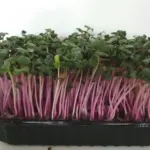
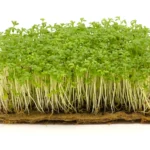
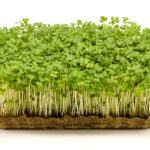
Radish (Green): how to grow — step-by-step guide
Growing parameters, agronomy, common mistakesGrowing parameters
Big, round
Step-by-step guide
Seed preparation
Green radish is not soaked. Large seeds germinate without preparation if the substrate is properly moistened.
Sowing
- Moisten the substrate evenly.
- Spread the seeds evenly. The norm is 7 g - due to the large size of the seeds, it is easy to control the uniformity "by eye". Do not stack grains on top of each other.
- Spray the surface with water from a spray bottle.
Green radish is the easiest start in microgreens in general. If you are growing for the first time or teaching someone, start with him. Large seed size, fast growth, distinct result in a week and minimal error cost.
Clamp - 0.5 kg (light)
Mandatory. Without clamping, the powerful radish roots remain on the surface and the sprouts grow unevenly or fall. 0.5 kg is enough. Stack the trays or place an empty box with a small load on top.
Darkness (Blackout) — 3–4 days
Radish is one of the fastest starters. The first sprouts appear already on the 2nd day.
Conditions:
- Complete darkness
- Temperature: +18...+22°C
- Watering is moderate, lower
Root hairs: in green radish, they are expressed the strongest among all radishes and all cabbages in general. On the 2nd or 3rd day, the entire substrate looks like it is covered with thick white "wool" - absolutely normal. One check: spray with water - the root hairs disappear ("melt"), the mold remains as cotton wool.
A sign of readiness: the sprouts have confidently raised the clamp, the height is 3–4 cm.
Vegetation in the light — 4–6 days
The main difference between green radish and colored varieties: it does not need to "pick up pigment". It turns green evenly and quickly with any sufficient lighting.
Lighting: unpretentious - even with moderate lighting, it gives a good green mass. Unlike Red Koral or Sango, brightness and color do not depend on the intensity of the lamp.
Speed: the most aggressive growth among all radishes. Monitor the condition of the cotyledons every day for the last 2 days - one extra day and it becomes "flaky".
Watering: moderate, lower. With a lack of moisture, it "lies down" in a few hours - but after timely watering, it gets back up. Don't do it systematically.
Watering
- Water it 1-2 times a day
- Bottom watering is better
- The parameters are similar to other varieties of radish
- A sign of lack: green color fades, burning increases → water and collect
Storage
| Uncut in tray | Fridge +4...+6°C | up to 3 weeks |
|---|---|---|
| Cut in container | Refrigerator | up to 7 days |
| Room temperature | 1–2 days |
Harvest
- Cotyledons are fully opened, deep green, elastic
- The stem is white or pale green, juicy, thick
- Height 6–8 cm
- The first real leaf has not yet appeared
Sharp knife under the root. Green radish is one of the heaviest microgreens by weight. Boxing cuts very quickly.
Rinse in cold water before serving. Dry in a salad spinner or with a paper towel. Do not wash before storing.
Seasonal adjustments
- Soaking: reduce by 2–3 hours from the standard - the seeds are active in the heat
- Ventilation: open more often in the blackout phase to avoid excess moisture
- Watering: increase the frequency - the substrate dries faster at a higher temperature
- Expect: shortening of the cycle by 2–3 days, a more tender stem
- Soaking: increase by 2-3 hours from the standard - cold water is absorbed more slowly
- Placement: keep the trays in a warmer place (next to the battery, but not close to it)
- Watering: use water at room temperature—cold slows growth
- Expect: lengthening the cycle by 2-4 days, denser and more fragrant result
Water pH and EC
The optimal range for Radish green: 5.8–7.0. Similar to other varieties of radish. The green color is a genetic feature, not a response to environmental pH.
Optimal range: 1.0–2.0 mS/cm. The parameters are identical to other varieties of radish. Mineralization does not significantly affect the taste of green radish.
Experienced grower tips
The thickest "white fluff" in the catalog - use it
Show the novice a tray of radish greens on day 2 and explain the difference between root hairs and mold. No other culture provides such a vivid example.
Follow up every day for the last 2 days
Green radish grows the most aggressively among all radishes. Set reminders for days 7 and 8 from seeding—this is a critical window.
"Lays down" and gets up - do not throw away
If the box has dried up and the radish has fallen, immediately fly through the pallet. If no more than 2-3 hours have passed, it will rise back up. If it has been several hours and the sheet has started to darken, the batch is lost.
Four radishes together = ready mix without effort
Sow green, China Rose, Red Koral and Sango simultaneously in four boxes. The green will be ready a little earlier - or leave it for another day while the colored ones "gain pigment". As a result, four colors, one shipping time.
Position as "radish all year round"
For a buyer who is not familiar with microgreens, a green radish is the simplest explanation: "it's the same radish, only young and without the root." The familiar taste removes the barrier of the first purchase.
Agronomy notes and common mistakes
- Sowing: No soaking. High density.
- Clamp: Light or no pressure.
- Temperature: +18...+24°C.
- Watering: 1-2 times a day.
- Ventilation: It is important. Prevention of "black leg".
- Panic due to "white fluff" → Grover throws out a healthy tray → Spray with water: root hairs will disappear - this is the thickest "fluff" of all crops
- Overgrowth → "Lobby" greens, rough texture, too sharp → Cut when the cotyledons are open, do not wait for a real leaf; monitor daily
- Thickened sowing (more than 8 g) → Thin weak stems, poor ventilation, rotting in the center → The norm is 7 g and no more
- Drying out → "Lays down" in 2–3 hours → Timely moderate watering; after watering gets up, if on time
- Color Expectation → Disappointment from the "uninteresting" white stem → Green radish — about taste and texture, not about color; for color - colored varieties
Variety selection
Daikon is green
Misato Green, Luobo
Massive thick stem, bright green color, milder sharpness than red varieties. It gives the maximum yield of mass and is stored the longest after cutting - up to 14 days in the refrigerator. Recommended choice for commercial cultivation.
Green radish for sowing
Green Radish, Chinese Green
Smaller stem, more pronounced spiciness, softer texture. Suitable for mixes where a green base with a sharp accent is needed without an advantage in volume over other components.
Що далі?
More crops in the catalog
Explore similar and contrasting flavors — from basil to amaranth