
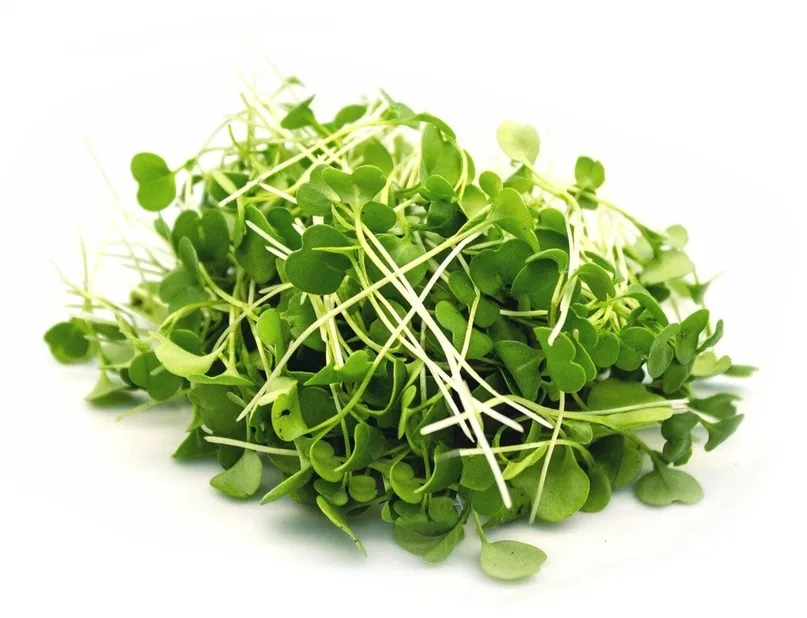
Flavor profile
Taste & aroma
Sweet, mustardy, fresh - like young cabbage - with a slight mustard aftertaste that appears at the end. Grassy, unobtrusive aroma.
like young cabbage - with a light mustard aftertaste that appears at the end. The sharpness is delicate: it is felt, but it does not burn and does not dominate
Grassy, unobtrusive, fresh. Without harshness - a light cabbage aroma with a hint of mustard.
Tender leaves on a crispy juicy stem. There is a crunch, but not as expressive and loud as radish
Ripening and optimal harvest time
The cotyledons are opened, the taste is balanced, the sharpness is light - the optimal moment.
A real leaf with villi appears, the sharpness somewhat increases.
The leaf turns yellow and becomes coarser, the marketability decreases.
Why flavor may vary batch to batch
The taste of microgreen turnips — tender, with a slight cabbage bitterness — depends on the temperature. At cool cultivation (+16...+18°C) sprouts are denser and more pronounced. At warm (+22°C and above) - more delicate and almost neutral. This is one of the fastest microgreens — ready in 5-6 days.
Culinary use
How to use
Turnip is a great culinary accent. Add fresh at the end of cooking or directly on the plate.
Spring salad with cucumber and egg
turnips instead of or together with lettuce leaves - crunch and freshness without fluffiness
Sandwich with grilled chicken
a layer of turnips between chicken and bread — freshness and light piquancy
Broccoli or cauliflower cream soup
a handful of turnips on top as a textural contrast to the creamy base
Toast with poached egg and avocado
turnips next to or on top — a slight spiciness balances the fattiness of the avocado
Omelet or scrambled eggs
a handful of turnips on top is a garnish that emphasizes, not interrupts
Vegetable plate with hummus
turnip as one of the "chips" for dipping - a crunchy and savory alternative to crudita
Perfect pairings
Turnip adds volume and crunch without a sharp flavor accent
Replaces iceberg leaves - the same freshness and crunch, but with a slightly spicy shade
The slight spiciness of the turnip emphasizes the oiliness and contrasts with the delicate cheese or egg
- Do not add to hot dishes - the tender leaves will instantly wilt from the heat
- Do not expect a distinct sharp accent - if you need the sharpness of radish or mustard, turnip will not replace
- Do not overdo it - yellow leaves and a hard stem spoil both the appearance and the taste
Home storage
How to store
Turnip keeps longer than most microgreens. Follow simple rules to keep it fresh for up to 10–12 days.
Keep at +2...+5°C in the refrigerator. The term is up to 10–12 days.
Place in an open container or plate, cover with a damp paper towel. Don't seal — without air, greens yellow faster.
Don't wash until ready to eat. Wet greens spoil much faster. Rinse just before serving.
Pro tip: **Practical Grower Hint:** Turnips are a reliable crop for expanding your range. It occupies a niche between broccoli (the mildest) and radish (the sharpest) and complements both well in mixes. Position for customers who find "radish too spicy and broccoli too fresh."
Nutrients & health
Benefits & composition
Turnip is valued for its rich vitamin-mineral composition and bioactive compounds typical of microgreens.
Like most microgreens, turnip contains a concentrated amount of nutrients relative to its weight — many times more than the mature plant.
| Protein | 2.0 g — building material for cells |
|---|---|
| Calories | ~22 kcal |
| Vitamins | K, C, A |
| Minerals | Calcium, Potassium, Magnesium |
- People with individual intolerance to cruciferous vegetables (cabbage, broccoli, radish, mustard) turnip belongs to the same family.
- People taking anticoagulants should consider the total intake of greens with vitamin K.
This information is general in nature and is not medical advice. Composition data: USDA FoodData Central.
Worth knowing
Calcium in the composition
Calcium in turnips is one of the highest indicators among cruciferous microgreens. Vitamin K is traditionally included in the diet to support bone health and normal blood clotting. The culture is very low-calorie (~29 kcal) and can be used in any quantity.
Antioxidants and biologically active substances
Microgreens are a concentrated source of antioxidants — compounds that are being studied in the context of protecting cells from oxidative stress. Regular consumption of a variety of microgreens is part of a balanced plant-based diet.
Antioxidants and biologically active substances
Microgreens are a concentrated source of antioxidants — compounds that are being studied in the context of protecting cells from oxidative stress. Regular consumption of a variety of microgreens is part of a balanced plant-based diet.
Antioxidants and biologically active substances
Microgreens are a concentrated source of antioxidants — compounds that are being studied in the context of protecting cells from oxidative stress. Regular consumption of a variety of microgreens is part of a balanced plant-based diet.
Similar crops
Similar by taste microgreens
If you are looking to complement or replace Turnip:
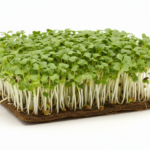
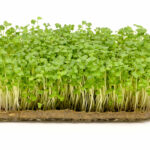
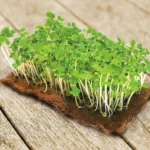
Turnip: how to grow — step-by-step guide
Growing parameters, agronomy, common mistakesGrowing parameters
Small, round (cabbage)
Step-by-step guide
Seed preparation
Turnips are not soaked. Small cabbage seeds germinate without preliminary treatment.
Sowing
- Moisten the substrate evenly.
- Spread the seeds evenly. The norm of 1.5–1.8 g is critically important. Turnip seeds are small, and this is where growers most often make a mistake: they sow "by eye, like a radish" and get a thickened crop with inevitable mold on the 4th day.
- Spray the surface with water from a spray gun - "fog", evenly.
Main error: thickened sowing. If turnip seeds are sown thickly (like radish — 6–7 g), a suffocating environment without aeration will form in the center of the box and mold or rot will begin. 1.5–1.8 g — and no more. Turnips are visually very similar to broccoli in the finished form. If you grow both crops, sign the boxes when sowing to avoid confusion. At the stage of cotyledons, it is difficult to distinguish them even for an experienced grower.
Clamp — 1–2 kg (average)
Clamping is important for small turnip seeds. Without it, sprouts grow unevenly - "helicopters" (seeds remain on the leaves) and fall. An average pressure of 1–2 kg helps the fine root to quickly sink into the substrate.
Darkness (Blackout) — 3–4 days
Conditions:
- Complete darkness
- Temperature: +18...+22°C
- Watering is moderate, low - turnip does not drink water as actively as sunflower or mung bean; overflow leads to vitreousness of the stem and rotting
On the 2nd to 3rd day, white fluff of the root hairs appears — the norm for cruciferous plants. Test: sprinkle with water - they will disappear.
A sign of readiness: the sprouts have raised the clamp, the height is 3–4 cm.
Vegetation in the light — 5–7 days
Lighting: standard, 16 hours a day. Turnips do not require super-powerful light, but when there is a lack of it, they stretch out a lot. It is optimal to expose to light when the height of the sprout is 3–4 cm.
Ventilation: important With high air humidity in the room, black spots may appear on the leaves (alternaria or false powdery mildew). Air circulation solves this problem.
Watering: moderate, lower. Culture consumes water moderately - without excess.
When to cut: before the appearance of the first real leaf with villi. Formed bright green cotyledons are the optimal stage of collection.
Watering
- Water it 1-2 times a day (in the morning - necessarily, in the evening - if necessary)
- Lower watering is better; the upper one is allowed carefully
- Turnip is a moderate water user, similar to kohlrabi
- A sign of lack: the leaves curl slightly and acquire a matte shade → water
Storage
| Uncut in tray | Fridge +4...+6°C | up to 3 weeks |
|---|---|---|
| Cut in container | Refrigerator | up to 7 days |
| Room temperature | 1–2 days |
Harvest
- Cotyledons are fully opened, bright green
- Height 5–7 cm
- Before the appearance of the first real leaf with villi - it signals that "it should have been cut yesterday"
Sharp knife or scissors under the root. Stems are more delicate than radishes - a neat cut is important for storage.
Rinse in cold water before serving. Dry easily - delicate leaves are easily deformed.
Seasonal adjustments
- Soaking: reduce by 2–3 hours from the standard - the seeds are active in the heat
- Ventilation: open more often in the blackout phase to avoid excess moisture
- Watering: increase the frequency - the substrate dries faster at a higher temperature
- Expect: shortening of the cycle by 2–3 days, a more tender stem
- Soaking: increase by 2-3 hours from the standard - cold water is absorbed more slowly
- Placement: keep the trays in a warmer place (next to the battery, but not close to it)
- Watering: use water at room temperature—cold slows growth
- Expect: lengthening the cycle by 2-4 days, denser and more fragrant result
Water pH and EC
The optimal range for turnips / turnips: 6.0–7.0. Turnip grows optimally in a weakly acidic-neutral environment. Like other crucifers, it tolerates ordinary tap water well.
Optimal range: 1.0–2.0 mS/cm. The average consumer of minerals. The parameters are identical to kohlrabi and broccoli.
Experienced grower tips
Weigh the seeds - do not sow "by eye"
1.5–1.8 g is very little. Growers who do not have kitchen scales are constantly reseeding turnips. Buy scales with an accuracy of 0.1 g - this is a basic tool for all small-seeded crops (turnips, broccoli, basil, mint).
Sign boxes when sowing without exception
Turnips and broccoli at the cotyledon stage are identical. If you grow both crops, after 10 days without a signature you will not know what is in which box. This is critical for proper sales positioning.
Turnip + broccoli + mizuna = basic soft mix
Three crops with the same agricultural technology and close cycles. Together, they give volume, a different shape of the leaf and a smooth taste gradient from neutral to moderately spicy. The perfect base mix for customers who "don't like spicy".
Ventilation — prevention of black spots
Unlike radishes, turnips are prone to fungal leaf diseases in high humidity. Install a small fan or regularly ventilate the room - the problem will disappear.
Position as "soft radish"
For customers who find radishes "too sharp", turnips are an ideal alternative. The same crunch and freshness, but without burning. This message works well when explaining the range to new customers.
Agronomy notes and common mistakes
- Sowing: No soaking. High-medium density.
- Clamp: Light or no pressure.
- Temperature: +16...+20°C. Cool conditions emphasize the delicacy of the taste.
- Watering: 1-2 times a day. Similarly kohlrabi.
- Ventilation: It is important. Prevention of cruciferous diseases.
- Thickened sowing (more than 2 g) → Mold in the center of the box on the 4th day → Strictly adhere to the norm of 1.5–1.8 g; to weigh on the scales
- High humidity in the room → Black dots on leaves (Alternaria) → Provide ventilation; reduce room humidity
- Overflow → Vitrification of the stem, rotting at the base → Moderate bottom watering; turnip drinks less than radish
- Delay → Leaves turn yellow and coarsen → Cut when the cotyledons are bright green to a true leaf
- Weak lighting → Elongated pale sprouts → Expose to light at a height of 3–4 cm, standard lighting 16 h/day
- Broccoli Confusion → Confused boxes → Sign when seeding; it is almost impossible to distinguish at the cotyledon stage
Variety selection
Turnip is common
Early May, Sapphire, Goldball
A classic choice. Mild cabbage bitterness, even germination, stable germination.
Hakurei Japanese turnip
Hakurei, Tokinashi
Softer and sweeter taste. Smaller seeds, flatter sprouts are a popular choice for restaurants.
Що далі?
More crops in the catalog
Explore similar and contrasting flavors — from basil to amaranth