
Flavor profile
Taste & aroma
Fresh, cabbage, mustard - the same pleasant pepper, but much softer and more delicate. Neutral fragrance.
the same pleasant pepper, but much softer and more delicate. It does not dominate and does not interrupt, but adds depth
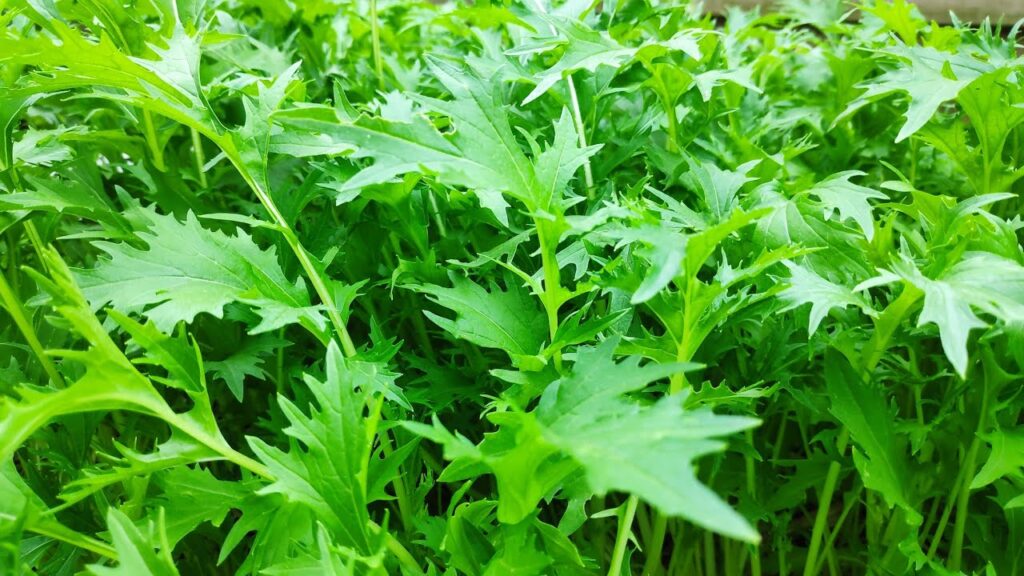
Neutral, grassy. The aroma is not the main feature of mizuna - it plays with the texture and shape of the leaf.
Gentle, Elastic, Thin - prevents the leaves from sticking together and creates volume. The carved edge of the leaf is the main decorative advantage of the culture
Why flavor may vary batch to batch
The pepper-mustard taste of mizuna is formed by glucosinolates. The intensity depends on the temperature: at cool cultivation (+14...+18°C) the taste is more pronounced, sharp. At warm (+22°C and above) - softer, less spicy, but the sprouts are more tender. Mizuna is a cold-loving culture; best quality in autumn and winter.
Culinary use
How to use
Mizuna (Green) is a great culinary accent. Add fresh at the end of cooking or directly on the plate.
Beef or salmon carpaccio
mizuna on top instead of arugula — a more sophisticated look, milder taste
Steak or duck breast
a handful of mizuna next to it when serving - the mustard note emphasizes the meat
Bowl or poke
mizuna as the top layer — volume and openwork in the photo and in practice
Asian mix
mizuna + pak choi + cilantro — the entire flavor spectrum of Japanese cuisine in one plate
Tuna or chicken sandwich
the mizuna between the layers is crunchy without too much flavor
Mixed greens for a restaurant
30% mizuna + 40% peas + 30% sunflower — a balance of textures and volume
Perfect pairings
Mizuna is an ideal component of mix-microgreens, does not stick together and keeps its shape for a long time
The carved leaf looks natural and elegant
A simpler alternative to endive for those who don't want bitterness
- Do not cut at the cotyledon stage - rounded leaves without carving are no different from cabbage and have no product uniqueness
- Do not add to hot dishes - delicate carved leaves are instantly boiled and lose their shape
- Don't expect a lot of spiciness - mustard or watercress is better for a spicy kick; mizuna is much softer
Home storage
How to store
Mizuna (Green) keeps longer than most microgreens. Follow simple rules to keep it fresh for up to 14 days.
Refrigerator +4...+6°C. The term is up to 14 days. Cut just before serving.
Place in an open container or plate, cover with a damp paper towel. Don't seal — without air, greens yellow faster.
Don't wash until ready to eat. Wet greens spoil much faster. Rinse just before serving.
Nutrients & health
Benefits & composition
Mizuna (Green) is valued for its rich vitamin-mineral composition and bioactive compounds typical of microgreens.
Like most microgreens, mizuna (green) contains a concentrated amount of nutrients relative to its weight — many times more than the mature plant.
| Protein | 2.0 g — building material for cells |
|---|---|
| Calories | ~25 kcal |
| Vitamins | K, A |
| Minerals | Potassium, Calcium, Iron |
- People taking blood thinners — because of the vitamin K content, should stick to a moderate amount and consult a doctor
- With diseases of the thyroid gland - cruciferous vegetables in large quantities in raw form can be relevant; moderate use is not a problem for most people, but for specific purposes, check with your doctor
This information is general in nature and is not medical advice. Composition data: USDA FoodData Central.
Worth knowing
Vitamin K
found in mizuna in noticeable quantities — as in most leafy greens, it is traditionally associated with the support of blood vessels and bone tissue.
Beta-carotene (vitamin A)
mizuna is a plant source of this antioxidant. It is better absorbed in combination with a small amount of fat (olive oil, avocado).
Glucosinolates
antioxidants characteristic of cruciferous plants. They are responsible for the light mustard piquancy of mizuna.
Antioxidants and biologically active substances
Microgreens are a concentrated source of antioxidants — compounds that are being studied in the context of protecting cells from oxidative stress. Regular consumption of a variety of microgreens is part of a balanced plant-based diet.
Similar crops
Similar by taste microgreens
If you are looking to complement or replace Mizuna (Green):
Mizuna (Green): how to grow — step-by-step guide
Growing parameters, agronomy, common mistakesGrowing parameters
Small, round, cabbage type
Step-by-step guide
Seed preparation
The seeds are small, cabbage type. No soaking. Sow dry.
Sowing
- Moisten the substrate evenly
- Sprinkle 3 g seeds evenly
- Spray liberally from a spray bottle
- Press lightly with the palm of your hand
The norm of 3 g is a little less than that of white cabbage (5 g) or broccoli (4 g). The mizuna forms a wide carved leaf that needs more space to open. With thickened sowing (> 3 g), the stems are thin and the leaves do not open completely - the main visual advantage of the culture is lost.
Clamp — 0.5 kg
Light pressure is enough for the roots to cling to the substrate. You can simply put the trays in a stack.
Darkness (Blackout) — 3–4 days
What is normal:
- White thick fluff on the roots for 2-3 days — root hairs, not mold. Characteristic for all cruciferous plants. When sprayed with water, they disappear or become invisible
- Equal friendly steps already on the 2nd day
What is NOT normal:
- Mold with an unpleasant smell on the stems is real mold: ventilate, check humidity
- Decay of the base of the stem → waterlogging
Watering: usually not needed. When drying - the lower one through the pallet.
Vegetation in the light — 6–8 days
Lighting:
- LED phytolamps: 16–18 hours a day
- Natural light: acceptable - mizuna is undemanding to intensity
- With a lack of light, the stems are elongated, but the carved leaf is still formed
Temperature: +18...+22°C. Mizuna is cold-resistant, grows in a wide range.
Watering: 1 time a day, lower through the pallet. Moderate - does not like waterlogging.
Ventilation: daily ventilation. Like all crucifers, there is a risk of mold in stagnant air.
Key point: take your time to cut. Mizuna reveals its beauty only with the first carved leaf. At the cotyledon stage, it is just green cabbage without any uniqueness.
Watering
- Water it 1-2 times a day (in the morning - necessarily, in the evening - if necessary)
- Bottom watering is better - mizuna is tender and does not like wet leaves
- Moderate humidity: do not overmoisten
- A sign of lack: lacy leaves slightly curl and fade → pour through tray
Storage
| Uncut in tray | Fridge +4...+6°C | up to 3 weeks |
|---|---|---|
| Cut in container | Refrigerator | up to 7 days |
| Room temperature | 1–2 days |
Harvest
- The first real carved leaf with sharp edges appeared
- Height 6–8 cm
- When touched, the leaf is elastic, not limp
Under the root, with a knife or scissors.
Immediately before use or sale.
Seasonal adjustments
- Spiciness: mizuna tolerates heat better than kale or endive, but the sharpness of mustard at +26°C and above is noticeably stronger - cut earlier
- Cycle: shortens for 1-2 days, watch for the opening of the first carved leaf
- Watering: increase the frequency - the substrate dries out faster, overflow in the heat threatens with rotting of the base
- Ventilation: daily mandatory in the blackout phase, otherwise mold in the thick crop
- Expect: brighter, sharper taste and thinner stem
- Ideal season: the coolness softens the sharpness and gives a balanced, delicate profile - this is the peak of mizuna quality
- Cycle: lengthens by 1–2 days, but the carved sheet is formed smoother and more beautiful
- Expect: denser stem, pronounced magnificence of the leaf, long shelf life after cutting
Water pH and EC
The optimal range for the mizuna: 6.0–6.8. Like cabbage, mizuna prefers a slightly acidic environment. Regular tap water is usually fine.
Optimal range: 1.0–1.5 mS/cm. Mizuna is unpretentious to nutrition. Excess nitrogen can increase pungency — consider this when growing hydroponically.
Experienced grower tips
The carved leaf is the main argument for the price
Explain to the buyer the difference between mizuna at the cotyledon stage and at the true leaf stage. This justifies the higher price and longer cycle.
Mizuna in the mix is a mandatory component
20–30% mizuna in any mix turns a dense mass into a lush voluminous salad. This is the easiest way to increase the attractiveness of a mixed product without changing the taste.
Green + red mizuna together
The pair are identical in terms of agricultural technology and readiness time. In the mix, green and red mizuna provide a bright color contrast with an identical taste - effective and simple.
"Workhorse" of the farm
Mizuna is unpretentious, gives a stable result and is well stored. If you need a reliable crop for a weekly supply, mizuna is one of the best options, along with broccoli and cabbage.
Agronomy notes and common mistakes
- Sowing: No soaking. Medium-high density. Even distribution for an even carpet.
- Clamp: Light or no pressure.
- Temperature: +15...+20°C. Coolness is ideal for the delicate taste of mizuna.
- Watering: 1-2 times a day. When it's cool, once a day is enough.
- Ventilation: Important: crucifers without air movement are prone to fungal damage.
- An early cut at the cotyledon stage → Round leaves without carving — no product uniqueness → Wait for the first carved leaf
- Fluff/mold confusion → Throw away healthy trays → White fluff on the roots is the norm for cruciferous plants
- Thickened sowing (>3 g) → Thin stems, leaves do not open completely → Strictly 3 g
- Overflow → Rotting of the base → Bottom watering, moderately
- Poor ventilation → Mildew in dense crops → Daily airing
Variety selection
Mizuna is green
Early Mizuna, Kyoto Mizuna
Standard selection. Gentle spicy bitterness, carved leaves, even germination.
Mizuna is broad-leaved
Broadleaf Mizuna, Komatsuna type
Wider leaves and greater yield of mass. The taste is a little softer - suitable for a less spicy profile.
Що далі?
More crops in the catalog
Explore similar and contrasting flavors — from basil to amaranth