
Flavor profile
Taste & aroma
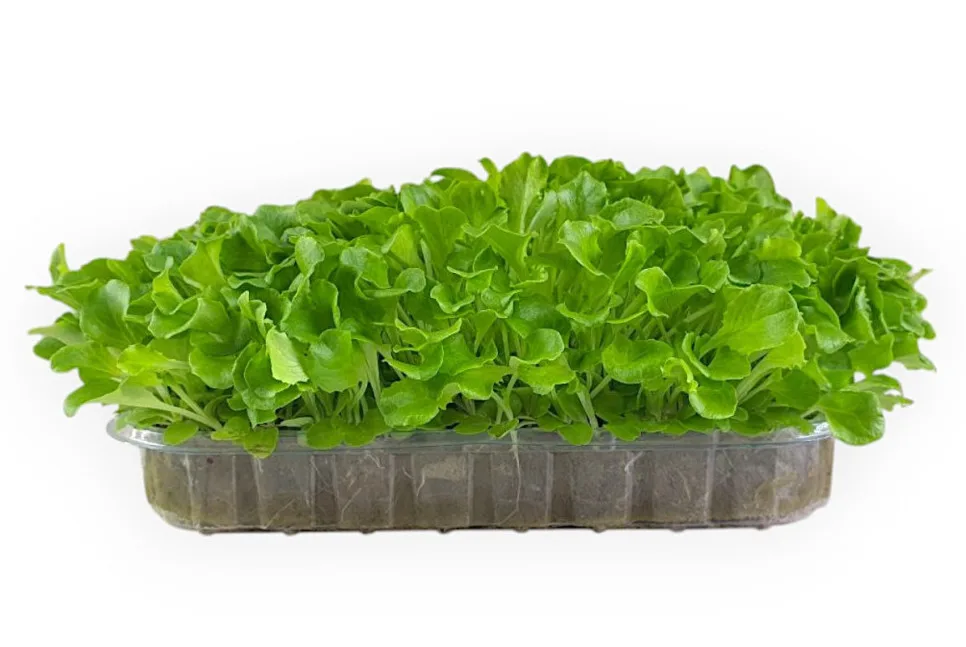
Fresh, bitter, chicory - not sharp and not unpleasant, it is a deep chicory taste, similar to young radicchio or leaf chicory. Fresh, grassy aroma.
not sharp and not unpleasant, it is a deep chicory flavor, similar to young radicchio or leaf chicory. With the right combination, it emphasizes sweet and fatty flavors, and does not compete with them
Fresh, grassy, neutral. Aroma is not the main characteristic of endive - it plays with taste and texture.
Tender, Springy, Leafy - they do not fall off from the dressing and do not wither quickly on the plate. The carved lacy edge of the leaf creates a natural volume in the salad without additional effort
Ripening and optimal harvest time
Cotyledons: the leaves are flat, the bitterness is barely perceptible, it looks like an ordinary grass.
The first real carved leaves: the bitterness is fully manifested, the lacy shape becomes expressive - this is the product for which endive is grown.
Bitterness can increase, especially during warm cultivation.
Why flavor may vary batch to batch
The intensity of bitterness of endive depends on the growing temperature. When grown in a cool environment (+16...+20°C), the bitterness is mild and balanced. When it is warm (+24°C and above) it is sharper and more intense. This is one of the reasons why endive is considered a "cool" culture.
Culinary use
How to use
Endive is a great culinary accent. Add fresh at the end of cooking or directly on the plate.
Salad with pear and gorgonzola
endive as a base — pear gives sweetness, gorgonzola spiciness, walnuts crunch. Classics of French cuisine in a micro-format
Bruschetta with salmon
a layer of cream cheese, a thin layer of salmon, a handful of endive - the bitterness balances the fat
Avocado bowl
endive + avocado + poached egg + lemon dressing. The bitterness of the greens contrasts with the creaminess of the avocado
Salad with orange
orange segments + endive + olive oil + salt. Simple and effective - citrus softens bitterness
Serve with steak or duck
a handful of endive next to fatty meat instead of a traditional salad is refreshing and balancing
Mix with neutral greens
30% endive + 70% peas or sunflower - bitterness is felt, but not dominant
Perfect pairings
Endive and blue cheese is a classic gastronomic combination with the contrast of bitter and salty
Honey-mustard or orange dressing is a classic for endive salads
This is the same role played by lemon or capers, but in a green format
- Do not serve endive without dressing or a combination - bitterness is perceived sharply on its own, a balance is needed
- Do not add to dishes with an already bitter profile (for example, with arugula and watercress at the same time) - accumulation of bitterness
- Do not cut before the appearance of real leaves - at the cotyledon stage, endive looks like an ordinary grass and has neither a lacy shape nor a pronounced taste
Home storage
How to store
Endive keeps longer than most microgreens. Follow simple rules to keep it fresh for up to 7–9 days.
Refrigerator +4...+6°C. The term is up to 7–9 days in the tray. Endive tolerates standard storage conditions well, unlike basil.
Tightly closed container, refrigerator +4...+6°C. The term is 7–9 days. Endive keeps its shape better than most tender crops, but it quickly loses turgor in an open container.
Don't wash until ready to eat. Wet greens spoil much faster. Rinse just before serving.
Pro tip: Cut endive should be stored in a **tightly closed** container - leaves that are open quickly wither and lose elasticity. This is one of the few crops where airtightness during storage is beneficial.
Nutrients & health
Benefits & composition
Endive is valued for its rich vitamin-mineral composition and bioactive compounds typical of microgreens.
Like most microgreens, endive contains a concentrated amount of nutrients relative to its weight — many times more than the mature plant.
| Protein | 1.8 g — building material for cells |
|---|---|
| Calories | ~30 kcal |
| Vitamins | A |
| Minerals | Potassium, Calcium, Iron |
- Younger children usually do not like the bitter taste - it is better to start with more neutral cultures
- People taking blood thinners — because of the vitamin K content, should stick to a moderate amount and consult a doctor
This information is general in nature and is not medical advice. Composition data: USDA FoodData Central.
Worth knowing
Intibin
a bitter compound that gives endive its characteristic taste. It is traditionally associated with appetite stimulation and digestion support. It is this substance that distinguishes endive from most neutral microcultures.
Inulin
a natural prebiotic contained in chicory cultures. It is a source of nutrition for beneficial intestinal microflora and is traditionally associated with digestion support.
Folic acid (B9)
present in green endive is a vitamin that is traditionally considered an important element of the diet during pregnancy planning.
Vitamin K
found in leafy greens — traditionally associated with vascular support.
Similar crops
Similar by taste microgreens
If you are looking to complement or replace Endive:
Endive: how to grow — step-by-step guide
Growing parameters, agronomy, common mistakesGrowing parameters
Small, elongated, light brown
Step-by-step guide
Seed preparation
Endive seeds are small and do not need to be soaked. Sow dry.
The only preparation is to make sure the seeds are fresh: endive has a relatively short germination shelf life compared to large-seeded crops. Old seeds give uneven sprouts and "bald heads" on the tray.
Sowing
- Moisten the substrate evenly
- Spread the seeds as evenly as possible — 1.7–1.8 g is very little, the seeds are small and few
- Press lightly with the palm of your hand to make contact with the substrate
Uneven sowing is the main cause of "forest" in one corner and baldness in another. Spend more time on this step than you think is necessary.
To distribute the fine seed evenly throughout the tray, mix it with a small amount of dry vermiculite before sowing. Light vermiculite is clearly visible and helps to control the uniformity - immediately visible places where there is dense and where empty. After sowing, vermiculite also holds moisture near the seed.
Clamp — 0.5 kg
The pressure is light - it is enough for the roots to cling to the substrate. More weight can damage the tender endive seedlings.
- Empty tray on top + 0.5 kg (for example, a small board or a light load)
- Evenly over the entire surface
Darkness (Blackout) — 3–4 days
Temperature +18...+20°C — endive is a cold-resistant culture, and this is its advantage. At +24°C and above, growth accelerates, but bitterness increases and the leaf becomes less dense.
What is normal:
- Slower growth compared to radishes or peas - endive takes its time
- Uneven height - evens out in the light
What is NOT normal:
- Decay of the base of the stems → waterlogging or too dense sowing. Ventilate, reduce the rate next time
- Zero germination on the 4th day → check the quality and freshness of the seeds
Watering: usually not needed. When the edges are dry, lower watering through a tray.
Vegetation in the light — 7–10 days
Lighting:
- LED phytolamps: 16–18 hours a day — for dense curly leaves
- Natural light (windowsill): acceptable, but the leaf will be less dense and curly
- With a lack of light, the leaves are elongated and lose their characteristic carved shape
Temperature is an important parameter for taste:
- Optimum: +18...+20°C
- At +24°C and above: bitterness increases noticeably, the leaf may become looser
- Endive is one of the few microcultures where a cool room gives better results
Watering:
- 1 time a day, lower through the pallet
- Thin stems of endive are sensitive to overmoistening - the substrate should be moist, but not wet
The key point is when to put up for sale: endive reveals its beauty only with the appearance of real carved leaves. At the cotyledon stage, it is just grass without character. You need patience and another 3-4 days after the first real leaves.
Watering
- Water it 1-2 times a day (in the morning - necessarily, in the evening - if necessary)
- Bottom or careful top watering
- Endive is a cool culture: at +18°C, water less often
- A sign of lack: lacy leaves slightly curl and fade → pour through tray
Storage
| Uncut in tray | Fridge +4...+6°C | up to 3 weeks |
|---|---|---|
| Cut in container | Refrigerator | up to 7 days |
| Room temperature | 1–2 days |
Harvest
- 1–2 true carved leaves have formed — this is the main sign of readiness
- The edge of the sheet has a distinct lacy shape
- The stem is elastic, not watery
In the cotyledon stage, endive looks like any other herb - neither lacy leaves nor pronounced taste. It is for this that he is paid more - wait for the real letter.
Use a sharp knife as carefully as possible - the leaves are tender and crumple easily.
Seasonal adjustments
- Bitterness: grows sharply in the heat - cut 1-2 days before the optimal time, while the taste is still balanced
- Placement: keep in the coolest part of the room - endive is a cold-resistant crop, summer is the most difficult season for it
- Watering: moderate, without overmoistening - heat increases the risk of mold
- Vegetation: shorten the observation - the cycle is accelerated by 1-2 days
- Expect: more pronounced bitterness and less dense leaves compared to the cold season
- This is the best season for endive: soft balanced bitterness and dense curly leaves
- Expect: lengthening the cycle by 2-3 days, but the quality and appearance are higher
- Placement: without special requirements - endive tolerates coolness well
Water pH and EC
The optimal range for Endive: 5.5–7.0. Endive is not picky about pH. A cool temperature is more important than the chemical parameters of cultivation.
Optimal range: 1.0–1.8 mS/cm. Moderate mineralization is ideal. The level of bitterness of endive depends on the temperature and time of collection, not on EC.
Experienced grower tips
Take your time
Endive is a culture for the patient. Those who cut at the cotyledon stage get an uninteresting product. Wait for the carved letter — and you will get something worth paying a higher price for.
Coolness = quality
Unlike most microcultures, endive does better at lower temperatures. If there is an opportunity to allocate a cool zone (+16...+18°C), endive there.
Mix with sweet herbs
25-30% endive in a mix with peas or sunflower - the bitterness is felt as a pleasant accent, but not dominant. A good way to introduce the buyer to the culture.
Dense container when sold cut
Endive in an open package withers much faster than in a closed one. If you sell it cut, airtight packaging is mandatory.
Agronomy notes and common mistakes
- Sowing: No soaking. Medium-high density.
- Clamp: Light or no pressure.
- Temperature: +15...+20°C. Coolness is perfect. At +24°C, endive is drawn out and becomes more bitter.
- Watering: 1-2 times a day. When it's cool, once a day is enough.
- Ventilation: moderate
- Uneven sowing → "Forest" in one corner, bald spots in another → Mix with vermiculite, distribute slowly
- Cut too early → Smooth leaves without carving, weak taste → Wait for the appearance of real carved leaves
- Exceeding the sowing rate → Rotting, poor ventilation → Strictly 1.7–1.8 g — culture is economical
- Cultivation at +24°C and above → Excessive bitterness, loose leaf → Keep at +18...+20°C
- Overflow → Black leg, rotting of thin stems → Moderate bottom watering, good ventilation
- Storing the cut in an open container → Rapid wilting → Tightly closed container
Variety selection
Curly endive
Paul Guerin, New Pulmet
A classic choice for microgreens. Light bitterness, curly leaves, even germination are characteristic.
Broad-leaved endive (Escarole)
Fullheart Batavian, Nuvol
Wider and straighter leaves, slightly less bitterness. Suitable for mixes where a milder bitterness is required.
Що далі?
More crops in the catalog
Explore similar and contrasting flavors — from basil to amaranth