Flavor profile
Taste & aroma
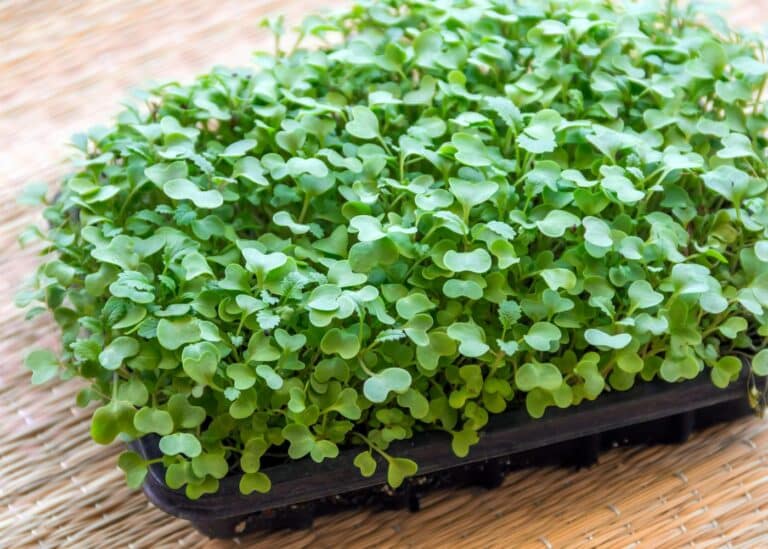
Sweet, fresh, cabbage - somewhere between young broccoli and spinach, but lighter than both. Fresh, almost grassy aroma.
somewhere between young broccoli and spinach, but lighter than both. Without bitterness and without sharpness, which are characteristic of adult leaves
Fresh, almost grassy, almost neutral. A light cabbage note is felt only when sniffing carefully - it does not dominate and does not interrupt other ingredients.
Juicy, Tender, Crisp - especially characteristic of the Red Russian variety with purple or pink veins. The leaves are delicate, carved, keep their shape even after filling
Ripening and optimal harvest time
The cotyledons have opened, the taste is the most delicate and sweetest, the cabbage note is minimal.
The optimal moment: the first carved leaf begins to form, the taste is balanced.
A pronounced real leaf appears, the taste becomes noticeably "cabbage" and a little coarser.
Why flavor may vary batch to batch
The purple color of the stem and veins in the Red Russian variety is formed under the influence of two factors: light intensity and temperature. With strong light and cool cultivation (+16...+20°C), the color is bright and saturated. In low light or warm (+24°C and above) — pale, almost green. This is a purely visual difference, the taste does not change.
Culinary use
How to use
Kale is a great culinary accent. Add fresh at the end of cooking or directly on the plate.
Green smoothie
a handful of microgreen kale + banana + apple + water is a classic detox option without bitterness
Bowl
kale as a base instead of lettuce — it's crispier, more nutritious, keeps its shape under the sauce
Avocado toast
a layer of avocado + a poached egg + a handful of kale + a drop of lemon — a balanced breakfast
Omelette or scramble
sprinkle on top before serving — the kale will soften slightly from the heat, but won't turn into mush
Caprese in a new reading
mozzarella + tomato + kale instead of basil — a different flavor profile, but just as effective
Side dish for baked fish
kale + olive oil + salt + lemon — simple and restaurant-style
Perfect pairings
Kale is a classic element of a healthy breakfast
Kale does not give bitterness and easily turns into a green base
In fresh salads, kale acts as a crunchy base
- Do not add to hot dishes during cooking - the heat will cause it to lose its crunch and turn green
- Do not combine with heavy cream sauces - the delicate taste of kale is lost, light dressings are better
- Do not collect after the appearance of a large real leaf - the taste becomes rougher and more "cabbage"
Home storage
How to store
Kale keeps longer than most microgreens. Follow simple rules to keep it fresh for up to 14 days.
Refrigerator +4...+6°C. Kale is one of the most hardy microcultures when stored. The term in the tray is up to 14 days.
Place in an open container or plate, cover with a damp paper towel. Don't seal — without air, greens yellow faster.
Don't wash until ready to eat. Wet greens spoil much faster. Rinse just before serving.
Pro tip: Kale is one of the most hardy microcultures in terms of dormancy after cutting. Keeps much longer than most greens. Good for selling cut.
Nutrients & health
Benefits & composition
Kale is valued for its rich vitamin-mineral composition and bioactive compounds typical of microgreens.
Like most microgreens, kale contains a concentrated amount of nutrients relative to its weight — many times more than the mature plant.
| Protein | 3.5 g — building material for cells |
|---|---|
| Calories | ~28 kcal |
| Vitamins | C, K, A |
| Minerals | Calcium, Iron, Copper |
- People taking blood thinners — because of the vitamin K content in leafy greens, should stick to a moderate amount and consult a doctor
- With diseases of the thyroid gland - cruciferous vegetables in large quantities in raw form can be relevant; moderate use is not a problem for most people, but for specific purposes, check with your doctor
This information is general in nature and is not medical advice. Composition data: USDA FoodData Central.
Worth knowing
Vitamin C
is contained in microgreen kale in a significant concentration - young sprouts are traditionally richer in this vitamin than adult leaves. A vegetable source of vitamin C for those looking for variety in their diet.
Sulforaphane
an antioxidant from the group of glucosinolates, characteristic of cruciferous crops (broccoli, kale, cabbage). The highest concentration is in young sprouts.
Vitamin K
is contained in feces in a noticeable amount - it is traditionally associated with the maintenance of bone tissue and blood vessels.
Calcium and iron
in plant form — kale is one of the plant-based sources of these minerals, making it an interesting addition to a varied diet.
Similar crops
Similar by taste microgreens
If you are looking to complement or replace Kale:
Kale: how to grow — step-by-step guide
Growing parameters, agronomy, common mistakesGrowing parameters
Small, round, cabbage type
Step-by-step guide
Seed preparation
Kale is a standard cruciferous flower. The seeds are small, round, without soaking. Sow dry.
The most popular variety for microgreens — Red Russian (purple stem and carved leaf). Also grown Toscana / Lacinato (dark green, richer taste) and Curly (curly leaves). The difference between the varieties is mainly in the form and color, the agricultural technology is identical.
Sowing
- Moisten the substrate evenly
- Spread the seeds in an even layer — 4 g gives a dense carpet that supports itself and at the same time is ventilated
- Press lightly with the palm of your hand to make contact with the substrate
The norm of 4 g for cruciferous vegetables is the "gold standard". Less is a thin uneven carpet. More — thickening and the risk of mold. Weigh the seeds on a kitchen scale, not by eye.
Clamp — 1–2 kg
Clamping is important for an even ladder. Kale is strong and sheds its seed coat well with the right humidity and pressure.
- Empty tray on top + 1–2 kg of load evenly
- Hold on until you get out of the darkness
Darkness (Blackout) — 3–4 days
Kale is coming up in a friendly way - already on the 2nd day, there are even sprouts all over the tray.
What is normal:
- Even white or pale green sprouts on the 2nd day
- Some remains of the seed coat on the cotyledons
What is NOT normal:
- Exposure to light too early → the roots did not have time to go deep, the plants will fall when the clamp is removed. Wait a full 3-4 days
- Mold on the root → stagnation of air. Ventilate the room
Watering: usually not needed. When drying out, lower watering through a pallet.
Vegetation in the light — 6–8 days
Lighting and color:
- LED phytolamps: 16–18 hours a day
- For a rich purple stem color (Red Russian) — powerful light and coolness (+16...+20°C)
- In low light or heat (+24°C and above) the stems will remain green or pale pink
Temperature: +18...+22°C is optimal. Kale is cold-resistant: at +16°C it grows more slowly, but the quality is better. At +26°C and above — the stems thin out, the color fades.
Watering: 1 time a day, lower through the pallet. Kale does not like "swamp" - the substrate is moist, but without standing water.
Ventilation: mandatory with dense sowing of cabbage. Air stagnation → mold on the roots. Daily ventilation of the room.
Want a brighter purple Red Russian? 2 days before collection, place the tray in a cooler place (+14...+16°C). Stress from a decrease in temperature increases the synthesis of anthocyanins — the color becomes more saturated.
Watering
- Water it 1-2 times a day (in the morning - necessarily, in the evening - if necessary)
- Bottom watering through a pallet is a priority
- Kale is more resistant than broccoli, but does not like excess moisture
- A sign of lack: the green color fades, the leaves curl slightly → water
Storage
| Uncut in tray | Fridge +4...+6°C | up to 3 weeks |
|---|---|---|
| Cut in container | Refrigerator | up to 7 days |
| Room temperature | 1–2 days |
Harvest
- The cotyledons have fully opened and have a bright color
- The first real carved leaf just beginning to take shape is the optimal moment
- Height 6–8 cm
- Don't be late: when a large real leaf appears, the taste becomes noticeably "cabbage" and coarser
With a knife or scissors, the stems are juicy and easy to cut. Cut as close as possible to the substrate. There will be no regrowth.
Rinse in cold water immediately before use or sale. Wet greens are stored worse - wash only what you serve.
Seasonal adjustments
- Watering: increase the frequency - the substrate dries faster
- Ventilation: critically important - in the heat and dense sowing, mold develops quickly
- Collection: shorten the cycle by 1-2 days, cut earlier while the taste is still mild
- Expect: growth accelerates, the color of the stem is paler - this is the norm
- Watering: reduce to 1 time per day - when it is cool, the substrate dries more slowly
- Stack: keep in a warmer place at the start, then you can put it in the cool for a better color
- Expect: prolongation of the cycle by 1–2 days, richer taste, better color of the stem
- ---
Water pH and EC
The optimal range for keel: 6.0–6.8. Kale, like cabbage, prefers a slightly acidic environment. At a pH above 7.2, the assimilation of trace elements may decrease. Normal tap water is fine.
Optimal range: 1.2–1.8 mS/cm. Kale is moderately demanding on mineral nutrition. When growing on a soil substrate, EC is less critical. With hydroponics, stick to the range for even growth.
Experienced grower tips
Temperature stress for color
2 days before collection - a cooler place. The difference in the color of Red Russian will be noticeable even to the buyer.
Kale + broccoli in a mix
These two crops are agriculturally identical and have a similar taste. In the 50/50 mix, you get a dense, even carpet with a double set of antioxidants — convenient for positioning as a premium superfood.
Longest stored
If you need a culture to sell cut with stock, kale is one of the best options. 10-14 days in the refrigerator without losing its appearance.
Ventilation is not an option
All cabbages are prone to mold on the roots when the air is stagnant when sown thickly. A small fan or just an open window is a must, especially in summer.
Agronomy notes and common mistakes
- Sowing: No soaking. High density. Even distribution ensures an even dense carpet.
- Clamp: Very light or no pressure.
- Temperature: +14...+20°C. Kale is cold-resistant. A lower temperature gives a richer taste.
- Watering: 1-2 times a day. When it is cool (+14°C), one watering in the morning is enough.
- Ventilation: It is important. Kale with excessive humidity and without ventilation is prone to "black leg".
- Coming out of the dark too early → The plants fall when the clamp is removed → Wait a full 3-4 days - the roots should go deep
- Pale stem color Red Russian → Green or pink stems instead of purple → Stronger light + temperature +16...+20°C
- Overflow → Mildew on the roots, decay → Moderate bottom watering, the substrate is moist but not wet
- Poor ventilation → Mildew in dense sowing → Daily ventilation, avoid air stagnation
- Late collection → Rough cabbage taste, hard leaf → Cut when the first real leaf just appears
Variety selection
Toscana / Lacinato (Dinosaur Kale)
Dark green, more saturated cabbage taste, dense narrow leaves. For those who appreciate taste, not color.
Curly
Curly leaves, classic kale look. Gives more volume on the tray.
Що далі?
More crops in the catalog
Explore similar and contrasting flavors — from basil to amaranth