Thai green chicken curry with coconut milk, green beans, and red bell pepper. Thai basil microgreens bring back the anise note the dish misses without fresh leaves.
INGREDIENTS
- 300 g - jasmine rice
- 400 ml - coconut milk (one 13.5 oz can)
- 2-3 tbsp - green curry paste
- 1 tbsp - neutral oil
- 500 g - boneless skinless chicken breast
- 150 g - green beans
- 150 g - red bell pepper
- 1 tbsp - fish sauce
- 1 tsp - brown sugar
- 1 - lime
- 20 g - Thai basil microgreens
STEPS
- Rinse the rice until the water runs clear and cook it according to the package.
- Open the coconut milk without shaking the can and spoon off 3-4 tbsp of the thick cream on top. Heat it with the oil in a deep skillet for 3-4 minutes, until the oil separates, then add the curry paste and fry for 1-2 minutes, stirring.
- Cut the chicken into 1 in (2-3 cm) pieces, add to the skillet, and cook for 4-5 minutes, until white on all sides.
- Pour in the rest of the coconut milk, add the fish sauce and sugar, bring to a boil, and simmer over low heat for 5 minutes.
- Add the green beans, cut into 1 1/4 in (3 cm) pieces, and the pepper in strips, and simmer 5-6 minutes more, until the vegetables are tender but still crisp. Taste and add the juice of half the lime.
- Take off the heat, stir in half the Thai basil microgreens, serve the curry over rice, and top with the rest of the microgreens and lime wedges.
Thai Basil Microgreens in Green Curry
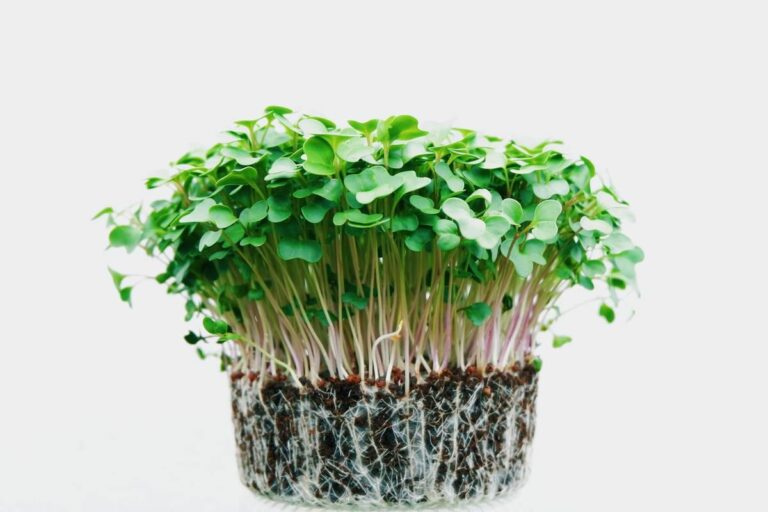
Thai green curry without Thai basil loses half its aroma: the basil brings the anise and clove notes that regular basil doesn’t have. Fresh Thai basil can be hard to find, while Thai basil microgreens smell the same and look striking, with green leaves on dark purple stems.
Stir some of the microgreens into the curry once it’s off the heat and put the rest on top. Long simmering darkens the basil and kills its aroma.
About the Ingredients
Thai basil microgreens: 20 g for four servings. Regular basil microgreens work, but you lose the anise.
Curry paste: store-bought Thai green curry paste. Heat varies a lot by brand, so start with 2 tbsp and add more after tasting the sauce.
Coconut milk: full-fat. Don’t shake the can: you’ll need the thick cream on top to fry the paste.
Fish sauce salts the curry and adds depth. For a vegetarian version, use soy sauce.
Technique: Fry the Paste in the Cream
Spoon the thick coconut cream off the top of the can into a hot skillet and simmer for 3-4 minutes, until oil starts to separate from it. Fry the curry paste in that oil for 1-2 minutes, until very fragrant. The spices dissolve in the fat, and the sauce comes out more aromatic than when the paste is simply stirred into the milk.
Variations
- With shrimp: 400 g peeled shrimp instead of chicken, simmered for 3 minutes.
- With tofu: seared firm tofu, and soy sauce instead of fish sauce.
- With eggplant: cubed eggplant instead of green beans.
- Red curry: red curry paste instead of green, everything else the same.
Serving and Storage
Serve with jasmine rice and a lime wedge. Without the basil, the curry keeps in the fridge for 2-3 days and tastes even better the next day. Add fresh microgreens after reheating. Whether to wash microgreens is covered in our wiki: should you wash microgreens.
Another spiced dish with microgreens: aloo methi with fenugreek microgreens.
CHEF'S TIPS
Curry pastes vary a lot in heat from brand to brand. Start with 2 tbsp; you can always stir in more paste loosened with a little sauce later.
Don't boil the curry hard once the coconut milk goes in, or it splits and the sauce turns grainy.