
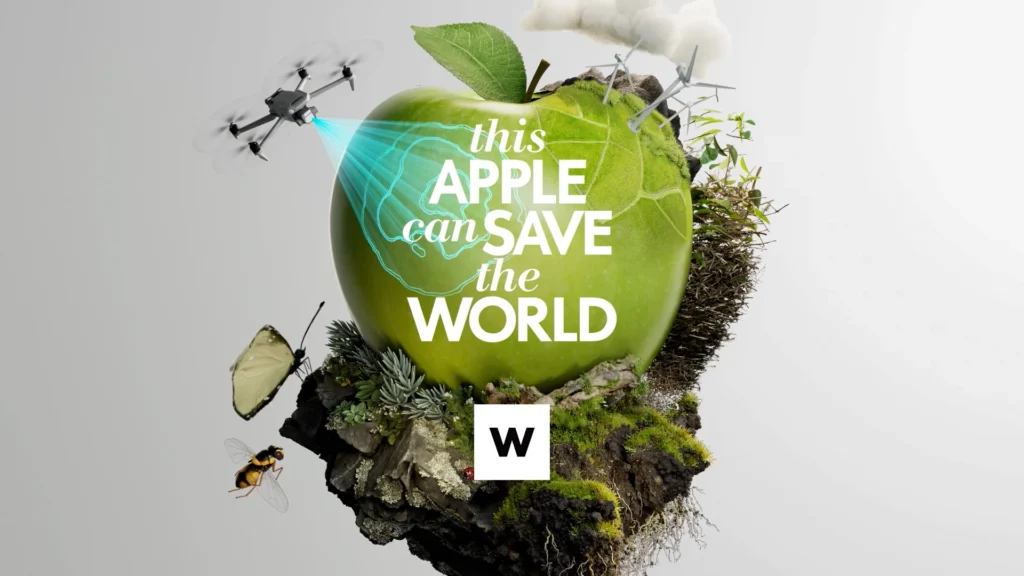
Usually the transition to organic farming is a farmer’s own initiative. But what if a major supermarket comes to the producer and says: “We will help you become better”? That is exactly how Woolworths’ “Farming for the Future” programme works — and 800 farms in South Africa and Mozambique are already part of it.
Not a ban — an evolution
The programme does not prohibit any registered pesticides — and that is a deliberate stance. Technical manager Tom Murray explains: the goal is not to “ban chemicals,” but to preserve effective products while gradually phasing out dangerous ones.
Each participating farm is measured only against its own starting point — there is no single benchmark that everyone must reach. “You cannot fail the programme,” says Pienaar. You simply move forward from where you began.
Why this is a smart model
Consumers have grown more sensitive to greenwashing — empty eco-claims with no real substance. Woolworths responded with transparency: the shopper can see exactly how their produce was grown and which practices the farmer followed. This is not marketing — it is documented change.
For participating farms, it is also advantageous: a stable sales channel, support from the retailer, and a gradual transition without the risk of crop loss that comes with abruptly abandoning familiar methods.
A lesson for Ukraine
In Ukraine, the organic market is still developing mostly bottom-up — individual enthusiasts obtain certification and search for sales channels on their own. A model where a major retailer itself creates demand and supports producers through the transition is still rare. But this is precisely what the future of the organic market looks like — one where a real field practice, not a certification document, sits at the centre.