
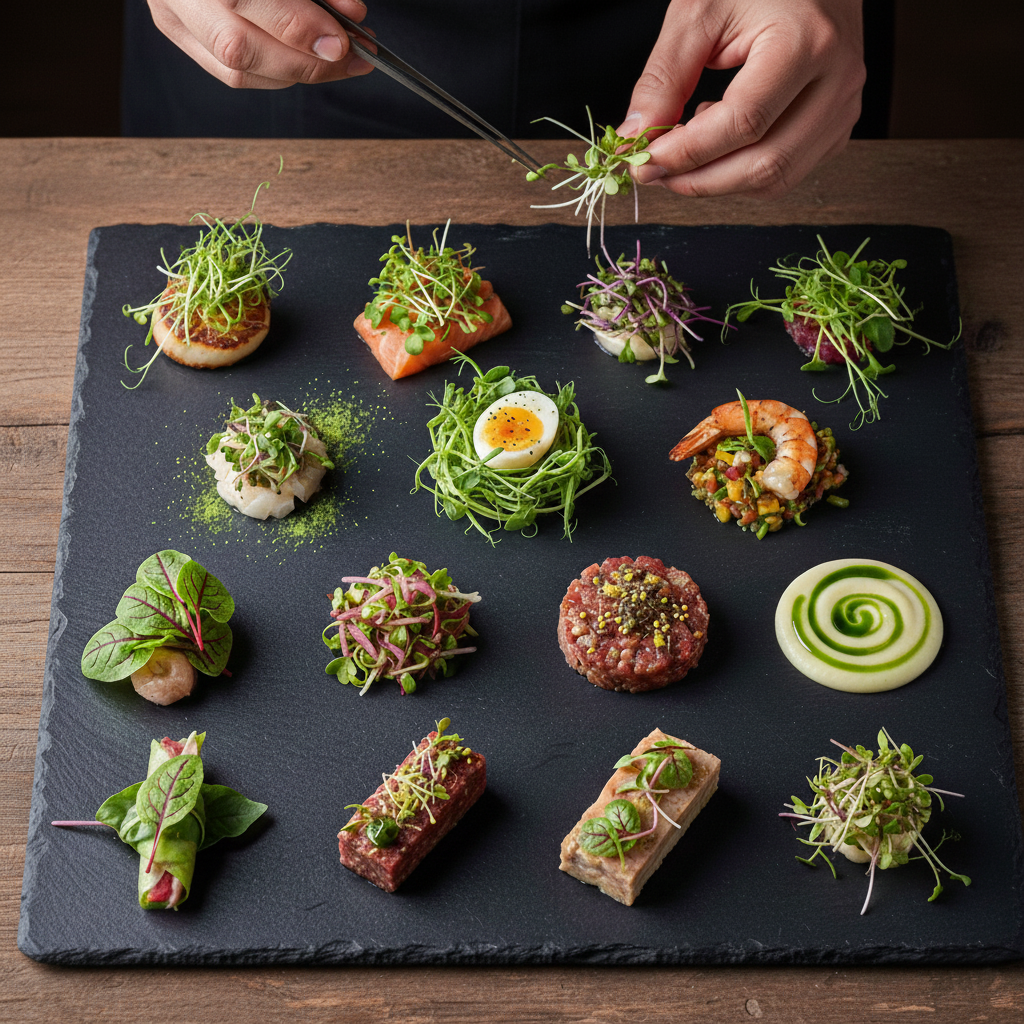
Microgreens are no longer just a pretty garnish. In modern fine dining they have become a full ingredient — a source of acidity, crunch, freshness, essential oils, bitterness, minerality and color.
Used correctly, microgreens can replace:
- lemon or lime in fish dishes;
- nuts in pastas and salads;
- mustard sauces in meat presentations;
- aromatic herbs;
- part of the salt;
- artificial food coloring;
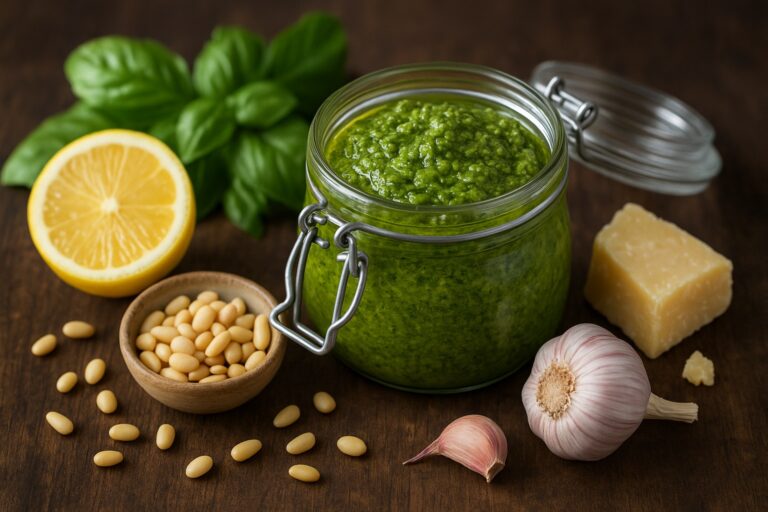
- complex sauces (pesto, aioli, hummus).
Below are 10 key chef techniques that turn microgreens into a powerful tool in fine dining and gourmet menus.
1. Green Oils (Aromatic Oils)
Best for: micro-mustard, micro-basil, micro-sorrel, amaranth, chard.
The technique:
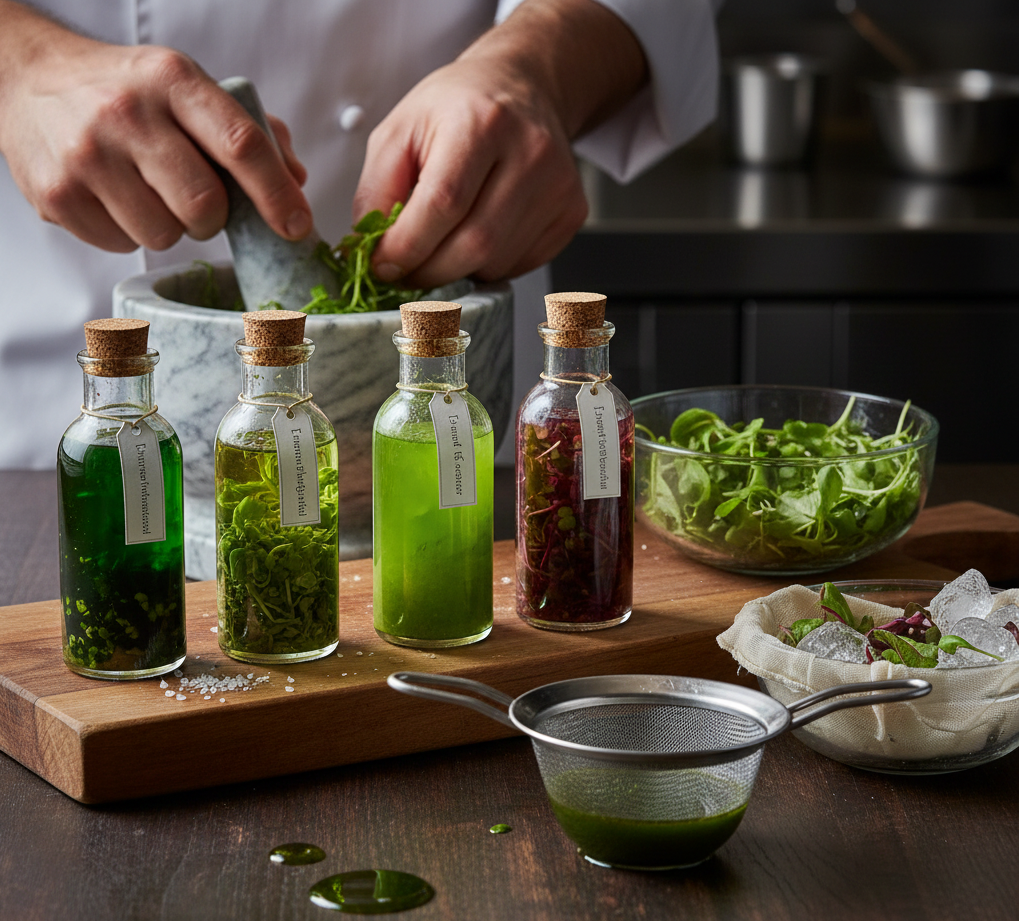
Green oil is a concentrate of essential aromas without any heat. Simple formula:
microgreens + olive oil + ice/cold → blend → strain.
Where to use:
- steaks, veal, duck breast
- fish dishes, crudo
- vegetable creams (pumpkin, Jerusalem artichoke)
- salads, bowls
- finishing drizzle on pasta
Common mistakes:
- heating the oil — destroys essential oils;
- too much salt — overpowers the green aroma.
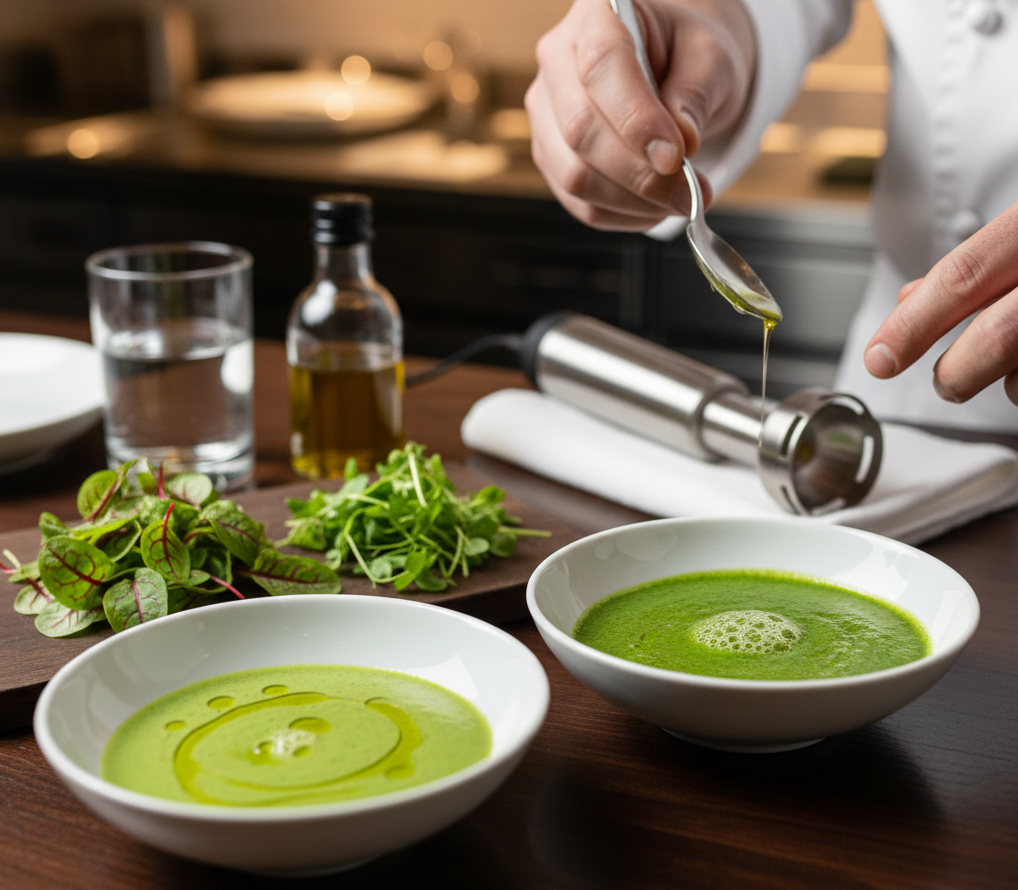
2. Green Emulsions (cucumber + micro-sorrel / micro-pea + oil)
Best for: micro-sorrel, pea shoots, mustard, basil.
The technique:
An emulsion is a light, acidic-herbal sauce. Unlike an oil, it is more watery, delicate, and “alive.”
Formula:
water / cucumber juice / stock + microgreens + a little protein or aquafaba.
Where to use:
- fish starters (crudo, carpaccio)
- summer salads
- cold soups (gazpacho)
- beet tartares
Common mistakes:
- adding lemon together with sorrel — the taste turns muddy.
3. Foams and Airs
Best for: chard, basil, micro-sorrel, micro-mint.
The technique:
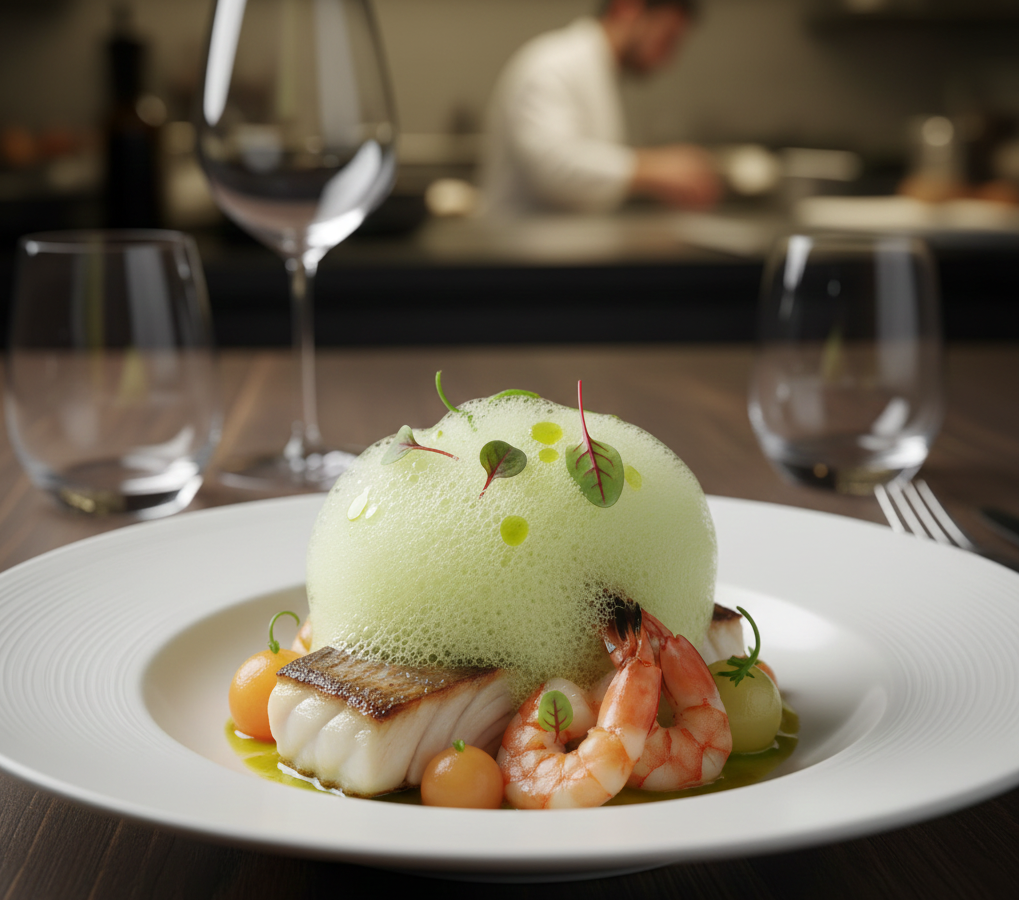
Foam creates a “light” aromatic accent without the weight of a sauce. Works beautifully in modern fine dining.
Base:
coconut milk / cream / vegetable stock + microgreens → blend → serve immediately.
Uses:
- seafood dishes
- prawn pasta
- warm vegetable plates
Common mistakes:
- foam lives 30–60 seconds — prepare literally right before plating.
4. Chips and Crunchy Elements
Best for: sunflower, pea, radish, chard.
The technique:
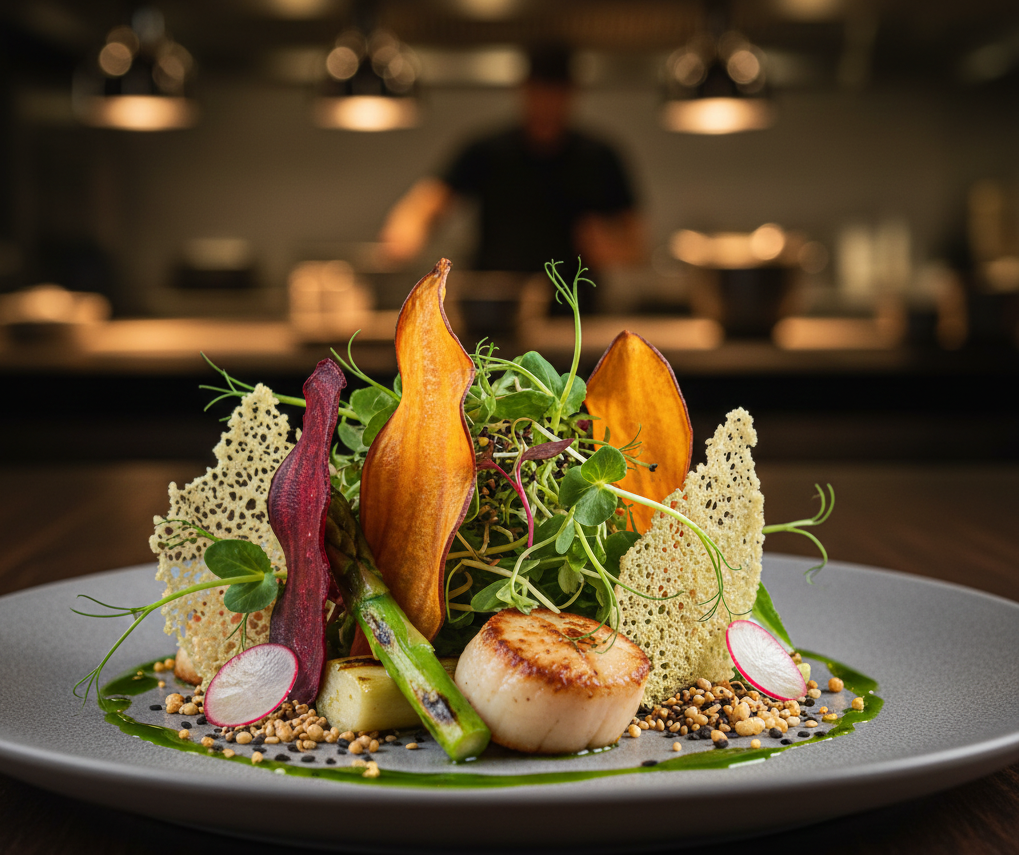
Chips from root vegetables or thinly sliced vegetables complement microgreens by creating textural contrast.
Great combinations:
- Jerusalem artichoke chips with micro-amaranth
- potato chips with micro-radish
- parsnip chips with micro-mustard
Common mistakes:
- thin chips go soggy from delicate greens quickly — add at the very last second.
5. Cold Smoking
Best for: micro-sunflower, micro-mustard, micro-chard.
The technique:
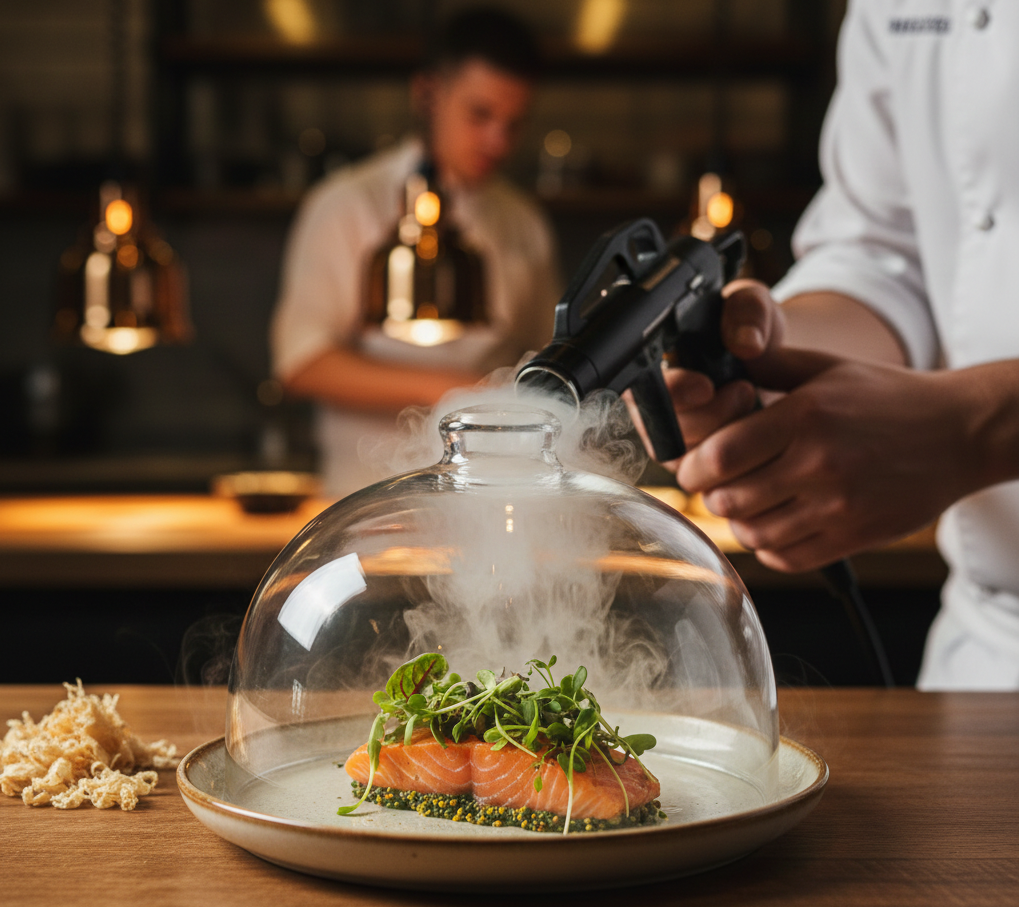
A quick cold smoke (30–60 seconds) changes the microgreen’s flavor profile: adds caramel and nutty notes.
Where to use:
- meat bowls
- warm salads
- dishes with beet or pumpkin
Common mistakes:
- don’t smoke longer than one minute — the greens lose their crunch.
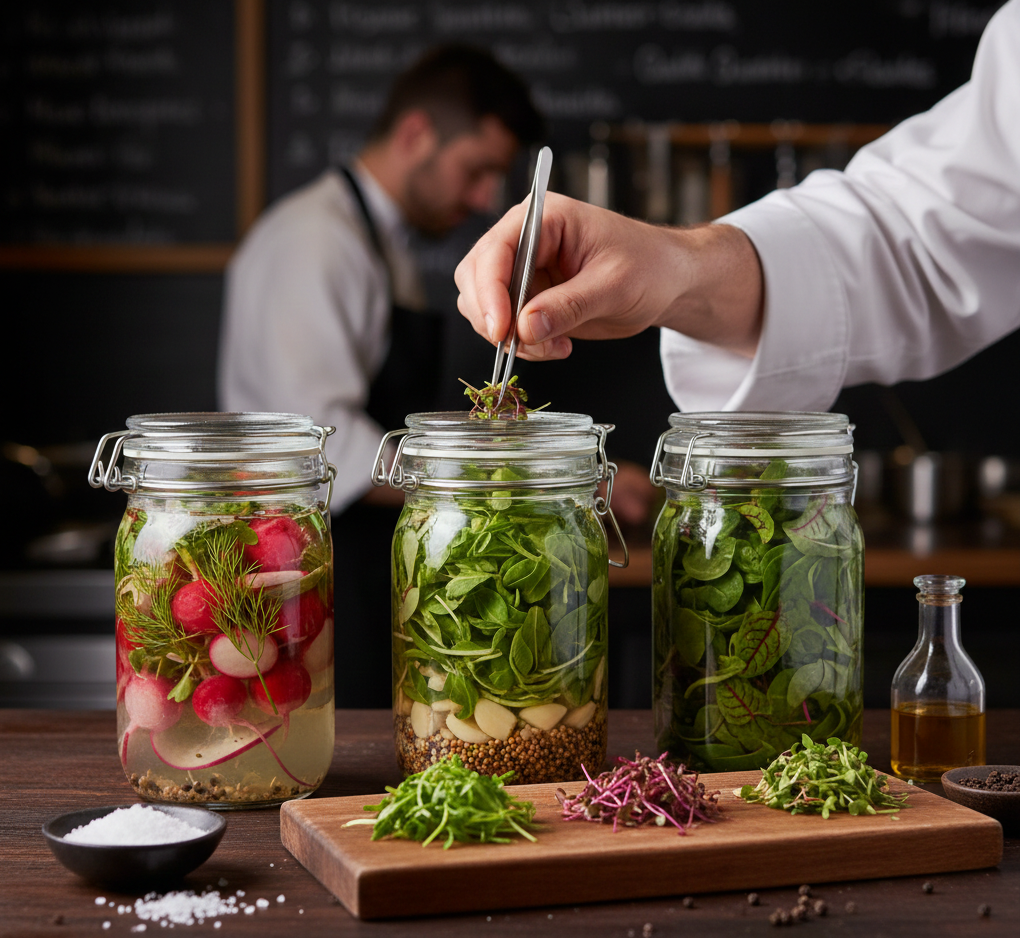
6. Fermentation (sour-spicy accents)
Best for: micro-radish, micro-mustard, micro-spinach, micro-sorrel (use carefully).
Fermentation formula:
water + 2% salt + aromatic spices → short fermentation (2–6 hours).
Microgreens can be added at the end as a “live” accent, without fermenting them fully.
Uses:
- bowls with veal tongue
- meat starters
- fish tartares
- salads with poached egg
Common mistakes:
- don’t over-ferment delicate varieties — they lose structure and color.
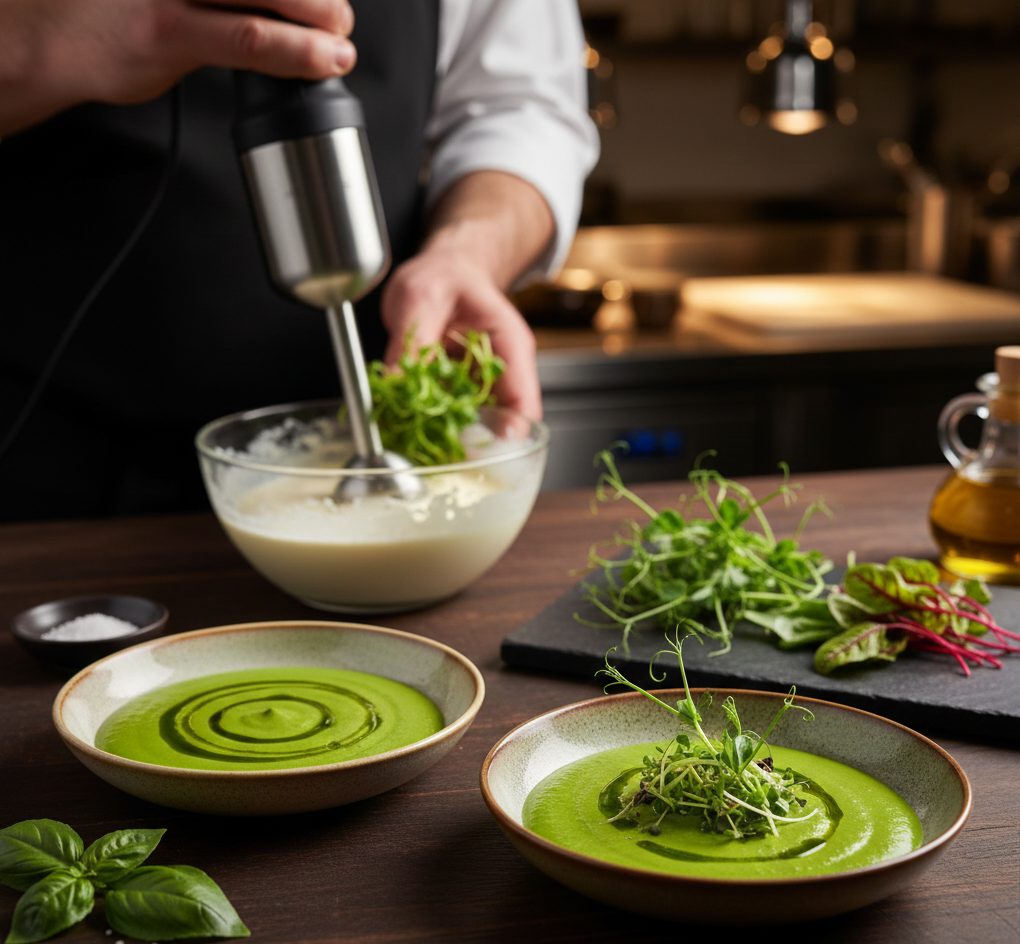
7. Green Creams (cream base + microgreens)
Best for: pea shoots, sunflower, chard, basil.
The technique:
A white neutral base (cauliflower, parsnip, potato) is blended with microgreens — the result is a vibrant emerald cream.
Uses:
- base under scallops, seafood
- pasta sauce
- plating element for fine dining
Common mistakes:
- heating above 70°C — the green color fades.
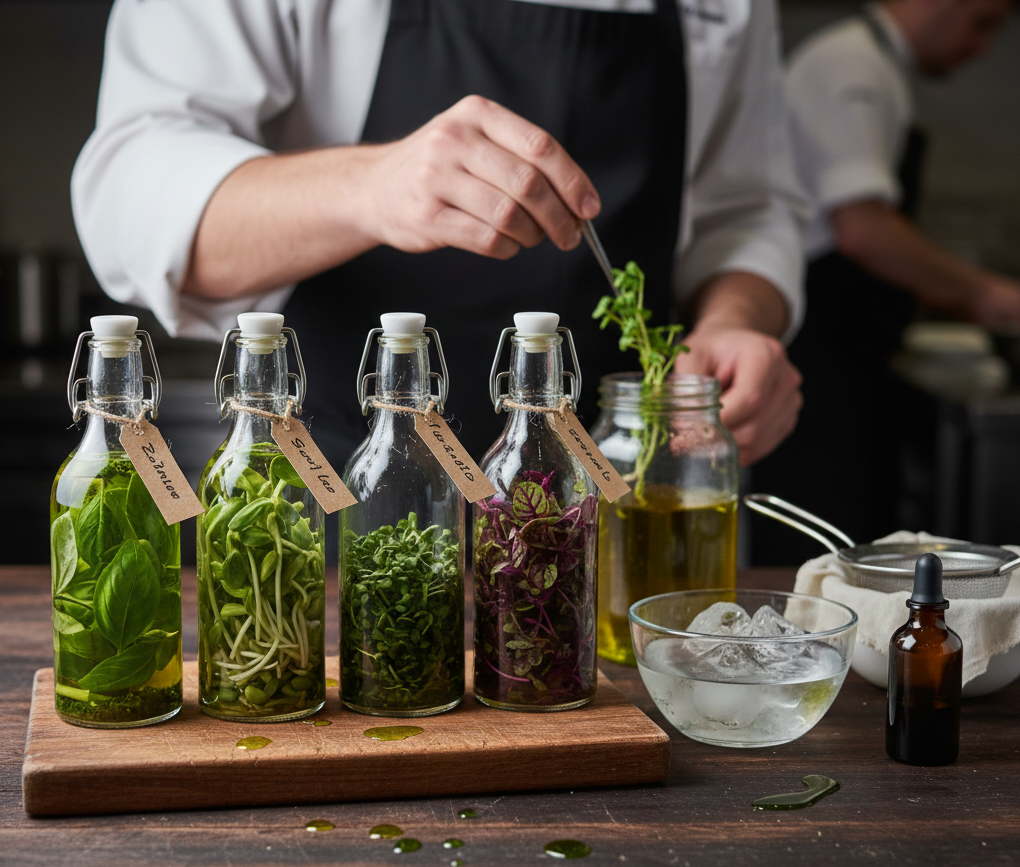
8. Cold-Infused Oils
Best for: basil, sunflower, mustard, amaranth.
The technique:
Cold infusion for 4–12 hours produces a clean, stable aroma without oxidation.
Where to use:
- finishing brushes on the plate
- salads
- steamed fish
- pasta
- hummus, dips
Common mistakes:
- keeping longer than 24 hours — the oil turns dark and bitter.
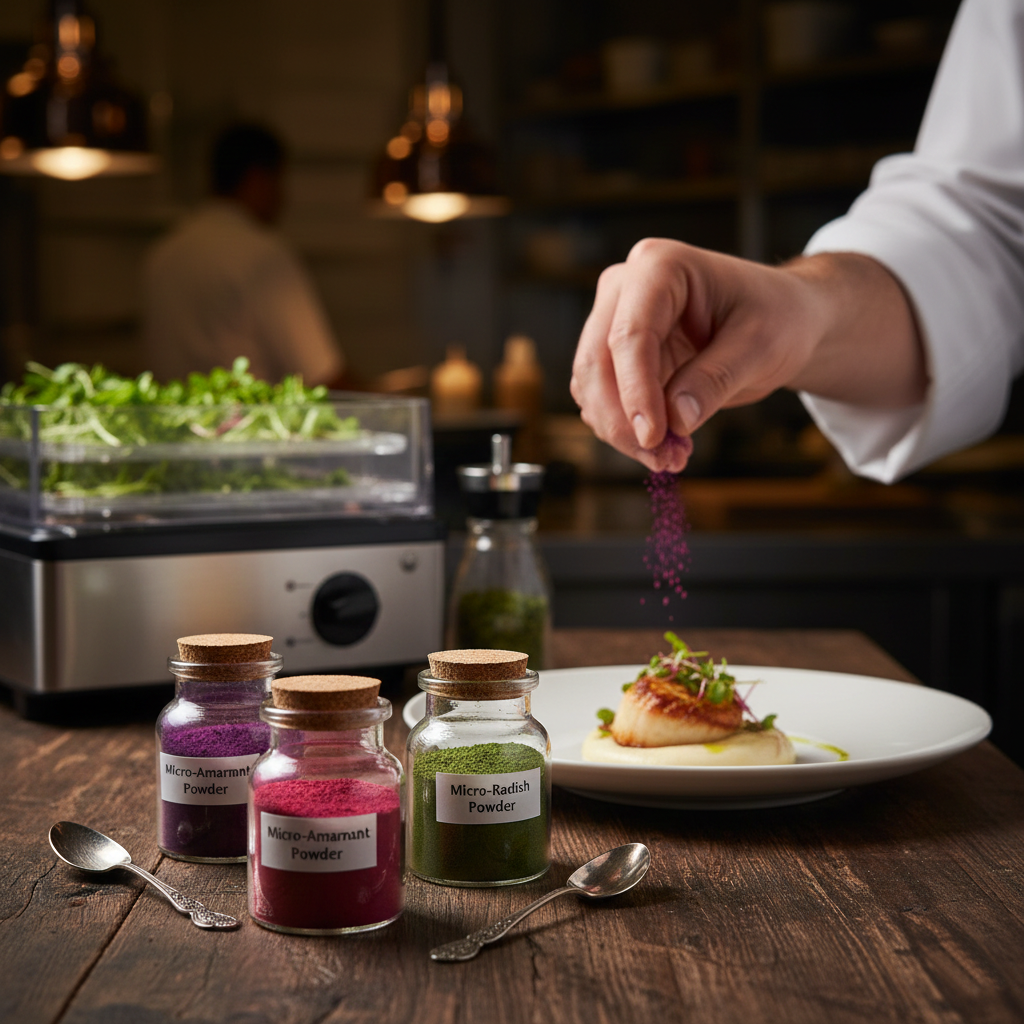
9. Powders (Dehydrated Microgreens)
Best for: micro-radish, micro-amaranth, basil.
The technique:
Microgreens are dried at low temperature (35–40°C), then ground into powder and used as a natural colorant and flavor booster.
Where to use:
- plating decor (not just cosmetic — real flavor!)
- dusting cream soups
- mixing into oils
- deviled eggs
- canapés, tartlets
Common mistakes:
- drying above 40°C — the color turns brown.
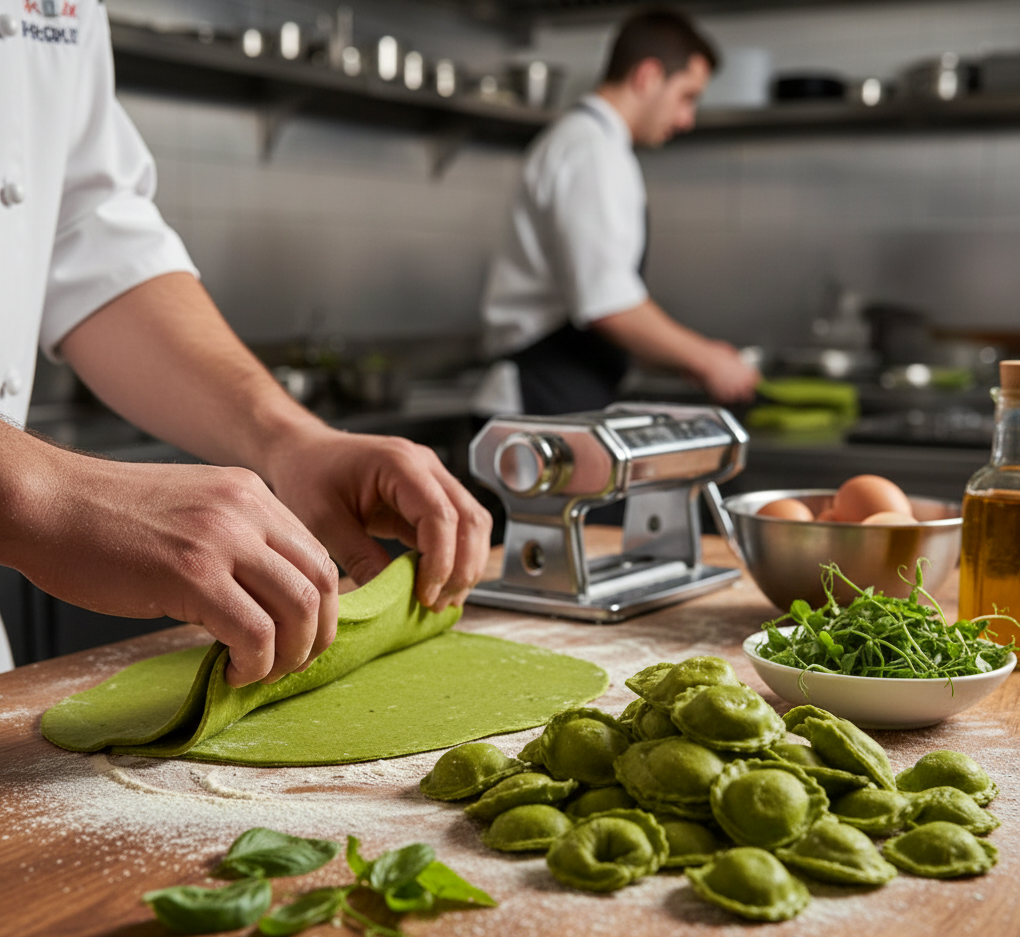
10. Chlorophyll Pasta (Fresh Green Pasta)
Best for: micro-chard, micro-basil, micro-pea.
The technique:
Microgreen purée is folded into pasta or ravioli dough.
The pasta takes on an emerald color without food dye, plus a delicate herbaceous flavor.
Uses:
- ravioli with cheese or prawns
- tagliatelle with lemon
- tasting menus
Common mistakes:
- adding too much purée — the dough becomes crumbly and hard to roll.
Most Common Chef Mistakes with Microgreens
- Overheating — most microgreens cannot handle high temperatures.
- Adding lemon to sorrel — the taste turns muddy and swampy.
- Too much salt — the greens lose their aroma.
- Improper storage — microgreens should not sit wrapped tight in plastic at zero.
- Using them as decoration only — microgreens must have a function: acidity, crunch, aroma.