What Is Pesto?
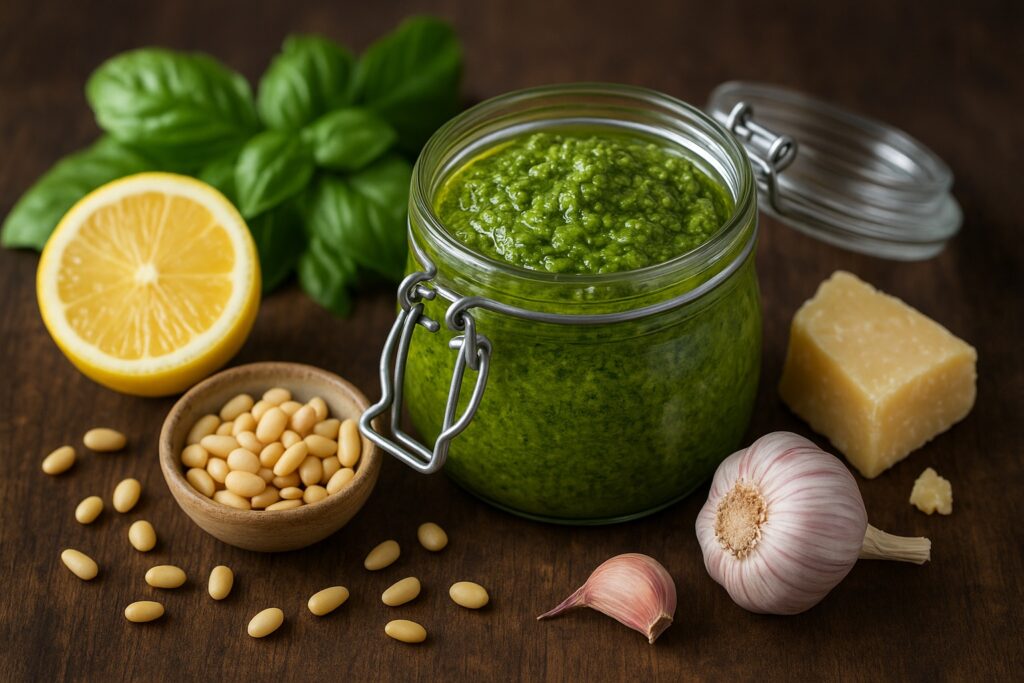
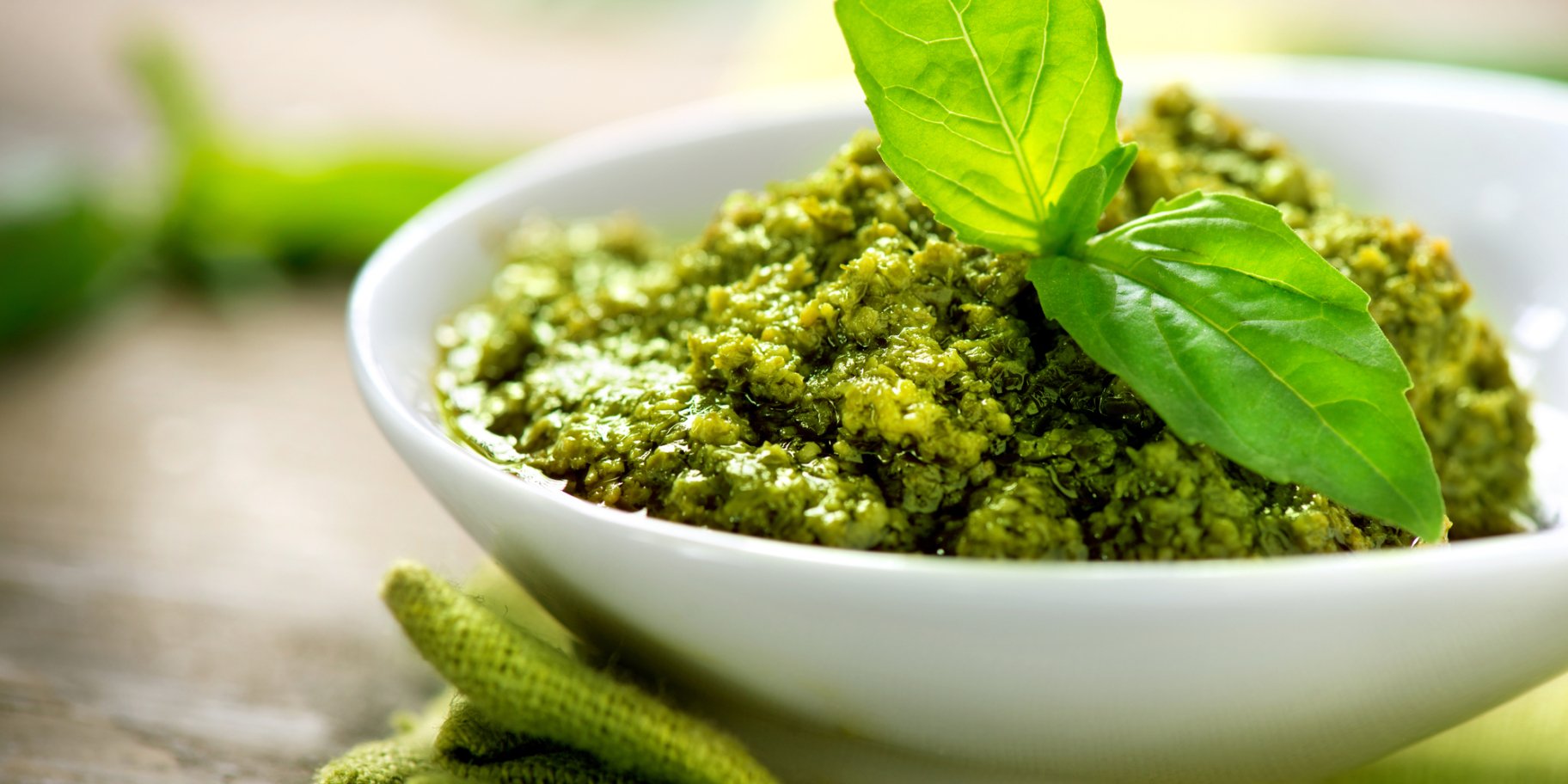
Pesto sauce (pesto alla Genovese) is one of Italy’s most famous sauces, originating in Liguria, from the city of Genoa. Its name comes from the Italian word pestare, meaning “to pound” — because authentic pesto is traditionally made in a marble mortar, grinding the ingredients with a wooden pestle.
Classic basil pesto combines fresh greens, pine nuts, garlic, hard cheese and olive oil. Today the sauce has countless variations and is used not only for pasta, but also for meat, fish, vegetables, pizza and even soups.
Health Benefits of Pesto
Pesto is not just a delicious sauce — it is also a source of valuable nutrients:
- Basil — antioxidants, essential oils, vitamins A, K, C.
- Extra Virgin olive oil — healthy fats that support the heart and blood vessels.
- Pine nuts — plant protein, magnesium, vitamin E.
- Cheese (parmesan, pecorino) — calcium, protein, amino acids.
- Garlic — a natural antiseptic that strengthens immunity.
Adding pesto regularly to your diet helps balance nutrition, enriches dishes with vitamins and gives them an unmistakable aroma.
Classic Pesto Recipe
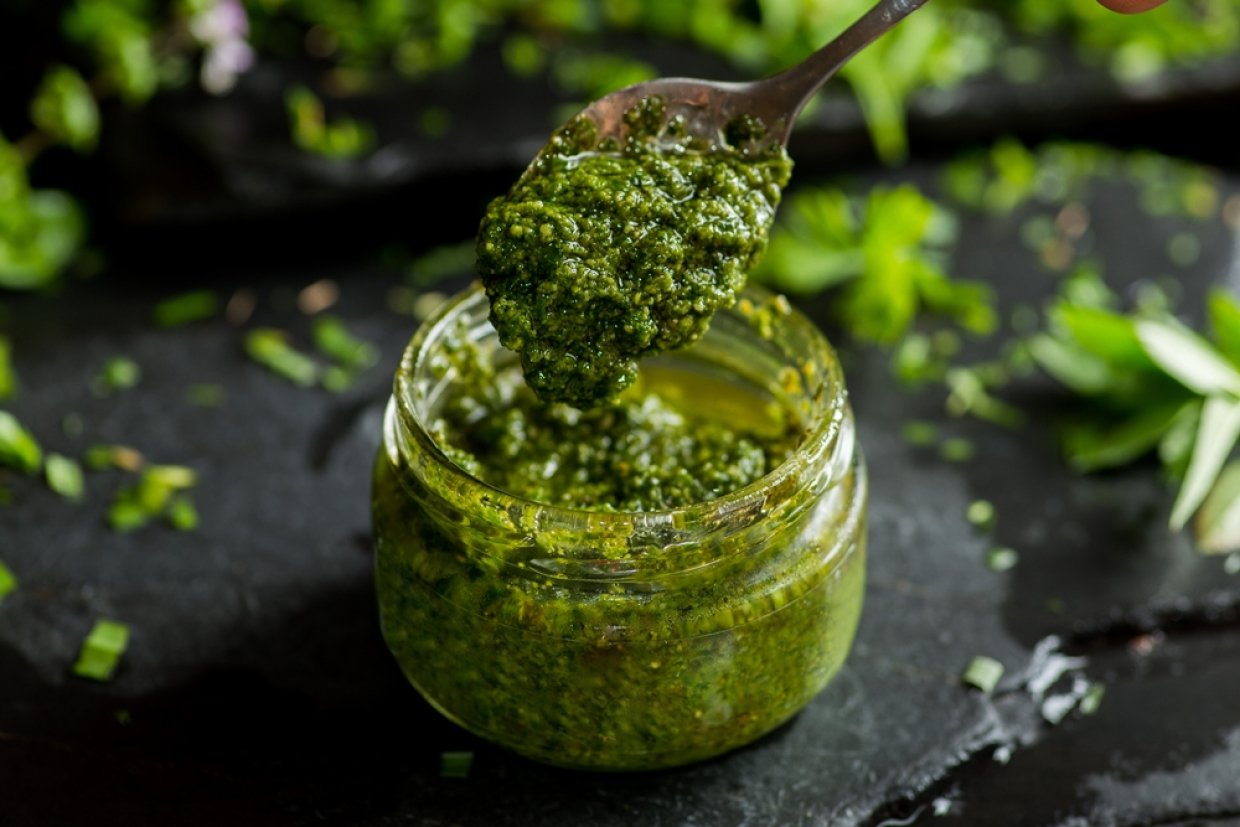
Ingredients (makes ~200 ml):
- 50 g fresh basil
- 30 g pine nuts
- 40 g parmesan
- 20 g pecorino
- 100 ml Extra Virgin olive oil
- 1 clove of garlic
- A pinch of sea salt
Method:
- Wash and dry the basil leaves.
- In a mortar or blender, crush the garlic with the nuts.
- Add the basil and salt, pound to a paste.
- Mix in the grated cheeses.
- Pour in the oil in a thin stream, stirring continuously.
👉 The classic recipe does not use lemon juice. However, modern chefs add a few drops to keep the sauce a vivid green and give it a fresh edge.
Why Does Pesto Turn Dark — and How to Prevent It?
When exposed to air, basil oxidises quickly and loses its color. To keep that bright green:
- add a little lemon juice,
- store under a layer of olive oil,
- don’t overheat the sauce in the blender — use short pulse bursts.
Pesto Variations: Classic and Modern
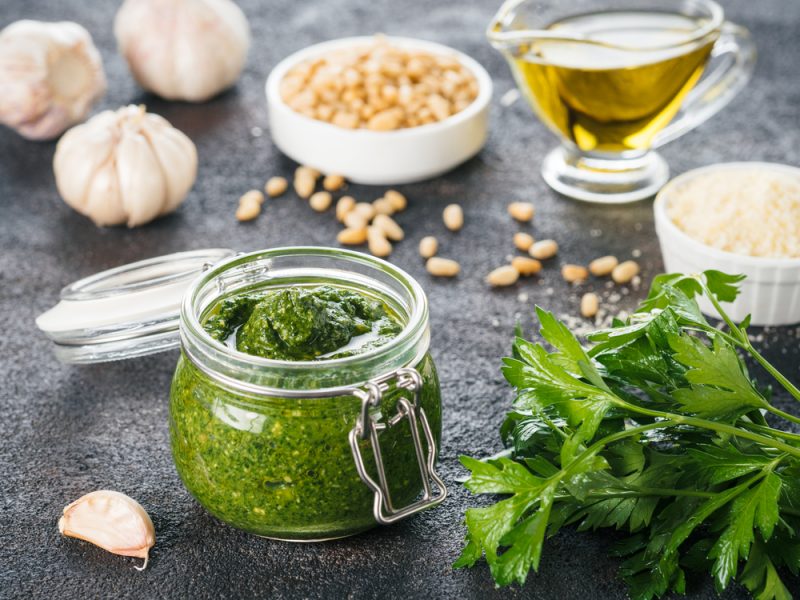
Pesto adapts easily to whatever ingredients you have. Here are the most popular versions:
| Variation | Greens / Base | Nuts / Seeds | Cheese | Extra ingredients | Serve with |
|---|---|---|---|---|---|
| Classic (alla Genovese) | basil | pine nuts | parmesan + pecorino | garlic, oil | pasta, lasagne, fish |
| Sicilian (alla Siciliana, “red”) | basil + sun-dried tomatoes | almonds | ricotta / parmesan | garlic, oil | pasta, chicken, bruschetta |
| Rocket (arugula) | rocket + basil | walnuts | parmesan | garlic | steaks, salads, fish |
| Spinach | spinach | cashews | parmesan | lemon juice | pasta, vegetables |
| French Pistou | parsley | walnuts / pine nuts | no cheese | garlic, oil | soups, vegetable stews |
| Broccoli | blanched broccoli | cashews / hazelnuts | parmesan | garlic | pasta, side dishes |
| Caper & Anchovy | basil + parsley | pine nuts | parmesan | capers, anchovies | seafood |
| Cilantro (Latin-style) | cilantro | pumpkin seeds | no cheese / goat cheese | lime, chili | tacos, grilled vegetables |
| Beet-green | young beet tops | walnuts | feta | lemon | bowls, salads |
Vegan Pesto Without Cheese
For those following a plant-based diet, here is a simple vegan pesto:
Ingredients:
- 60 g greens (basil, spinach, parsley)
- 40 g nuts or seeds
- 1 clove of garlic
- 100 ml olive oil
- 1 tbsp lemon juice
- Salt to taste
- (Optional) 2 tbsp nutritional yeast for a “cheesy” flavor
This sauce is incredibly versatile: great with pasta, in salads, as a bread spread or a dressing for roasted vegetables.
What to Eat Pesto With?
Pesto is an extraordinarily versatile sauce. Here are a few ideas:
- Pasta with pesto — the classic choice (spaghetti, tagliatelle, linguine).
- Soups — a spoonful of pesto stirred into minestrone or vegetable cream soups.
- Meat and fish — as a marinade or finishing sauce.
- Starters — bruschetta, toast spreads, crackers.
- Vegetables — as a dressing for salads, roasted vegetables or potatoes.
- Pizza — instead of tomato sauce, or as an extra topping.
How to Store Pesto?
- In the fridge — 3–4 days, covered with a layer of olive oil.
- In the freezer — up to 3–4 months in containers or ice-cube trays.
- Not recommended — leaving it at room temperature or storing longer than 5 days, as the cheese and nuts spoil quickly.
Secrets of the Perfect Pesto
- Use a marble mortar for the most authentic flavor.
- In a blender, use short pulse bursts so the ingredients don’t heat up.
- Add a few drops of lemon to preserve the vibrant color.
- Experiment with different greens and nuts — you will discover entirely new flavors.
Conclusion
Pesto is a true culinary classic that never goes out of style. It is simple to make, yet it can completely transform the flavor of a dish. Try the classic basil pesto first, then experiment with rocket, spinach or sun-dried tomatoes — and you will discover dozens of new combinations.
If you are looking for a versatile sauce for pasta, meat, fish or vegetables — pesto is the perfect choice.