
Flavor profile
Taste & aroma
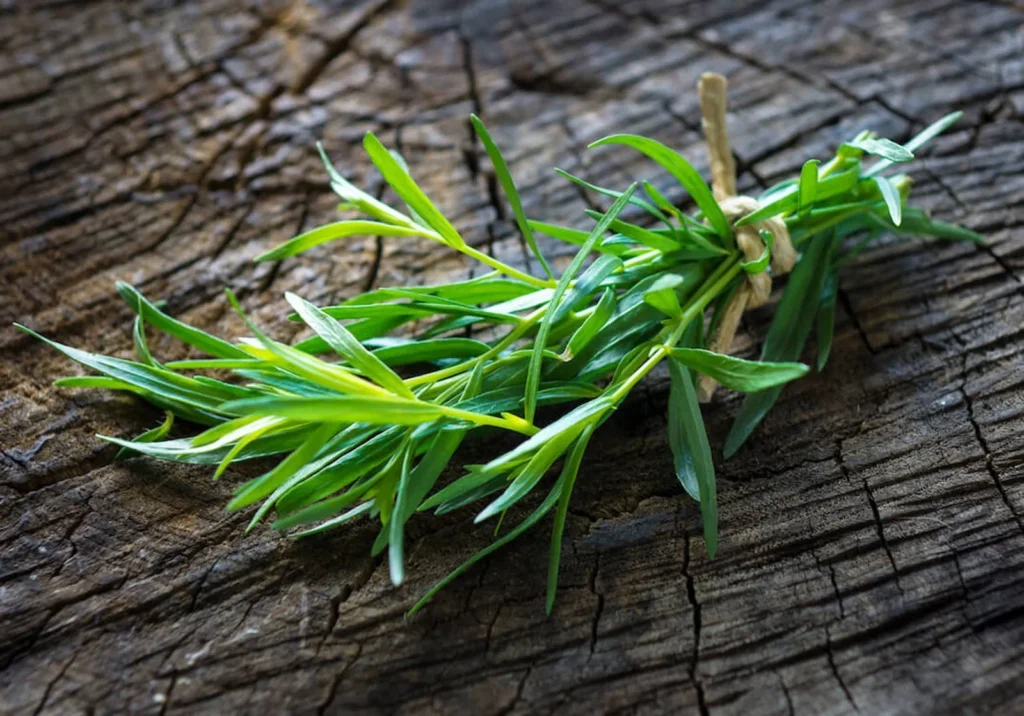
Aniseed, vanilla, spicy - a small amount of micro tarragon is immediately noticeable in the dish. Anise-herbal, pronounced aroma.
a small amount of micro tarragon is immediately noticeable in the dish
Aniseed-herbaceous, pronounced, volatile - it opens when cut and completely disappears when heated, so tarragon is added exclusively to the finished dish.
Gentle, Thin, Soft - a characteristic shape that immediately distinguishes tarragon from other microgreens. The stems are thin, tender, without stiffness
Ripening and optimal harvest time
The cotyledons have just opened, the taste is the mildest: pure aniseed freshness without wormwood notes.
The first real leaves with a characteristic lancet shape, the taste is the most balanced: anise + vanilla + grass.
The leaves enlarge, the herbal bitterness characteristic of adult tarragon appears.
Why flavor may vary batch to batch
The content of essential oils in tarragon depends on lighting and temperature. With good lighting and a temperature of +18...+22°C, the taste is rich. In low light or overheating (above +25°C), essential oils are synthesized worse — the leaves are watery and less aromatic. This is one of the reasons tarragon is more difficult to grow than most microgreens.
Culinary use
How to use
Tarragon is a great culinary accent. Add fresh at the end of cooking or directly on the plate.
Eggs benedict or omelette
a bunch of micro tarragon on top instead of chopped leaves - the same aroma, but more beautiful and more evenly distributed on the plate
Creamy sauce for chicken or fish
put the micro tarragon at the very end, already on the plate next to the sauce - the hot dish will heat up the leaves and the aroma will unfold without losing volatile oils
Salmon or beef tartare
micro leaves of tarragon as a final detail on top of minced meat is a classic restaurant technique
Cold snacks with cheese
bruschetta or a plate with soft cheeses (brie, camembert) — micro tarragon and honey, or tarragon and nuts; the anise-vanilla profile emphasizes the creaminess
Cream soup or consommé
a few leaves on top before serving - aroma and visual detail at the same time
Cocktails and drinks
tarragon in a glass is not just lemonade. Leaves as a side dish for gin and tonic, Aperol or non-alcoholic cocktails with citrus fruits
Perfect pairings
Tarragon is a classic French combination with artichokes, asparagus and avocado
The most famous combination is chicken and tarragon (poulet à l'estragon)
The classic is béarnaise sauce and tarragon vinegar
- Do not heat micro tarragon - essential oils (estragole, anethole) are very volatile, at a temperature above 60°C, the aroma disappears in 30-60 seconds. Tarragon is exclusively raw, at the end of the meal
- Don't overwhelm the dish with tarragon—the bright aniseed profile easily overpowers the subtler flavors. Start small (5-10 leaves per serving)
- Do not combine with vinegar-spicy dressings in large quantities - the acid suppresses subtle vanilla nuances, leaving only sharp anise
- Don't use tarragon instead of fennel in dishes that want a sweet anise note without the spicy herbiness—they're close but not identical
Home storage
How to store
Tarragon keeps longer than most microgreens. Follow simple rules to keep it fresh for up to 8–10 days.
Keep at +4...+6°C, do not close tightly - air circulation is required. Tarragon does not like excessive moisture: delicate leaves quickly darken with condensation. Cut just before serving. The term is 7–10 days.
Place in a container with a paper towel to absorb moisture, store at +4...+6°C. The aroma gradually weakens after cutting - use as fresh as possible. The term is 4–6 days.
Don't wash until ready to eat. Wet greens spoil much faster. Rinse just before serving.
Pro tip: Sale in a live tray is the best option for tarragon: the customer cuts it himself, the aroma is maximum. Emphasize that micro tarragon is an alternative to fresh leaf tarragon, which is hard to find in stores at all.
Nutrients & health
Benefits & composition
Tarragon is valued for its rich vitamin-mineral composition and bioactive compounds typical of microgreens.
Like most microgreens, tarragon contains a concentrated amount of nutrients relative to its weight — many times more than the mature plant.
| Protein | 3.0 g — building material for cells |
|---|---|
| Calories | ~295 kcal |
| Vitamins | C, A |
| Minerals | Calcium, Manganese, Iron, Magnesium, Copper, Potassium, Zinc |
- Tarragon contains estragole, a volatile organic flavoring that is safe in cooking amounts. Regulatory authorities (EFSA) confirm the safety of normal culinary use (a pinch of greens per serving). In concentrated form (essential oil, large medical doses) long-term use is not recommended
- Tarragon belongs to the Asteraceae family. People with sensitivities to this family (including ragweed, chamomile, chrysanthemum) may react to tarragon - it's worth trying a small amount first
- Pregnant women are advised to avoid large amounts of tarragon in the form of herbal infusions and concentrated doses; in culinary quantities (side dish, several leaves) there are no questions
This information is general in nature and is not medical advice. Composition data: USDA FoodData Central.
Worth knowing
Calcium and iron
Tarragon is a source of calcium and iron in significant amounts — compared to most green herbs, it ranks next to parsley and dill in terms of mineral content. Portions of microgreens are small, but this makes tarragon an interesting component for a variety of meals.
Vitamin C
in fresh young sprouts, it is present in a higher concentration than in adult leaves - this pattern is characteristic of most microgreens: young tissues actively synthesize ascorbic acid as an antioxidant.
Essential oils
(primarily estragole) is a unique component that cannot be found in most vegetables. Traditionally, tarragon is used in culinary cultures as an herb that complements light meat and fish dishes.
Polyphenols and flavonoids
, contained in the leaves, are antioxidant compounds — typical of herbs of the Asteraceae family.
Similar crops
Similar by taste microgreens
If you are looking to complement or replace Tarragon:
Tarragon: how to grow — step-by-step guide
Growing parameters, agronomy, common mistakesGrowing parameters
Small, light, oblong. Only common tarragon is grown from seed. French tarragon does not give seeds - it reproduces only by cuttings
Step-by-step guide
Seed preparation
Tarragon seeds are small and light, like dust - they are easily blown by the air when sowing. Soaking is contraindicated: soaked seeds stick together in lumps and are unevenly distributed. Before sowing, mix the seeds with a small amount of vermiculite or dry sand (1:3) - this will greatly facilitate even distribution.
Check for similarities beforehand. Tarragon is a crop with inconsistent similarity. Before the first large sowing, place 10-15 seeds on a damp paper towel and keep at +20°C near a light source. If less than 40% germinated in 14–18 days, the batch is weak.
Fresh seeds (of the current season) germinate better than old ones. If you are buying tarragon for the first time, check with the supplier about the year of collection. Tarragon seeds remain viable for 2-3 years, but each year it decreases.
Sowing
- Evenly moisten the substrate - without puddles and dry areas
- Spread the seeds as evenly as possible over the entire surface - tarragon is sown less often than most microgreens (the rate is small due to very slow germination and low yield)
- Lightly press with the palm of your hand - contact with the substrate is important
- Spray the surface with a fine mist from a spray bottle
Tarragon grows better in a soil substrate than on agrocotton - slow germination and thin rhizomes require a more nutritious and moisture-rich environment. If there is a choice, use a light mixture of peat with perlite or coconut substrate instead of agrocotton.
Coating
Since tarragon is photoblastic, a long deaf blackout is inappropriate.
Option A (recommended): Cover the tray transparent with a lid or food film - preserves moisture and allows diffused light to pass through. Place in a warm place (+20...+24°C) with access to indirect lighting.
Option B: If there is no transparent lid, cover with a dark tray for a maximum of 12-24 hours, then open and expose to light. Don't wait for the stairs to appear - just open on time.
Germination — 10–21 days
This is the longest and most difficult step in growing tarragon. Be prepared for a long wait.
What is normal:
- The first single sprouts on the 10-12th day are normal
- Uneven shoots (some sprouted, others not yet) on the 14th-16th day - normal for tarragon
- Almost nothing on day 7 - that's fine, don't throw the tray away
What is the problem:
- No sprouts on day 21 → maybe seeds in the dark too long, or an old batch with low germination
- Elongated pale sprouts → little light
Temperature: +18...+24°C is optimal. Tarragon does not germinate well at temperatures below +16°C and above +28°C. If the room is cool, increase the germination time to 3 weeks or more.
Humidity: keep the substrate moist, but without stagnant water. Moisture is kept well under the transparent cover - spray once every 1-2 days as needed.
A heating mat for seedlings (+22...+24°C) significantly shortens tarragon germination time — from 21 days to 12–14. If you grow tarragon regularly, this is a justified investment.
Vegetation in the light — 14–20 days (from sowing)
After the appearance of stable stairs, expose the tray to full lighting.
Lighting: 14–16 hours a day, moderately intensive. Tarragon is a light-loving culture: with poor lighting, the leaves are pale and without aroma. Responds well to full-spectrum LEDs or bright window sills.
Temperature: +18...+22°C is optimal. At +25°C and above, essential oils are synthesized worse, and growth accelerates, but quality drops.
Watering: the lower one through a pallet, once every 1–2 days. Tarragon does not tolerate constantly moist air near the leaves - dripping moisture on the leaves contributes to fungal diseases.
Ventilation: mandatory Tarragon with dense sowing is prone to fungal problems in the lower layer. Easy air movement from a fan or an open window is a simple prevention.
Watering
- Water it 1 time a day the bottom way (through the pallet)
- Tarragon leaves should not be wet - dripping moisture contributes to fungal diseases
- The substrate should be moist, but without stagnation of water in the tray
- A sign of lack: substrate is dry, leaves lose turgor → moisten
Storage
| Uncut in tray | Fridge +4...+6°C | up to 3 weeks |
|---|---|---|
| Cut in container | Refrigerator | up to 7 days |
| Room temperature | 1–2 days |
Harvest
- Optimal — after the appearance of the first real leaves of a characteristic lanceolate shape, 18–25th day
- Height 5–10 cm
- Do not wait too long: when overgrown, wormwood bitterness appears, which breaks the delicate aroma
Scissors or a sharp knife above the substrate level. The leaves are very tender - without excessive compression.
Only before serving or shipping. The leaves are thin and darken from water during storage - wash, dry carefully, use immediately.
Seasonal adjustments
- Placement: away from direct sunlight — overheating of the substrate through the glass raises the temperature above +28°C and blocks essential oils
- Temperature: tarragon is a cool-loving culture — at +25°C and above, the quality of the aroma drops noticeably
- Watering: moderate, only the lower one - excessive humidity provokes fungal diseases
- Vegetation: the cycle can be shortened to 16-20 days, but the aroma will be weaker
- Expect: less pronounced anise notes and more watery leaves compared to the cool season
- Heating: mandatory — at +16°C and below germination stops. A heating mat (+22°C) shortens the cycle from 3 weeks to 12-14 days
- Placement: keep the trays away from windows and cold walls - temperature changes inhibit growth
- Expect: lengthening the cycle by 5-7 days, but winter tarragon gives an excellent aroma - coolness keeps volatile essential oils
Water pH and EC
The optimal range for Tarhuna: 6.0–7.0. Tarragon is relatively undemanding to pH. At a pH lower than 5.5, it is possible to block the assimilation of calcium — the leaves become smaller. At a pH above 7.5, growth slows down.
Optimal range: 0.8–1.2 mS/cm. Tarragon is a culture of low needs. Soft water (EC up to 0.5) is suitable. Hard water (EC above 2.0) can reduce seed germination.
Experienced grower tips
Tarhun is a restaurant niche
Fresh tarragon is hard to find in stores, and chefs are looking for it all the time for béarnaise sauce, chicken dishes, and egg recipes. Microtarhun is a direct hit in this niche. Offer with micro chervil as a "fines herbes set".
Heating solves the problem of slow germination
If you have a heating mat or a warm shelf (+22...+24°C), tarragon germination is reduced from 3 weeks to 12–14 days. Without heating in winter, tarragon is almost impossible to grow comfortably.
Similarity - check separately
When buying a new batch of seeds, always do a test on a paper towel before mass sowing. Tarragon has inconsistent germination even in fresh seeds. It is better to spend 10 minutes and 20 seeds than to sow 10 trays with zero results.
A small tray is the right strategy
Due to the long cycle and uneven germination, it is better to sow tarragon in several small trays after 5-7 days than in one large one. The uneven similarity is less noticeable, if one tray did not give a result, there is another.
Aroma — at the time of cutting
Remind customers that micro tarragon reveals its aroma when the leaves are mechanically damaged (cutting, chewing). As long as the leaf is intact, the smell is weak. Press it with your finger and you will immediately feel it. This is a good demonstration technique when selling.
Mix with micro lettuce
Never put more than 15-20% of the total volume of tarragon in the collection - it dominates. The ideal base: 70-75% neutral lettuce + 10-15% chervil + 10-15% tarragon = ready-made "French mix" that is easily sold to restaurants.
Agronomy notes and common mistakes
- Photoblasticity: tarragon seeds germinate only in the light or in minimal darkness (up to 24 hours). Prolonged blackout blocks similarity.
- Similarity: test each new batch on a paper towel — tarragon has an erratic germination even with fresh seeds.
- Temperature: optimum +18...+22°C. Below +16°C, germination stops. Above +25°C, the quality of the aroma decreases.
- Watering: exclusively lower. Leaves darken when in contact with water.
- Ventilation: mandatory from the first day of vegetation — tarragon is prone to fungal diseases in the lower tier.
- Prolonged blackout (3–5 days) → No stairs or unit on day 21 → Tarragon is photoblastic - maximum 24 hours in the dark, then immediately into the light
- Looking forward to day 7-10 → "Nothing grows, the seeds are dead" - the tray was thrown away → Tarragon germinates in 10-21 days - this is normal. Take your time
- Old batch of seeds → Similarity below 30% → Check similarity in advance; buy seeds of the current season
- Room too cold (<16°C) → Germination takes up to 3–4 weeks or does not occur → Heating the substrate to +20...+24°C — heating pad, mat or moving to a warmer place
- Weak lighting → Elongated pale stems, no aroma → Increase lighting duration to 16 hours, replace with full-spectrum LED
- Excess moisture in the leaves → Dark spots, rot in the lower tier → Only lower watering; ventilation; do not spray leaves after emergence
- Collection is too late → Wormwood bitterness instead of anise → Cut at the first real leaves, do not expect large sizes
Variety selection
Common tarragon
Artemisia dracunculus
The only type available from seed. Softer and grassier, but in microgreens the difference with mature leaves is less noticeable.
French tarragon
Artemisia dracunculus var. sativa
Culinarily better: brighter anise, vanilla notes. But sterile - it is not grown from seeds. If "French" seeds are offered, this marking is incorrect.
What's next?
More crops in the catalog
Explore similar and contrasting flavors — from basil to amaranth