
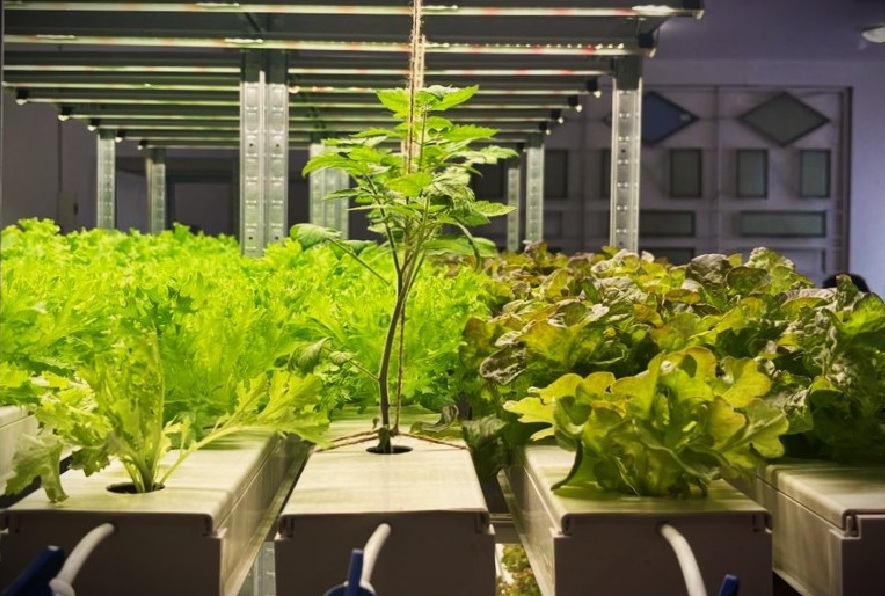
A hydroponics teaching laboratory called “Green Lab” has opened at the lyceum of the Ryzhska community in Zhytomyr region. The project was created with support from the local budget and a grant programme — the goal is twofold: to teach students modern growing methods and to provide the community with fresh greens year-round. The classroom is equipped with compact systems for growing salads and microgreens, pH and EC monitoring, and LED lighting with basic intensity control.
Teachers say the laboratory lets them combine biology, physics, computer science, and economics: students measure parameters, plan plantings, calculate production costs, and run a small sale of produce to the school canteen. This blend of theory and practice builds a real understanding of urban farming economics.
For the community it is also a step towards food resilience: local production reduces dependence on logistics, and surplus produce can be directed to social initiatives. Looking ahead, the school “Green Lab” could become the core of a micro-farm network — connecting neighbouring schools and clubs.
Practical lessons: the focus is on simple, reliable crops (greens, microgreens) that deliver a fast turnover and a strong educational effect; teachers benefit from sowing plan templates and sanitation checklists; students gain basic data skills (pH/EC logs, growth charts).
The project reflects a broader trend in Ukraine: in response to logistics and energy challenges, communities are introducing small hydroponic systems in schools, lyceums, and employment centres.