
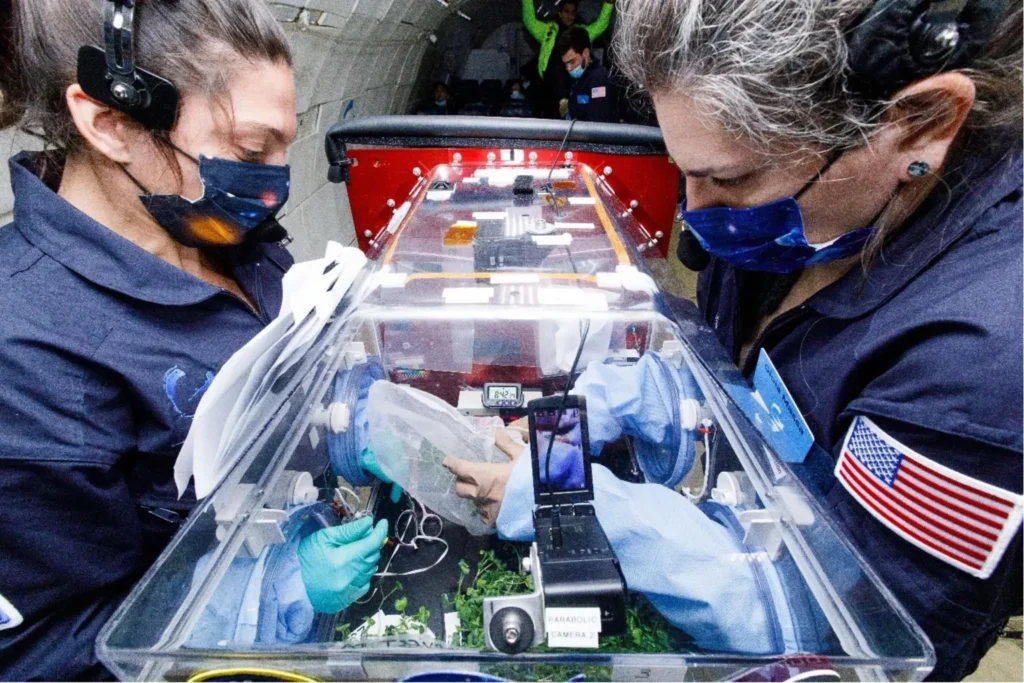
What could astronauts eating on the ISS possibly have to do with us? As it turns out, NASA’s research into growing microgreens in microgravity produces technological solutions that then transform ordinary Earth-based indoor farming. And that is not a metaphor.
Why microgreens are the ideal food for space
Conventional crops take months to mature. Microgreens take 7–21 days. They require no soil, take up minimal space, need no cooking, and concentrate the vitamins and minerals most critical for astronauts on long-duration missions. Iron, magnesium, potassium, and carotenoids are especially important — these are precisely the nutrients most commonly deficient in space crews.
What NASA is solving — and where the challenges lie
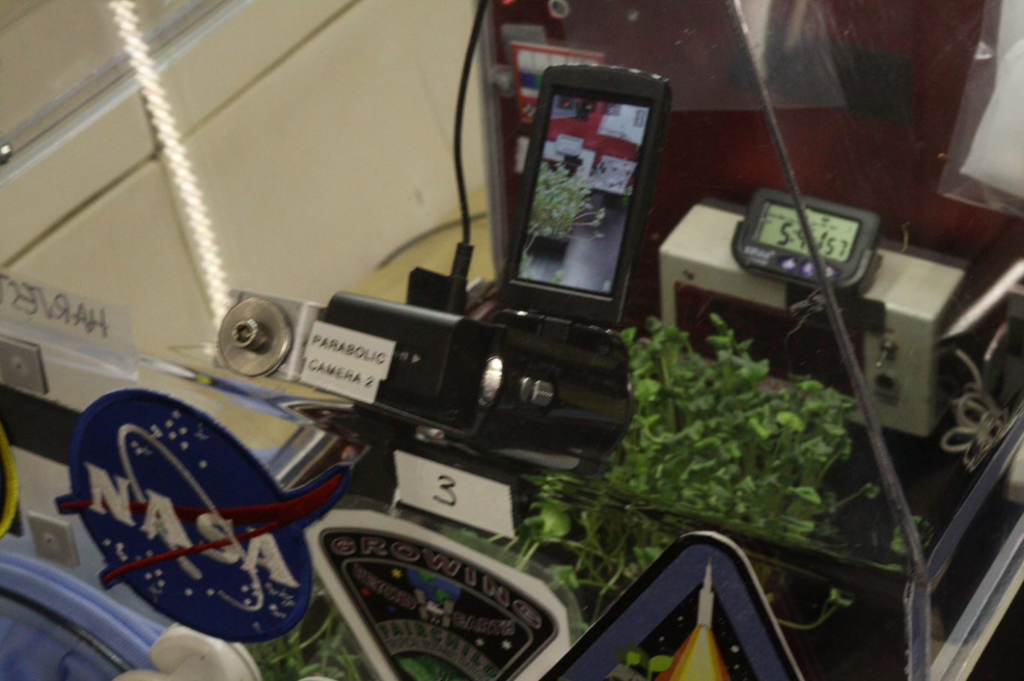
The main technical problem is that water in microgravity does not flow downward — it forms floating droplets. You cannot water seeds in the conventional way. NASA’s Kennedy Space Center developed specialised substrates with capillary irrigation and isolated chambers where the root zone and shoot zone are separated, to prevent microbial contamination of the edible part.
Three harvesting methods were tested: traditional scissors, a sliding blade, and a device resembling a miniature shredder. During parabolic flights — where gravity alternately disappears and doubles — each method produces different results.
What has transferred back to Earth
The NuCLEUS system from Interstellar Lab — winner of the NASA Deep Space Food Challenge — is an autonomous growing module for microgreens, vegetables, and mushrooms. It took the top prize of $750,000 and is now developing as a commercial product for Earth-based indoor farming. The two-level separation of root and leaf zones is already being adopted by some commercial microgreen producers to reduce contamination risk.
The practical takeaway
Every time NASA solves a food-growing problem under extreme conditions, solutions emerge for Earth-bound farmers too. LED spectra optimised for microgreens, pump-free capillary irrigation, root-to-leaf isolation — all of this is already available in commercial growing equipment.