
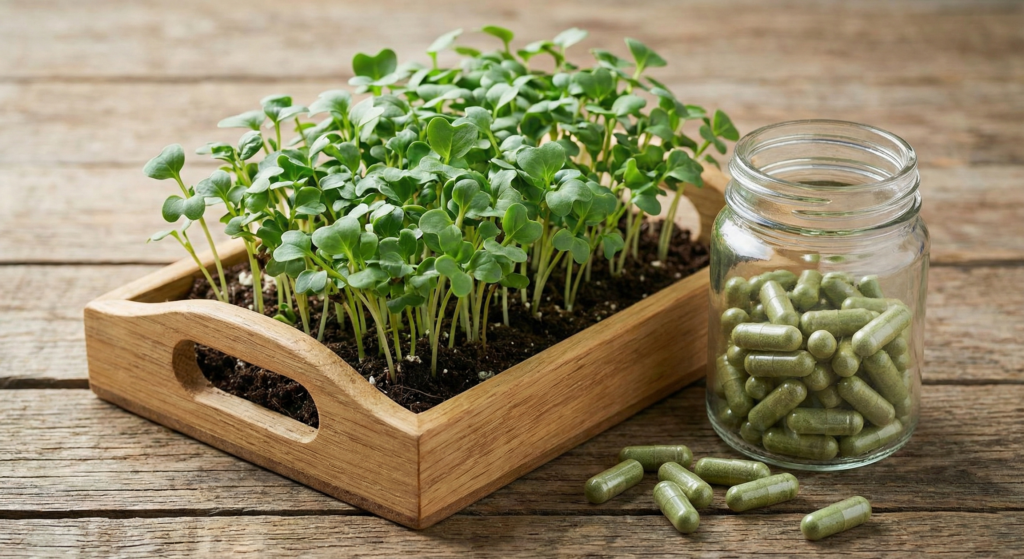
Broccoli is called the king of cruciferous vegetables. Its protective properties against cancer, diabetes, and ageing are backed by thousands of studies. The main actor here is a compound called sulforaphane. There is just one catch: in fresh broccoli, sulforaphane does not actually exist.
How did we end up buying expensive broccoli-extract supplements that are often worthless — and how does the simple mechanics of chewing activate the most powerful biochemical laboratory in the world? Let us work through this step by step.
Chemistry on Your Plate: The “Glow Stick” Effect
To understand why simply swallowing a capsule or a piece of broccoli is not enough, you need to look at the cellular structure of the plant.
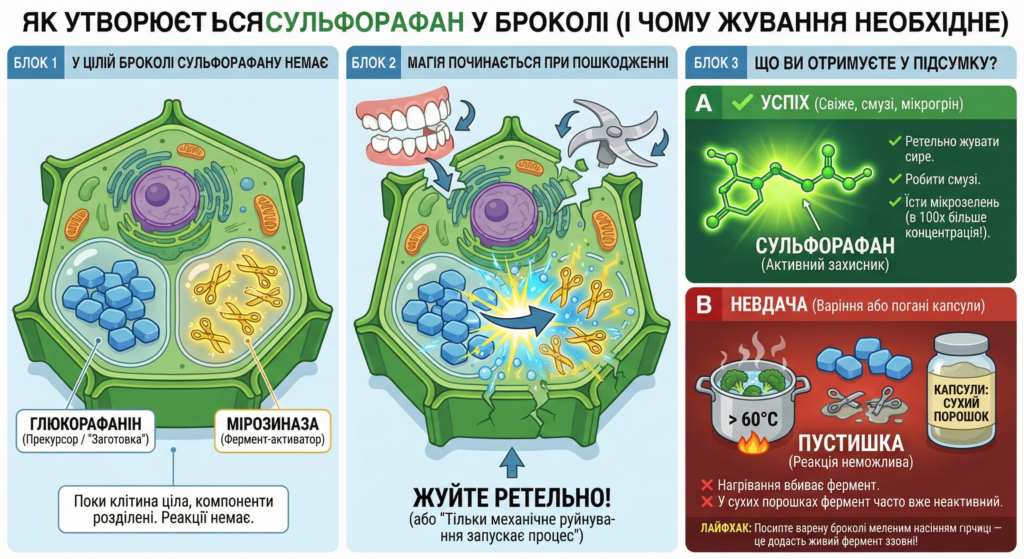
Sulforaphane is not a ready-made compound sitting in the stem waiting for you. It is the product of a chemical reaction. In an undamaged plant, two components are stored separately:
- Glucoraphanin (the sulforaphane precursor).
- Myrosinase (the activating enzyme).
They sit in separate “compartments” of the plant cell and never come into contact. This is the plant’s defence mechanism against pests. When a caterpillar bites a leaf, it ruptures the cell walls, the components mix, and the reaction occurs — sulforaphane is formed, which is toxic to the insect (but beneficial to us in the right doses).
Analogy: Think of the glow stick used at parties. Until you snap it (damaging the inner capsule), it does not glow. Broccoli works the same way: no crunch (no damage) — no magic.

Why Powder Capsules Are Usually Useless
Marketing has trained us to expect convenience: “Take a pill and be healthy.” The market is flooded with “Broccoli Extract” supplements. But why do most of them not work?
The answer lies in the enzyme myrosinase. It is extremely sensitive.
- Temperature: Myrosinase is destroyed by heating above 60 °C.
- Processing: Most dried powders are made by drying the raw material, often with heat, which kills the enzyme.
- No reaction: In a capsule you receive only glucoraphanin (the precursor). Without myrosinase, your body can convert only a tiny fraction of it into sulforaphane (through gut bacteria, but this process is extremely inefficient).
Conclusion: If you buy capsules that do not guarantee the presence of active, stabilised myrosinase, you are simply purchasing an expensive “half-finished product” that your body cannot utilise.
How to Get the Maximum: A Broccoli User Manual
To get the benefit, you need to act as a bioreactor yourself. Here are the rules that make your food genuinely therapeutic:
1. Mechanical Damage — the Key
You must chew the greens thoroughly. The more finely you break down the cell walls with your teeth, the more glucoraphanin will meet myrosinase. A smoothie is an excellent option — the blender does this job for you perfectly.
2. The “40-Minute Rule”
If you want to make broccoli soup, try this trick: blend the broccoli raw and leave it for 40 minutes. During that time the reaction will occur and sulforaphane will form. Unlike the myrosinase enzyme, sulforaphane is heat-stable! After that you can cook the soup — the benefit will be preserved.
3. The Law of Synergy (Mustard Seed Hack)
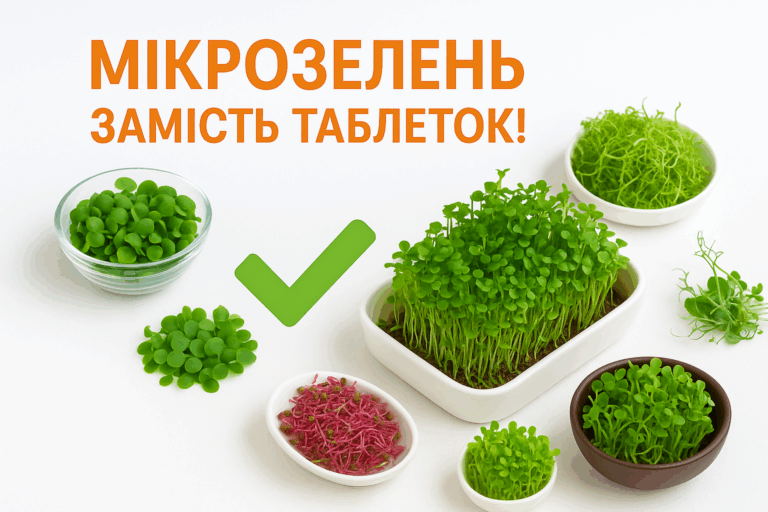
What if you want to eat cooked broccoli, where myrosinase has already been destroyed by heat? Add the enzyme from outside! Myrosinase is present in all cruciferous plants. Sprinkle your dish with ground mustard seeds, add a little fresh rocket, radish — or better still, fresh microgreens. This restores the lost enzyme to the dish and allows sulforaphane to be absorbed even from cooked brassicas.
Why Microgreens Are the Next Level
If mature broccoli is “gold,” broccoli microgreens are “diamonds.”
- Concentration: Glucoraphanin content in microgreens can be 10–100 times higher than in a mature head of broccoli.
- Live enzyme: Microgreens are eaten primarily raw. This means you receive 100 % active myrosinase.
- Easy absorption: Tender sprouts are easier to chew, ensuring perfect mixing of the two components.