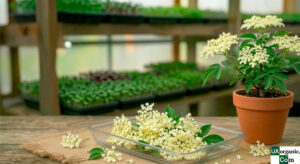

When and how available
| the moon | Accessibility |
|---|---|
| February — March | ✅ O. triangularis blooms in room conditions |
| April — May | ✅ O. acetosella — spring flowering in forests; peak quality |
| June — August | ✅ O. triangularis and O. corniculata continue to bloom |
| September — October | ✅ Autumn flowering; the leaves keep the taste |
| November — January | ✅ O. triangularis indoors - all year round |
Oxalis triangularis ("purple shamrock") blooms almost year round in room conditions. Along with wax begonia and pelargonium, it is one of the three edible flowers available in winter without a city farm directly from the windowsill.
| Form | Features of use |
|---|---|
| Fresh (leaves + flowers) | The main form is salads, decor, garnish, cocktails; period of 1-2 days |
| Infusion in water or syrup | Sour-lemon infusion for drinks, jellies and sauces |
| Kandovan | Small elegant decor for cakes and pastries |
| Frozen in ice | Cocktails and lemonades - flower shamrocks in a cube |
| Sorbet or granita | Concentrated sour infusion is the basis for refreshing desserts |
Taste, aroma & texture
Bright, lemon-apple, instantly sour — one of the purest sour flavors among wild plants. It is compared to sorrel, but softer and fresher; with green apple, but without sugar; with a drop of lemon juice, but more floral. The leaves are more sour than the flowers - the flowers have the same character, but more delicate, with a slightly sweet finish. Young seed pods provide acidity in a minimalistic texture. The stems are juicy and sour at once.
Fresh, green-sour, slightly lemony - without bright floral notes. The aroma is not the main asset of sourdough, the taste dominates completely. When you rub a leaf between your fingers, you can feel a distinct lemon-herb smell.
The flowers are small — 1–1.5 cm, five rounded petals, delicate and delicate. The leaves are heart-shaped, trefoil-like - the recognizable "false clover". The petals are soft, slightly waxy. The leaves are crispy and juicy. A unique motor reaction: leaves and flowers **fold at night, in the dark and during rain** — and then unfold again.
Safety & edibility
Edible flowers are not the same as florist flowers. Only flowers grown specifically for food use without synthetic pesticides are suitable.
- ✅ Flowers and petals
- ✅ Leaves are the main edible part
- ✅ Stems - juicy, sour
- ✅ Young green seed pods are edible, crunchy
- ✅ Potatoes O. tuberosa (oka) is a full-fledged root crop, cultivated in the Andes
- ⚠️ The roots of most species are edible, but small and rarely used
Are all varieties edible: Yes - all over 500 species of the genus Oxalis are considered edible. Basic culinary:
- Oxalis acetosella (common sorrel, wood sorrel) ✅ — forest, white or pink flowers
- Oxalis triangularis (false shamrock, purple soursop) ✅ — indoor, purple leaves, pink and white flowers
- Oxalis corniculata (yellow soursop) ✅ — garden weed, yellow flowers
- Oxalis tuberosa (oka) ✅ — cultivated, edible tubers
Do not confuse: sour cream (Oxalis) ≠ sorrel (Rumex) are different genera. Both are edible, but completely different plants.
Heat treatment: It is better not to heat fresh flowers and leaves - they wither and lose their color and texture. For sorbet and infusions — cold or warm water without boiling. The leaves can be lightly blanched to reduce the oxalic acid - if you plan to use large quantities.
- Yeast contains oxalic acid, the same acid found in begonia, spinach and rhubarb. Moderate use is safe for most people; large amounts can interfere with calcium absorption
- People with a tendency to kidney stones, gout or rheumatism should use carefully and moderately
- Oxalic acid toxic to cats, dogs and rabbits with regular use in large quantities - keep indoor plants out of their reach
- General scientific consensus: oxalic acid poisoning from sourdough in people with normal kidney function is virtually impossible at normal cooking amounts
- Allergy is rare; when using for the first time, start with a small amount
This information is general in nature and is not medical advice. Sources: USDA FoodData Central, EFSA.
Culinary use
Yeast is a functional sour ingredient in a minimalist form. Chefs use it where a live acid is needed without liquid — lemon juice or vinegar — and appearance is important. A soursop leaf or flower on a dish gives acid, botanical aesthetics and a recognizable "wild" note at the same time. NOMA and Scandinavian "New Nordic" cuisine discovered this plant for restaurants, but around the world it has long been known to foragers and children who chew it in the forest.
Fresh garnish
leaves and flowers are placed on the dish immediately before serving. Nothing extra. This is the main and simplest technique.
Cold infusion
leaves and flowers are poured with cold water and left for 1–2 hours. The water acquires a lemon-sour taste and a delicate green tint. Base for sorbet, cocktails and jelly.
Candy making
small flowers are covered with egg white and sugar, dried. The size of 1–1.5 cm gives a minimalist point decor.
Freezing in ice
a flower or shamrock leaf is placed in an ice cube tray. The plant is transparent and looks great in a cube.
Sorbet
concentrated cold infusion + sugar syrup + lemon juice; freeze in a freezer or glasses. A lemon-herb dessert made from completely wild plants.
Infusion in syrup
leaves and flowers are brewed in warm sugar syrup (not boiling), infused for 15–20 minutes, strained. Soft sweet and sour syrup for cocktails.
- Do not collect soursop along roads, on cultivated lawns and in industrial zones - it absorbs chemicals and heavy metals from the soil; only clean forests, meadows and your garden
- Do not confuse with clover - if the leaf is not sour immediately when touched with the tongue, it is not a soursop; clover is not toxic, but it will not give the desired taste
- Don't consume large amounts if prone to kidney stones - a moderate amount in a salad is safe for most, but pounds won't even eat spinach
- Do not heat flowers and leaves for decoration - they instantly wither and darken; use only as a fresh garnish or candied
Perfect pairings
salmon, trout, tuna, scallops — sour sour cream replaces capers or lemon and adds a botanical accent; Scandinavian and Japanese technique "acid + fish" in plant form.
goat cheese, ricotta, burrata — fresh sourness cuts through the creamy, fatty base; laconic and elegant couple.
poached eggs, frittata, egg toast - the sourness and botanical beauty of shamrock on the yellow background of the yolk; effortless restaurant aesthetics.
sorbet, granita, lemon tart, panna cotta - the acidity of sourdough supports the fruity and citrus profile of desserts; leaves and flowers as decor on an acidic basis.
in the Scandinavian and British forgery tradition, sourdough is a side dish for venison - here soursop plays the same role as cranberry sauce or sour berry.
the sour note of soursop sharply contrasts with the bitterness of dark chocolate 70%+; petals or leaves as decoration for tarts, truffles or chocolate mousse.
How to select & store
- The flowers are fresh, springy, without signs of wilting - check: the leaves should be open (this means the plant is in the daytime phase)
- The sour taste when touching a leaf to the tongue is the main criterion for identification and freshness
- For collecting in the wild: a clean place, away from roads; recognize the heart-shaped leaves and the shamrock
- O. triangularis on the windowsill is the most convenient and reliable source
Buy edible soursop flowers from growers who grow them specifically for food use. O. triangularis as a houseplant is available at garden centers — but make sure the plant has not been treated with pesticides. If you grow it yourself or collect it in the forest, this is the cleanest option, if the place is clean.
Freshness after cutting: 2–3 days
- Fresh flowers and leaves — airtight container with a wet paper towel, refrigerator +4...+6°C, term 1–2 days
- Do not wash before use - moisture accelerates wilting
- An important detail: leaves and flowers can be closed in the refrigerator - this is a normal reaction to darkness; at room temperature and light they will open again
Composition & properties
Common soursop (O. acetosella) was traditionally used in folk medicine for scurvy - thanks to the significant content of vitamin C. In ancient Egypt, Greece and Rome, it was known as a sour edible green. Native American tribes - Kiowa, Cherokee, Iroquois - chewed the stems to quench thirst and for colds.
| Nutrient | Value (per 100 g of fresh leaves and flowers) |
|---|---|
| Caloric content | ~20–30 kcal |
| Vitamin C | ~50–70 mg — traditionally used for scurvy |
| Vitamin A (beta-carotene) | present |
| Potassium | ~300–400 mg |
| iron | ~1–2 mg |
| Oxalic acid | ~600–900 mg — the main taste component (sour note); level as in spinach |
| Flavonoids | are present |
| Tanning substances | are present |
Horsetail is one of the most common wild edible plants in the forests of Northern Eurasia and North America. Its edible use is documented in dozens of folk traditions — from Ireland and Scotland, where it was considered a "true shamrock," to Japan and China, where young leaves are eaten in salads and soups.
Oxalis tuberosa (oka) — a separate culinary species with edible tubers. According to the International Potato Center, there are eyes the second most widely cultivated root vegetable after potatoes in the Andes. In New Zealand, okra tubers are known as "New Zealand yams" and are a popular garden staple.
The NOMA restaurant in Copenhagen uses Oxalis triangularis as one of its signature botanical ingredients—along with other wild plants from Scandinavia. This raised interest in the genus Oxalis among bosses around the world.
Accurate tabular data for flowers and leaves Oxalis USDA FoodData Central does not publish a separate line for most species. Sources: USDA FoodData Central, scientific publications about Oxalis spp.