When and how available
| the moon | Accessibility |
|---|---|
| May — June | ✅ Beginning of flowering; collection - until St. John's Day (June 24) |
| July | ✅ The peak of flowering is the traditional time of collection |
| August | ✅ Completion of flowering; the quality decreases |
| The rest | ❌ Not the season |
St. John's wort flowers are traditionally harvested around June 24, St. John the Baptist's Day, which is where the English name comes from. St. John's Wort. At this time, the plant is in full bloom and is considered the most "powerful" - both in folk medicine and in the modern understanding of pharmacological activity.
| Form | Features of use |
|---|---|
| dry (tea) | The main culinary form; flowers and leaves; term up to 12 months |
| fresh | Tea made from fresh flowers, decoration of dishes; use on the day of collection |
| Tincture (oil) | The traditional medicinal form is red oil on solar infusion |
| Syrup | Rarely; flowers with honey and water |
Taste, aroma & texture
Astringent-bitter, balsamic-herbal, with a slightly sweet honey-floral undertone. Fresh flowers have a more delicate taste than dry ones. Infusion (tea) — warm, herbal, with a slight astringency; goes well with honey and lemon. The taste resembles a combination of chamomile and yarrow - with a more pronounced bitterness.
Herbal-balsamic, slightly resinous - with a warm, slightly honey note. When rubbing the black drops between the fingers on the edges of the petals, a pronounced aroma of essential oils appears. The infusion has a pleasant, warm herbal aroma.
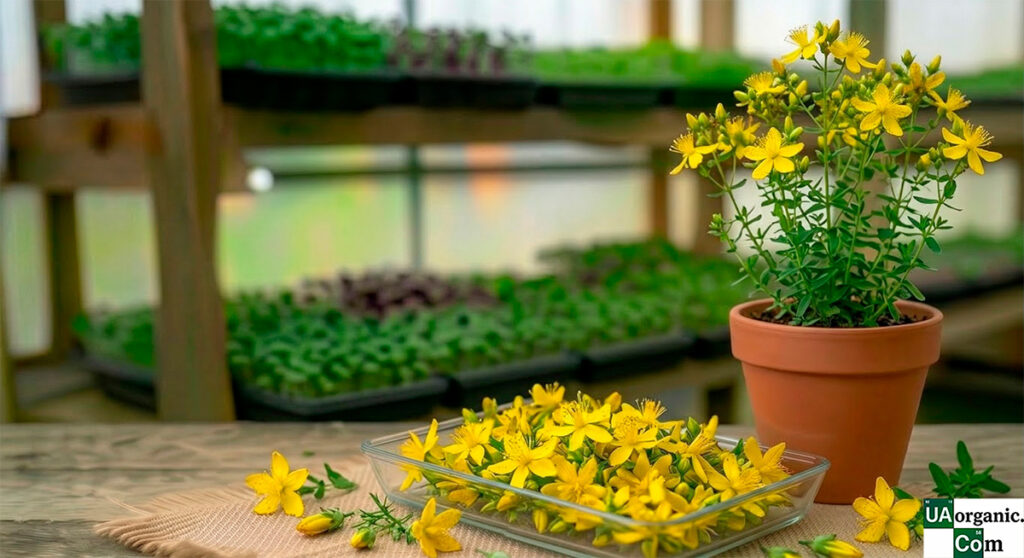
Medium-sized flowers - 2–3 cm, five petals with characteristic black or dark purple dots on the edges. The petals are delicate, yellow. A characteristic sign of identification: when the petal is rubbed between the fingers, a dark ruby or red juice appears - hypericin in free form. ---
Safety & edibility
Edible flowers are not the same as florist flowers. Only flowers grown specifically for food use without synthetic pesticides are suitable.
- ✅ Flowers — in tea or as a fresh decoration in small quantities
- ✅ Young leaves - in tea or in a small amount in a salad
- ⚠️ Seeds and mature plants have a higher content of active substances
- ❌ The roots are not used
Heat treatment: Hypericin is partially preserved during normal tea brewing. To reduce the photosensitizing effect, use in the evening or avoid prolonged exposure to the sun after consuming large amounts.
⚠️ Interactions with medicines - the longest list in the catalog:
St. John's wort activates liver enzymes (CYP3A4, CYP2C9, P-glycoprotein), which accelerate the metabolism of many drugs and reduce their concentration in the blood. This is clinically documented and subject to EU and FDA regulatory warnings.
- Antidepressants (SSRIs, TCAs) — the risk of serotonin syndrome (excess serotonin): symptoms from tremors and diarrhea to convulsions and fatal complications
- Warfarin — reduces the anticoagulant effect; risk of thrombosis
- Oral contraceptives — reduces efficiency; documented unwanted pregnancies
- Antiretrovirals (HIV, hepatitis C) — significantly reduces the effectiveness of treatment
- Chemotherapy (irinotecan) — reduces the concentration of the drug in the blood
- Cyclosporine — reduces efficiency; documented cases of graft rejection
- Triptans — the risk of serotonin syndrome
- Digoxin — lowers the concentration in the blood
- Photosensitizing drugs — increases photosensitivity
Photosensitization: hypericin when used in large quantities increases the sensitivity of the skin to the sun. With normal culinary use (a few flowers in tea), this effect is minimal, but with large doses, it can cause burns, rashes and dermatitis.
Pregnant and nursing mothers should not use (Mayo Clinic and EFSA recommendation).
Toxic for animals: The USDA classifies St. John's wort as poisonous to cattle, horses, and sheep—due to hypericin and photosensitization.
This information is general in nature and is not medical advice. Sources: USDA FoodData Central, EFSA.
Culinary use
St. John's wort is first of all a medicinal plant, and only then a culinary one. The main culinary use is tea. Flowers and leaves are brewed in hot water and used as a herbal drink. In folk tradition from Scotland to the Balkans and the Caucasus, St. John's wort is one of the basic herbal teas along with chamomile and mint.
As a culinary decoration, yellow flowers with black dots are a recognizable and beautiful accent on a dish. But in a culinary context, it is important to remember: even a few flowers eaten by a guest taking antidepressants or contraceptives can become a problem. Therefore, St. John's wort in restaurant serving requires the informed consent of the guest.
Brewing tea
1–2 tsp. fresh or dry flowers and leaves per 250 ml of boiling water; infuse for 10–15 minutes under the lid; strain Longer infusion increases the bitterness and concentration of active substances.
Drying
cut off the tops of the shoots in dry, sunny weather; tie in bundles and hang in the shade with good ventilation; dry for 2-3 weeks. Store in a closed jar in a dark place for up to 12 months.
Infusion in honey
immerse fresh or slightly dried flowers and leaves in liquid honey; close and leave for 2–4 weeks; turn the can over regularly. Honey acquires a herbal aroma and becomes more golden.
Infusion in olive oil
pour olive oil over the flowers in a glass jar; put in the sun for 4-6 weeks; the oil becomes intensely red from hypericin. Traditional outer form (not for eating in large quantities).
Dish decor
put a few fresh flowers immediately before serving; avoid heating - the flowers immediately wither and darken. For restaurants: it is imperative to inform guests about pharmacological activity.
Ice cubes
a flower in an ice form with distilled water; spectacular decor for cocktails and lemonades; the bright yellow color remains after freezing.
- Do not serve St. John's wort to guests without warning - it is pharmacologically active; in a restaurant context, this requires separate labeling or a verbal warning
- Do not use while taking medications from the list above without consulting a doctor
- Do not collect in polluted areas - St. John's wort can accumulate nitrates
Perfect pairings
herbal tea - honey softens herbal bitterness, lemon adds freshness; a classic combination in all folk traditions.
in herbal collections and teas, softer aromas balance the pronounced herbal character of St. John's wort; a popular anti-stress blend.
in herbal tea — a refreshing counterpoint to the balsamic and slightly bitter profile; balance of heat and coolness.
a few flowers as a decoration in light cheese appetizers or bruschetta - yellow color and herbal aroma without a significant taste role.
cornflower, chamomile, John's wort — in decorative herb bouquets for the table; yellow next to blue and white.
in summer lemonades and cold teas - herbal infusion of St. John's wort + raspberry or lemon as a basis for a refreshing drink.
How to select & store
- Bright yellow petals with black or dark purple dots on the edges are a characteristic feature of the species
- When the petal is rubbed, dark ruby juice; confirms the type and quality
- Harvest in dry, sunny weather, in full bloom, around June 24 is the traditional time
Where to buy is important: Collect only on clean meadows, forest edges and slopes away from roads. Do not collect near industrial zones and highways. For regular use, look for certified manufacturers of medicinal herbs.
Freshness after cutting: 2–3 days
- Fresh flowers should be used on the day of collection or the next day
- Dry flowers and leaves - airtight jar, dark place, up to 12 months
Composition & properties
St. John's wort is one of the most studied medicinal plants in the world - thousands of scientific studies in the last 50 years.
| Component | Meaning |
|---|---|
| Hypericin and pseudohypericin | red naphthodiantrones; photosensitizer and antidepressant component |
| Hyperforin | the main antidepressant component; neurotransmitter reuptake inhibitor |
| Flavonoids (rutin, quercetin, luteolin) | antioxidants |
| Essential oils | α-pinene, carvacrol; the aroma of the plant |
| Tanning substances | viscous taste |
| Xanthones | antioxidant properties |
| Caloric content | minimal - used in small quantities |
St. John's wort is one of the best-selling herbal dietary supplements in the world. Clinical studies support its effectiveness in mild to moderate depression at the level of some antidepressants—which is why interactions with other antidepressants are so serious.
In 2000, the European Medicines Agency (EMA) and the FDA issued official warnings about St. John's wort drug interactions after documented cases of transplant rejection and unwanted pregnancies in patients taking cyclosporine and oral contraceptives at the same time as St. John's wort.
Name Hypericum — from Greek hyper (over) and eikon (icon): the plant was traditionally hung over icons in the house to protect against evil spirits.
The information is general in nature and does not constitute medical advice.