
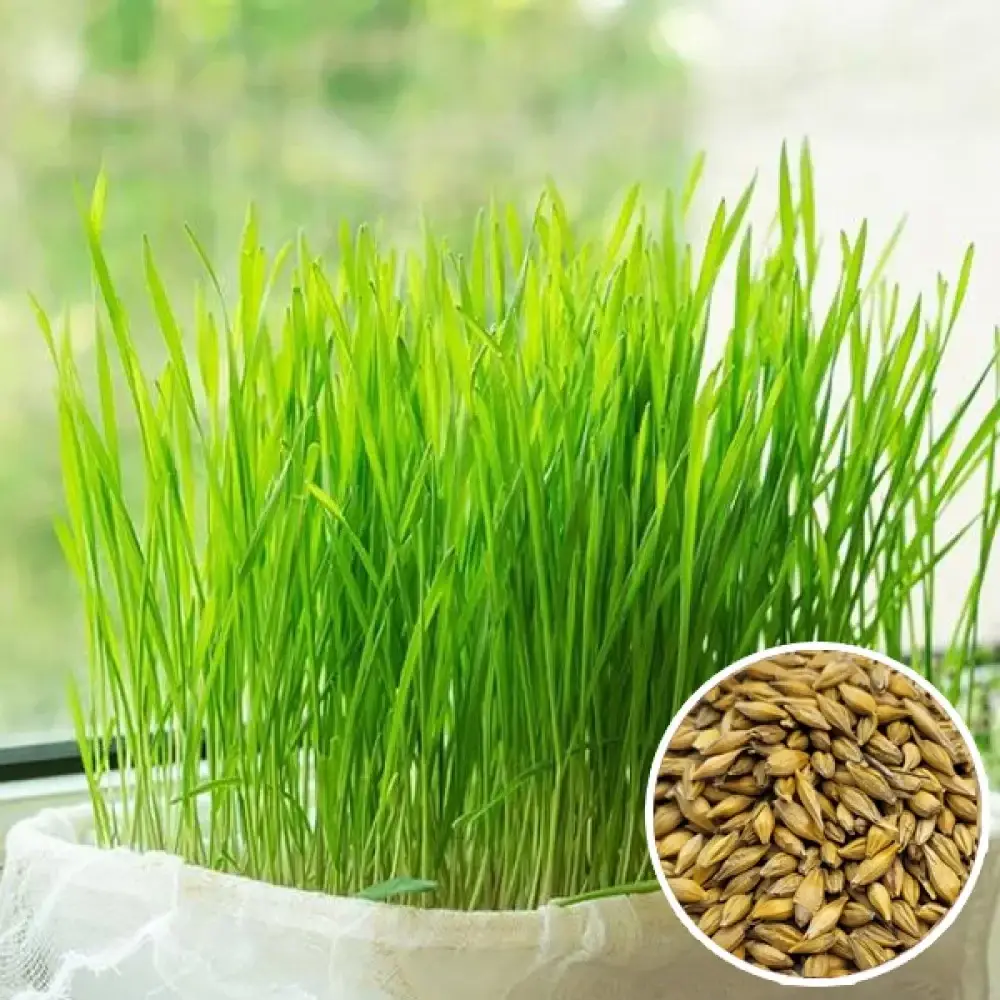
Flavor profile
Taste & aroma
Intense, grassy, sweet - without sharp "green" aggressiveness. The aroma of freshly mown meadow.
without sharp "green" aggressiveness. But still, it is a specific taste that needs getting used to or masking in a smoothie
Freshly mown meadow - just like that. Herbal, slightly sweet, reminiscent of the smell after rain on the field. When growing indoors, this aroma is quite noticeable.
Fibrous, Gentle, Soft - barley leaves are not chewed, but juice is squeezed or whipped in a blender. Trying to eat grass whole will only give you the sensation of chewing hay
Ripening and optimal harvest time
The optimal moment: the stem is juicy, the second leaf has not yet started to grow, the taste is the most balanced.
The taste is richer, a little more bitter, but still suitable for juice.
The grass becomes "woody", the stem is fibrous and bitter, the quality of the juice drops sharply.
Why flavor may vary batch to batch
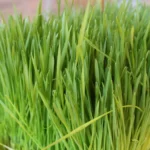
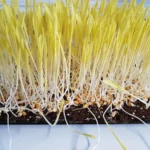
The sweet "green" taste of barley depends on the lighting and time of cutting. At bright light and a temperature of +18...+22°C sprouts are deep green with a higher chlorophyll content. At low light - pale yellow and less nutritious. The optimal cut — on the 8-10th day, similar to wheatgrass. Barley is sweeter and milder than wheat, with a less tart taste.
Culinary use
How to use
Barley is a great culinary accent. Add fresh at the end of cooking or directly on the plate.
Morning shot
30–50 ml of pure barley juice on an empty stomach is a classic detox ritual. Drink water or lemon juice
Green smoothie
barley + banana + mango + coconut milk - the sweet base hides the herbal taste, and the color remains bright green
Detox cocktail
barley juice + apple + cucumber + ginger + lemon — a refreshing and functional drink
Frozen cubes
pour the juice into an ice cube tray and freeze. Cubes are added to smoothies or water for several weeks
For cats and dogs
a live tray on the floor or windowsill - the animals are slaughtered themselves as needed
Cosmetic ice
frozen barley juice is used to tone the skin of the face - rub a cube in the morning
Perfect pairings
Smoothies, juice, soup are the best combinations
An auger juicer is the only correct tool
Sweet fruits completely neutralize the herbal taste of barley in the blender
- Do not try to chew barley grass - it is fibrous and is not digested in this form, only juice or finely whipped mass
- Do not use a centrifugal juicer - it will not squeeze the juice from the herb, it will only clog the filter
- Do not drink large portions of pure juice without getting used to it - 30 ml is enough to start, excess can cause nausea in sensitive people
- Do not store fresh juice for more than 20-30 minutes - enzymes are destroyed, and chlorophyll is oxidized. Squeezed - drank immediately
Home storage
How to store
It is more convenient than most microgreens to store barley alive - in a tray, not cut.
Keep at +4...+6°C or at room temperature on a windowsill with diffused light. In the refrigerator at +4°C, the grass stops growing and remains fresh for up to 7 days. Continues to grow at room temperature - cut as needed.
Place in a closed container in the refrigerator. At +2...+5°C, the term is up to 7 days. The grass gradually loses its juiciness, but remains suitable for juice.
Don't wash until ready to eat. Wet greens spoil much faster. Rinse just before serving.
Pro tip: **Sell live in a tray** - especially for the animal market. A cat or a dog cuts the grass every day, the tray "lives" for 2-3 weeks. For fitness customers: live tray + mini juicer - a ready-made product for daily shots without additional effort on your part.
Nutrients & health
Benefits & composition
Barley is valued for its rich vitamin-mineral composition and bioactive compounds typical of microgreens.
Like most microgreens, barley contains a concentrated amount of nutrients relative to its weight — many times more than the mature plant.
| Protein | 4.5 g — building material for cells |
|---|---|
| Calories | ~198 kcal |
| Vitamins | C |
| Minerals | Calcium, Iron, Potassium |
- For people with gluten intolerance: green barley grass itself is practically gluten-free, but there is a risk of grain particles getting into it when cut. With confirmed celiac disease - with caution and only from a proven source
- For those with a sensitive stomach: start with 15-20 ml of pure juice and gradually increase to 30-50 ml. Pure juice is a very active substance
- Pregnant and lactating women: consult a doctor before introducing large amounts into the diet
This information is general in nature and is not medical advice. Composition data: USDA FoodData Central.
Worth knowing
Chlorophyll
the main functional component of barley. A high concentration of chlorophyll is traditionally associated with maintaining the body's alkaline balance and is a subject of wide scientific interest. It is chlorophyll that is responsible for the rich green color of the juice and its characteristic herbal taste.
SOD enzyme (superoxide dismutase)
an antioxidant enzyme present in young cereal sprouts. It is traditionally associated with the protection of cells from oxidative stress. It is present only in live or freshly squeezed juice - it is destroyed during heat treatment.
Vitamin B12
in plant food - a rarity. Barley is one of the few plant sources where researchers have documented its presence, although the concentration and digestibility may differ from animal sources. This fact is traditionally of interest to vegetarians and vegans.
Calcium and iron
are contained in a significant amount in terms of dry weight. Barley juice can be an interesting addition to the diet for those looking for plant-based sources of these minerals.
Barley: how to grow — step-by-step guide
Growing parameters, agronomy, common mistakesGrowing parameters
Grain (grain in chaff)
Step-by-step guide
Seed preparation
Barley is a cereal, and there are special requirements for seed quality. This is one of the few cases where saving on seeds directly leads to the loss of the entire batch.
Which grain is suitable:
- Seeds for germination or microgreens from specialized suppliers
- Edible barley (wholegrain or hulled) is of proven quality
Which grain is not suitable:
- Fodder (feed) grain from the market or agricultural store is often infected with mold, bugs or treated with chemical preservatives. One such batch can infect the entire farm
- Grain without a clear harvest date — old germination is unpredictable
Soaking is a mandatory stage:
- Wash the grain in clear water - barley is dirty, with dust and small debris
- Fill with cold water in a ratio of 1:3
- Leave for 10-12 hours
- After soaking, rinse again with running water
Add 1 tsp to the soaking water. hydrogen peroxide (3%) or a few crystals of potassium permanganate to a faint pink color. This disinfects the grain and significantly reduces the risk of mold, which is the main problem of cereals. Before sowing, rinse with plain water.
Sowing
- Moisten the substrate evenly
- Spread the soaked and washed grain in a dense even layer - the grain lies close to each other
- The norm of 40 g is a very dense "lawn". The grain can touch, but not lie in two layers
- Lightly press with the palm of your hand for tight contact with the substrate
Why the norm is critical: less than 30 g — a liquid uneven lawn with openings. More than 50 g - the grain lies in several layers, the bottom layer rots without air access.
The clamp is heavy and mandatory
Required weight: 2 kg - minimum.
Cereal roots are extremely strong. Without heavy pressure, it does not sink into the substrate, but lifts the entire array of grain "cap" into the air. As a result: the roots are on the surface, the grain dries up, the seedlings are uneven and weak.
How to organize:
- Empty tray on top + 2 kg of load (brick, container filled with water, board with weights)
- The load must lie absolutely flat - cereals are especially sensitive to the skew of the clamp
For cereals, use the heaviest load you have - 3-4kg will give better results than the standard 2kg. Powerful barley roots easily lift 1–1.5 kg without effort.
Darkness (Blackout) — 3 days
The pile stands in the dark at +18...+24°C. Barley germinates very quickly - already on the 2nd day under the load you can see an even "hedgehog" of white sprouts.
What is normal:
- The white or cream color of the sprouts will turn green in the light
- Dense flat carpet under the load
- Light cereal aroma
What is not normal:
- A "cobweb" between the stems is the first sign of mold. Immediately expose to light and increase ventilation
- Sharp sour smell → the grain is poorly washed or there is no ventilation
- Soft brown spots → local rot. Check the drainage of the substrate
Watering during a blackout: usually not needed. At a temperature above +24°C — spray from below through the pallet on the 2nd day.
Vegetation in the light — 7–9 days
Expose to the light when the sprouts are 3–5 cm high. Barley turns green in the light very quickly — in 12–24 hours the stalks acquire a bright green color.
Lighting:
- LED phytolamps: 16–18 hours a day, distance 20–30 cm
- Natural window sill: suitable, but the uniformity is lower
- Barley is not demanding on intensity - ventilation is more important than the power of the lamps
Watering:
Barley is the record holder for water consumption among all cereal crops. A thick lawn actively evaporates moisture.
- Bottom watering through a pallet is a must, 1–2 times a day
- A sign of deficiency: the tips of the leaves turn yellow and dry up in a few hours - this is a critical signal, water immediately
- A sign of excess: water stagnates between the stems - dry, increase ventilation
Ventilation is critical from day one:
Mildew is the main enemy of cereals. In a thick lawn of barley without air circulation, a "web" appears already on the 4th-5th day in the light. A fan is not an option, but a mandatory element when growing cereals.
Direct the fan not directly at the tray from above, but from the side or below - this way the air passes between the stems, where the mold occurs, and not just blowing the surface.
Watering
- Water it 2 times a day (morning and evening)
- Bottom watering is better - cereals are moisture-loving and dry quickly
- Barley actively drinks: do not skip evening watering in warm rooms
- A sign of lack: the tips of the leaves turn yellow or dry up → increase the frequency of watering
Storage
| Uncut in tray | Fridge +4...+6°C | up to 3 weeks |
|---|---|---|
| Cut in container | Refrigerator | up to 7 days |
| Room temperature | 1–2 days |
Harvest
- Height 12–15 cm
- The stem is bright green, juicy, elastic
- The second leaf has not yet started to grow or is just starting to grow
- The taste is sweet, without noticeable bitterness
With scissors or a knife in bunches. Cut as close to the substrate as possible - this will maximize the yield of sap. There is no regrowth.
Squeeze immediately after cutting. Fresh juice - for 20-30 minutes, then the enzymes are destroyed. To freeze in cubes, squeeze and pour into molds within an hour after cutting.
Seasonal adjustments
- - Reduce soak to 8: 10 hours - in warm water, the grain swells faster, long soaking increases the risk of souring
- - Rinse more thoroughly after: soaking
- - Increase ventilation from the first day in the light: in heat, mold develops twice as fast
- - Expect cycle reduction by 1: 2 days
- - Increase soak to 12: 14 hours
- - Use room temperature water for: soaking and watering
- - Keep the stack in a warmer place during: blackout — at +14°C and below, growth slows down sharply
- - Expect the cycle to be extended by 2: 3 days
- ---
Water pH and EC
Optimal range for barley: 6.0–7.0. Barley is not picky about pH. Hard tap water is fine. At a pH below 5.5, seed germination may decrease.
Optimal range: 0.8–1.5 mS/cm. Like wheatgrass, barley is grown without mineral additives — the grains get enough nutrition from the endosperm. Watering with clean water is the standard for cereal microgreens.
Experienced grower tips
Peroxide when soaking is insurance against mold
1 tsp. 3% hydrogen peroxide per liter of water when soaking — and the risk of fungal infection in the first days drops significantly. This is the simplest and cheapest preventive measure for cereals.
The fan is on the side, not the top
Air must pass between the stems in the lower part of the lawn - that's where the "cobweb" occurs. The fan from above blows only the tops and hardly helps. Direct the stream from the side or below through the feet of the stand.
Yellow tips = water now
Barley very precisely signals a lack of moisture: the tips of the leaves turn yellow in 3-4 hours without watering. If you see it, don't wait for the next scheduled watering.
A live tray for cats is a separate niche
Cat owners are a stable audience with regular demand. One tray of barley per week is a standard order. Barley is milder than wheat and is better tolerated by cats with sensitive digestion. It is worth allocating a separate stream of crops for this niche.
Frozen cubes are an additional product
If there is a surplus of the crop, squeeze out the juice and freeze in cubes. Sold as a "frozen barleygrass shot" — a convenient format for customers without a juicer. The storage period is up to 3 months.
Do not mix with other crops in the rack
Mold from cereals spreads quickly. If you have a suspicious tray of barley - isolate it from other crops until the situation is clarified.
Agronomy notes and common mistakes
- Sowing: Soaked (6–8 hours) and washed barley — a dense carpet in one layer. Equal distribution is critical.
- Clamp: 1.5–2 kg, 2–3 days. Barley needs a clamp for reliable root contact with the substrate.
- Temperature: +15...+20°C. Cereals love coolness - at +24°C they grow faster, but are less tender.
- Watering: 2 times a day is mandatory. Barley does not tolerate drying out - the tips of the leaves react instantly.
- Ventilation: Good ventilation is important — a dense grass carpet can "suffocate" when the air stagnates.
- Fodder grain from the market → Mold from day one, bugs → Only seeds from specialized suppliers
- Weak pressure (<2 kg) → "Cap" of grain in the air, roots on the surface → Minimum 2 kg, better 3–4 kg
- Lack of ventilation → "Cobweb" between the stems, mold → Fan on the side from the first day in the light
- Lack of watering → Yellow leaf tips in a few hours → Bottom watering 1–2 times a day is mandatory
- Delay (>14 days) → The stem is fibrous and bitter, the juice is dark → Cut no later than the 12th day
- Selling as "salad greens" → The client is not satisfied - it cannot be chewed → Explain: this is grass for juice or for animals
- Storage of juice → The juice darkens and becomes bitter after an hour → Squeeze and use immediately or freeze
Variety selection
Membranous barley
with vole
A traditional choice. Chaff helps to retain moisture during soaking and gives more even stairs. The most common seed for microgreens on the market.
Whole grain barley
Without chaff, bare grain. Germinates a little faster and more evenly, there is less risk of chaff getting stuck between the stems when cutting. The juice is somewhat milder in taste. If available, it is the best choice for commercial cultivation.
Що далі?
More crops in the catalog
Explore similar and contrasting flavors — from basil to amaranth