
Flavor profile
Taste & aroma
Aniseed, sweet, licorice - fennel will be a discovery for you. Intense, spicy aroma.
fennel will be a discovery for you. If not, you are unlikely to like this green
Intense, spicy, slightly medicinal - like anise drops or herbal tea. It is formed thanks to the essential oil of anethole, which is the main aromatic component. The smell is felt even during cultivation and is well transferred to drinks during infusion.
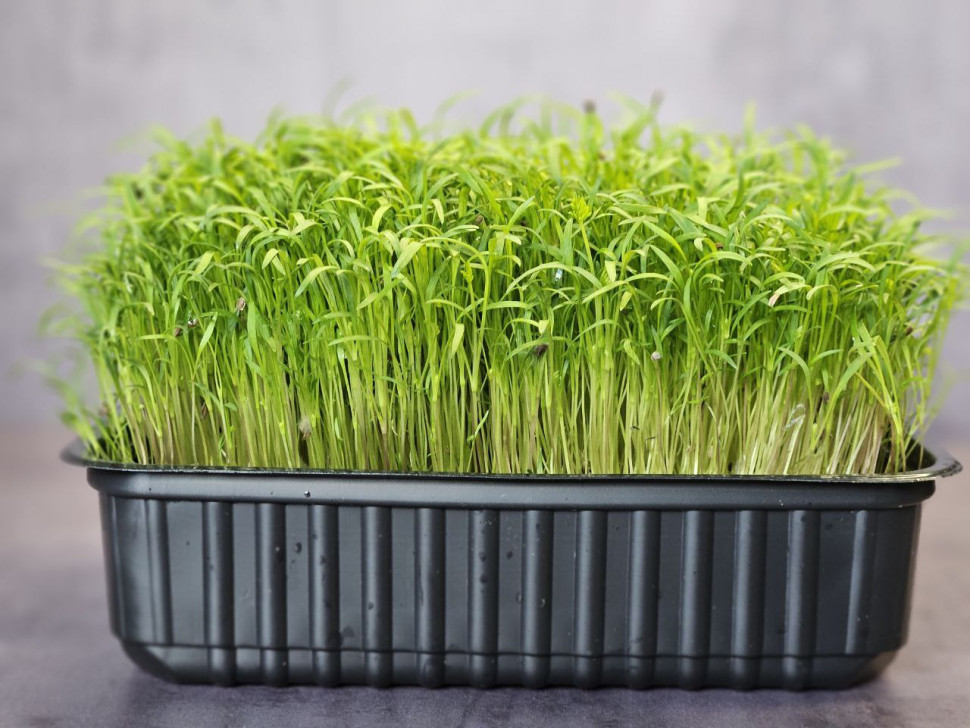
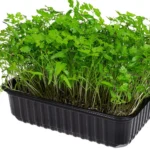
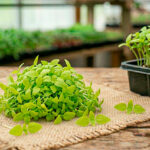
Gentle, Thin, Soft - thin openwork leaves on thin stems. It resembles a cloud or fluffy feathers
Ripening and optimal harvest time
The cotyledons are not yet fully opened, the taste is bright, but thinner.
The first carved leaf appeared, the aroma is the most complete, the aniseed note is at its peak.
The stems become coarser, the taste becomes sharper and richer.
Why flavor may vary batch to batch
The anise aroma of fennel is formed due to trans-anethole. The intensity depends on the lighting: at bright light and a temperature of +18...+22°C the aroma is rich and sweet. At weak light sprouts are pulled out and smell much weaker. Fennel is a slow culture (12–14 days); an early cutting stage produces a less aromatic product.
Culinary use
How to use
Fennel is a great culinary accent. Add fresh at the end of cooking or directly on the plate.
Salmon or tuna tartare
fennel on top instead of traditional dill - the aniseed note suits the fish better and looks more elegant
Ice cream (vanilla or lemon)
a few sprigs of fennel before serving turn an ordinary dessert into something restaurant-like unusual
Orange-fennel salad
a thinly sliced orange, olive oil and a handful of microfennel — a minimalist yet classic combination
Pana cat
instead of mint, use fennel - aniseed freshness and milky creaminess complement each other
Lemonade or herbal lemonade
leave the stems to infuse for 15–20 minutes and filter — the aroma is fully transferred to the drink
Fish in an envelope or on paper
sprigs of fennel inside when baking - the aroma permeates the fish from the inside
Perfect pairings
Salmon, orange, panna cotta are the best combinations
Fennel and white fish are classics of gastronomy
A particularly winning combination is citrus fruits: orange, grapefruit, tangerine
- Do not add to hot dishes during cooking - the delicate texture softens, the aroma becomes sharper and more unpleasant when heated
- Do not combine with sharp spices (garlic, hot pepper) - the anise profile of fennel is lost among stronger flavors
- Do not confuse with dill when serving - they look similar, but the taste expectations will be completely different; it is better to warn the guests immediately
Home storage
How to store
Fennel keeps longer than most microgreens. Follow simple rules to keep it fresh for up to 7–9 days.
Keep at a temperature of +4...+6°C in the refrigerator. The openwork structure of the leaf needs moisture - do not let the substrate dry out. Cut just before serving. The term is up to 7–9 days from the date of cultivation.
In a closed container in the refrigerator (+4...+6°C), preferably with a paper towel inside to avoid condensation. The term is up to 4-5 days. Due to the thin structure of the fennel leaf, it wilts faster than most microgreens.
Don't wash until ready to eat. Wet greens spoil much faster. Rinse just before serving.
Pro tip: Fennel is a niche crop, so it's best to sell it live in a tray to order: restaurants where the chef knows this green will be grateful regular customers. Selling cut pieces at retail is difficult due to the specific taste and short appearance of the products.
Nutrients & health
Benefits & composition
Fennel is valued for its rich vitamin-mineral composition and bioactive compounds typical of microgreens.
Like most microgreens, fennel contains a concentrated amount of nutrients relative to its weight — many times more than the mature plant.
| Protein | 1,2 г g — building material for cells |
|---|---|
| Calories | ~31 kcal |
| Vitamins | C |
| Minerals | Potassium, Manganese, Copper |
- People with individual sensitivities to anise or licorice-flavored products should start with a small amount
- Pregnant women should be careful — the high concentration of active essential oils makes microgreens richer than regular greens; it is better to consult a doctor
- For people with strong allergies to plants of the umbrella family (carrot, parsley, dill, coriander) — fennel belongs to the same family, so individual reactions should be taken into account
This information is general in nature and is not medical advice. Composition data: USDA FoodData Central.
Worth knowing
Anethol
essential oil responsible for the characteristic aniseed aroma of fennel. The concentration of essential oils in young microgreens is higher than in a mature plant, so the taste and smell are so pronounced even in a small amount.
Potassium
traditionally associated with maintaining the water-salt balance in the body. Fennel is one of the plant sources of this mineral.
Vitamin C
present in concentrated form—microgreens generally contain more vitamin C than mature plants of the same crops.
Fennel is traditionally used
Fennel is traditionally used in folk medicine as a digestive aid. "Dill water" for babies is actually made from fennel, not dill - the similarity in appearance has led to confusion in the names.
Similar crops
Similar by taste microgreens
If you are looking to complement or replace Fennel:

Fennel: how to grow — step-by-step guide
Growing parameters, agronomy, common mistakesGrowing parameters
Dry, oblong, ribbed, ethereal (Umbrella family)
Step-by-step guide
Seed preparation
Fennel seeds are dry, oblong, with a ribbed surface. Soaking is unnecessary and harmful — soaked seeds are poorly distributed and stick together.
Importantly: fennel and dill look very similar both as plants and as seeds. Before sowing, be sure to check the label on the package or rub a few seeds between your fingers - fennel smells like anise, dill smells like dill.
Sowing
- Moisten the substrate - evenly, without puddles on the surface
- Spread the dry seeds evenly in a thin layer over the entire area
- Lightly spray the seeds from above with a spray bottle
- Even distribution is critically important — in dense places there is an increased risk of mold
Fennel seeds are light and tend to "roll". After sowing, you can lightly press with the palm of your hand (without pressure) - this will help ensure uniform contact with the substrate.
Pressure and the onset of darkness
Install a clamp of 1 kg - it helps the root to cling to the substrate and evenly germinate the seeds.
Cover with a second tray and place the load. Move to a dark place.
Fennel seeds tend to stick to the lid when pressed. To avoid this, put a sheet of wet paper between the seeds and the lid - it keeps the seeds from sticking and retains moisture.
Darkness (Blackout) — 4–5 days
Fennel climbs slowly and unevenly - don't worry if you only see part of the ladder on day 3. This is the norm for this culture.
What is normal:
- Wavy, uneven stairs on the 3rd-4th day
- A strong smell of anise in the room - especially after watering
- Seed coats ("caps") on the tops of the leaves are a common problem for fennel
What is NOT normal:
- Mold in thick places is a sign of excess moisture or poor ventilation
- The absence of seedlings on the 5th day means that the seeds are either dry or of poor quality
Watering in the dark: moderate, only if the substrate is dry.
Vegetation in the light — 9–12 days
Fennel gains mass slowly - do not rush to cut before the first real carved leaves appear.
Lighting: standard for microgreens is LED phytolamps or bright natural lighting. Fennel is not as demanding on luxuries as basil.
Temperature: +18...+22°C. Fennel grows well at normal room temperature.
Watering: moderate, preferably through a pallet. Thin stems easily lie down when overflowing - water on the surface of the substrate is undesirable.
Ventilation: good air circulation is a must - during cultivation, the room will have an intense smell of anise. If the smell bothers you, take it outdoors or in a well-ventilated area.
Fighting with "helmets":
Seed coats (hard seeds that remain on the tip of the leaf) are the main aesthetic problem of fennel. Hard, ribbed seeds hold firmly on a thin leaf and do not fall off on their own.
Decision: 1-2 days before exposing to light, spray liberally on top and cover with a film for a few hours - the moistened shell will be softer and easier to remove. If the helmets remain, you can either carefully spray the tray with a hose (if possible), or cut the greens just below the level of the helmets.
If the helmets do not come off, slightly increase the pressure when spraying and give another 2-3 hours under the film. It is very difficult and inefficient to mechanically remove a tender leaf by hand.
Watering
- Water it 1 time a day (in the morning) with light watering
- Bottom or shallow top watering is acceptable
- Fennel is slow and unpretentious: similar to dill in needs
- A sign of lack: tender pinnate leaves dry up → water and check humidity
Storage
| Uncut in tray | Fridge +4...+6°C | up to 3 weeks |
|---|---|---|
| Cut in container | Refrigerator | up to 7 days |
| Room temperature | 1–2 days |
Harvest
- The first real carved leaf was formed (openwork, similar to a miniature dill)
- The cotyledons have fully opened
- The height of the greens is 5–7 cm
Scissors or a sharp knife above the substrate level. Greens are very light and voluminous - even a small mass looks luxurious.
Only immediately before serving or shipping.
Seasonal adjustments
- The cycle is accelerating for 1-2 days - watch the height and do not wait for the standard 14-16 days if the greens are already ready
- Drying out of the substrate — the main risk in the heat: water more often, fennel on agrocotton dries out quickly
- "Helmets" (seed coats) appear more often with rapid germination - moisten the tray abundantly before exposing to light
- Ventilation: ventilate regularly, but avoid direct drafts on young sprouts
- Expect: slightly higher anise aroma and slightly shorter stem levels compared to the cool season
- Heat mat is mandatory: at +14°C and below, seeds germinate unevenly and the cycle stretches to 20+ days
- The cycle is lengthening up to 18–22 days, greens become paler — illumination 14–16 h compensates for the lack of natural light
- Expect: a weaker anise aroma, but a softer texture and a more delicate taste
Water pH and EC
The optimal range for Fennel: 5.5–7.0. Fennel, like dill and carrots, is not picky about pH in a short cycle. A neutral environment is optimal.
Optimal range: 1.0–1.8 mS/cm. Moderate mineralization is ideal. Long cycle - we recommend avoiding very hard water.
Experienced grower tips
Label the trays immediately
Fennel and dill are indistinguishable in appearance. If you grow both, cross-confusion during cutting or shipping will spoil the entire customer experience.
The aroma of the seeds is a quality check
High-quality fennel seeds smell like anise already in the bag. A weak or absent smell is a sign of old or improperly collected seeds. Such material will give a faded aroma of microgreens.
Take your time to cut
Fennel looks "ready" already on the 12th day, but a full openwork leaf is formed later. Wait another 2-3 days - the difference in appearance and thickness is significant.
Restaurant trick
Serve a potential restaurant customer fennel along with a few drops of olive oil and a slice of orange - this classic combination gives an instant understanding of the product. A chef who knows fennel will immediately see the use.
Indoor odor control
If you grow fennel in a small closed room, consider that the smell of anise will be intense, especially in the blackout phase. Good ventilation is not a wish, but a necessity for comfortable work.
Plan with the long cycle in mind
13-17 days is significantly longer than peas (7-9 days) or radishes (7-10 days). Store fennel in advance if you need availability for a specific date.
Agronomy notes and common mistakes
- Sowing: No soaking. Sow small seeds evenly on the surface without sprinkling with substrate - the norm is 4 g per standard tray.
- Clamp: Not needed. Greenhouse dome or film for 5–7 days to retain moisture at the start.
- Temperature: +18...+24°C. When it is cold below +16°C, growth slows down sharply - heat mat is recommended in winter.
- Watering: 1 time a day, the lower through the pallet - thin stems of fennel easily lay down with excessive overhead watering.
- Ventilation: moderate Fennel is resistant to airing, but does not like direct drafts on young sprouts.
- Confusion with dill when sowing → After harvesting — an unexpected taste in the dish → Always mark the trays, check the smell of the seeds before sowing
- The crop is too dense → Mold in density → Follow the norm of 4 g, even distribution is critical
- Insufficient hydration during a blackout → Seeds do not germinate or sprouts are uneven → Control the humidity of the substrate daily, fennel grows slowly
- No action was taken against "helmets" → Hard seeds on the tips of the leaves — looks unaesthetic → Abundant spraying + film before exposure to light
- Overflow after exposure to light → Laying of thin stems → Only moderate watering, preferably the lower one through a pallet
- Collection with seed coats → Hard seeds spoil the texture of the dish → Check the tray before cutting; cut below helmet level if necessary
Variety selection
Common fennel
Foeniculum vulgare is green
Standard selection. Stable anise flavor, even germination, available seeds.
Bronze fennel
F. vulgare Purpureum
Decorative brown-bronze shade with the same taste. A spectacular option for restaurant serving.
Що далі?
More crops in the catalog
Explore similar and contrasting flavors — from basil to amaranth