
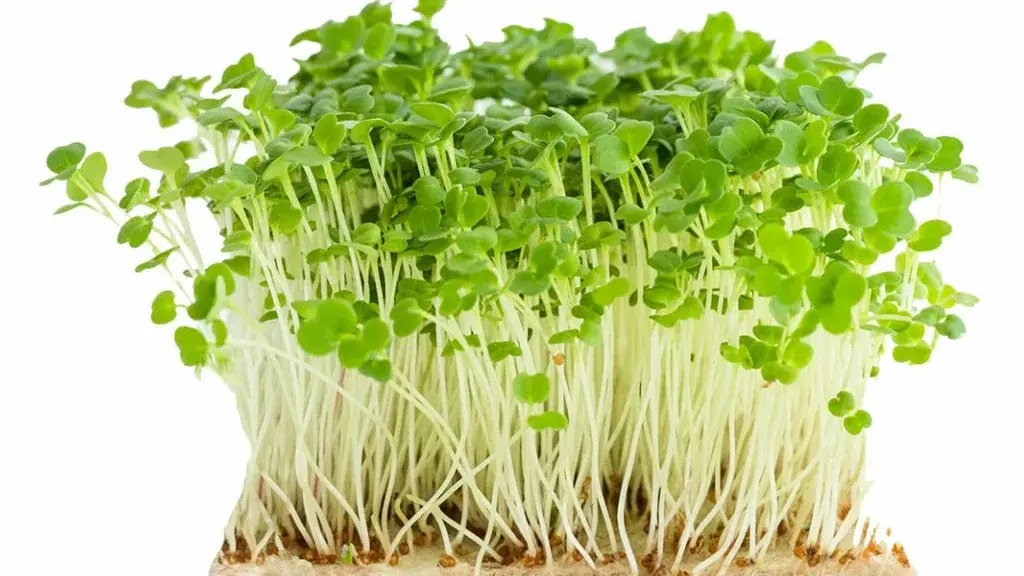
Flavor profile
Taste & aroma
Neutral, grassy, nutty - just present as a background. Almost absent. Fresh, slightly oily aroma when rubbed.
just present as background. Flax is added not for taste, but for function
Almost absent. Fresh, slightly oily when rubbed - reminiscent of the smell of fresh linseed.
Soft, Silky, Thin — reminiscent of the feeling of boiled flax seeds or oatmeal. It is this texture that softens the rough ingredients in the mix and gives the smoothie thickness
Why flavor may vary batch to batch
The profile of fatty acids in flax seeds is determined genetically and varies little depending on the growing conditions of microgreens. But the appearance and texture of the sprouts depend on the temperature: at cool cultivation (+16...+18°C) sprouts are denser and better preserved after cutting. At warm (+22°C and above) — more delicate and more prone to wilting. The sliminess of flax increases with excessive moisture.
Culinary use
How to use
Flax is a great culinary accent. Add fresh at the end of cooking or directly on the plate.
Green smoothie
spinach + banana + apple + a handful of flax — thicker and more nutritious without changing the taste
Coleslow
flax in a salad with cabbage and carrots instead of part of mayonnaise - softens and enriches
Bowl
a small amount of flax in the mix green - not noticeable on its own, but improves the overall texture
Yogurt dressing + salad
flax in the composition of greens under yogurt sauce — the slipperiness of the culture is naturally combined with the milk base
Avocado toast
a handful of flax on top - nutty flavor and nutrition without interrupting the taste of avocado
Cream soup
serve the flax in a plate before serving the soup - it will be a little bitter from the heat, but it will preserve the texture and character
Perfect pairings
Flax does not change the taste of the fruit, but gives the drink thickness thanks to natural mucous substances
Flax acts as a natural "moisturizer" — it softens hard fibers and makes the salad juicier without excess oil
Sunflower, peas, radish - flax in the microgreen mix (20-30%) provides a soft counterpoint to the crunch and enriches the Omega-3 mixture
- Do not serve flax as an independent snack - the neutral taste and specific texture are perceived vaguely without context
- Do not use in dishes where the texture is critical (for example, a crunchy appetizer) - flax softens, not crunches
- Do not add hot sauce - heat increases the stickiness
Home storage
How to store
Flax keeps longer than most microgreens. Follow simple rules to keep it fresh for up to 9 days.
Refrigerator +4...+6°C. The term in the tray is up to 9 days.
Closed or semi-open container, refrigerator +4...+6°C. The term is 7–9 days. Before packing, the greens must be dry - wet flax sticks together and spoils faster.
Don't wash until ready to eat. Wet greens spoil much faster. Rinse just before serving.
Pro tip: Cut flax should be packed dry only. Moisture between the stems during storage provokes sticking together and accelerates spoilage.
Nutrients & health
Benefits & composition
Flax is valued for its rich vitamin-mineral composition and bioactive compounds typical of microgreens.
Like most microgreens, flax contains a concentrated amount of nutrients relative to its weight — many times more than the mature plant.
| Protein | 4.5 g — building material for cells |
|---|---|
| Calories | ~55 kcal |
| Vitamins | E |
| Minerals | Calcium, Magnesium, Potassium |
| Fiber | Mucous polysaccharides |
- Flax microgreens have no specific contraindications for most people
- If you have an individual sensitivity to flaxseed or mucous products, start with a small amount
- Flax contains cyanogenic glycosides in minimal quantities - it is safe in culinary portions (side dish, handful in a dish), large therapeutic doses of raw flax are not recommended
This information is general in nature and is not medical advice. Composition data: USDA FoodData Central.
Worth knowing
Omega-3 fatty acids
Flax is one of the best-known plant sources of alpha-linolenic acid (ALA). Flax microgreens retain this property of mature seeds, although the concentration of oils in greens is lower than in mature seeds.
Mucous polysaccharides
substances that form the characteristic enveloping texture of flax. Traditionally associated with digestion support and comfort of the mucous membranes of the gastrointestinal tract.
Vitamin E
an antioxidant found in plants containing oils. Flax is a vegetable source of this vitamin.
Higher calorie content
(~55 kcal) compared to most microcultures is due to the content of vegetable oils - these are healthy unsaturated fats, not empty calories.
Flax: how to grow — step-by-step guide
Growing parameters, agronomy, common mistakesGrowing parameters
Medium, flat, mucilaginous
Step-by-step guide
Seed preparation
Flax seeds are flat, smooth and very mucilaginous. When soaked, it turns into a paste, from which it is impossible to make a uniform sowing.
Soaking is strictly prohibited. Sow only dry.
Sowing
- Moisten the substrate evenly
- Sprinkle dry seeds in an even layer
- Spray liberally from the atomizer - a clear gel coat will form around each seed
- Do not move the seeds after moistening — the gel fixes the position of the seed on the substrate
Linen on a linen rug is the perfect pair. The roots of flax literally "grow" with the fibers of its own substrate, forming a strong, even carpet. On coconut, the seed can "fall" due to weaker root attachment - if you use coconut, monitor the evenness of the seed especially carefully.
The greenhouse effect is instead of pressure
Weight press strictly prohibited. The slimy seed sticks firmly to any surface. When the clamp is removed, the entire crop will rise together with the tray.
Instead of pressure, there is a greenhouse effect:
- Cover the tray with transparent film or a dome with a small gap from the seeds
- Goal: 100% humidity until fully rooted
- When to shoot: when the sprout took root and dropped the seed coat on its own — the 3rd-4th day
Darkness (Blackout) — 3–4 days
What is normal:
- A thick gel around the seed is normal, do not wash it off
- Even sprouts already on the 2nd day
What is NOT normal:
- The smell of rot or mold → excess moisture or poor ventilation. Ventilate
- The seeds are dry and do not germinate → the film was removed prematurely or insufficiently moistened when sowing
Watering in the dark: usually not needed - the gel shell retains moisture. If the edges dry out, spray only the edges through a sprayer.
Vegetation in the light — 5–7 days
Lighting:
- LED phytolamps: 16–18 hours a day
- Natural light: acceptable - flax is unpretentious to the intensity of lighting
Temperature: +18...+22°C. Flax is cold-resistant and grows in a wide range.
Watering: moderate, only the bottom through the pallet. The seeds are flat and tightly attached to the mat - top watering provokes rotting of the roots and stems.
Helmets on cotyledons: flax often leaves seed coats ("helmets") on the cotyledons when emerging from darkness. They are edible and soft, but they can spoil the appearance.
Ventilation: moderate - without drafts, but with daily ventilation.
High humidity in the final 12–24 hours before exposure to light helps the seed shed its coat on its own. Before opening the greenhouse, spray the greens abundantly with a spray bottle and let it stand for a few more hours. Most helmets will fall off on their own.
Watering
- Water it 1-2 times a day ONLY by bottom watering (through a tray)
- NEVER top-water - flaxseeds produce slime and top-watering will stick the sprouts together
- Keep the substrate moderately moist - flax does not need an excess of water
- A sign of lack: tender leaves wither or curl → moisten gently through a tray
Storage
| Uncut in tray | Fridge +4...+6°C | up to 3 weeks |
|---|---|---|
| Cut in container | Refrigerator | up to 7 days |
| Room temperature | 1–2 days |
Harvest
- Formed green cotyledons
- Height 5–7 cm
- There is no need to wait for a real leaf - flax is cut at the cotyledon stage
Under the root, with a knife or scissors. Cuts easily, despite the tenacious roots.
Greens should be dry. Do not water 8–12 hours before harvesting — wet flax sticks together during packing.
Seasonal adjustments
- Gel: the mucous membrane of the seeds ferments faster in the heat - reduce the time under the dome to 2-3 days
- Decay: the risk is higher when it is warm; monitor ventilation and prevent moisture stagnation
- Watering: reduce frequency — moisture + heat = perfect environment for mold
- Collection: cut a little earlier, before the stem has hardened from the heat
- Placement: move to the coolest part of the room
- Stability: linen tolerates the cold well - no significant corrections are needed
- Cycle: can be extended by 1-2 days - do not rush to cut
- Gel: when cool, the mucus is less prone to fermentation - you can keep it under the dome for longer
Water pH and EC
The optimal range for flax: 6.0–7.0. Flax is relatively undemanding to pH. Normal tap water is fine. At an acidic pH below 5.5, germination is inhibited.
Optimal range: 1.0–1.5 mS/cm. Flax is undemanding to nutrition. Feature: flax seeds form mucus when soaked - this is normal and not a sign of a problem. Water carefully, without excessive moisture.
Experienced grower tips
Flax on a linen rug is a natural symbiosis
The roots are literally woven into the fibers of the substrate, forming a strong even carpet that keeps its shape even after cutting. If you want a perfect product appearance, this substrate is a must.
Flax in the mix — 20–30% of the volume
In its pure form, the specific texture of flax may not appeal to everyone. In a mix with sunflower, peas or radish, it becomes an invisible advantage: it softens and enriches without dominating.
Dry before cutting and packing
This is the most important rule for preserving the marketable appearance of flax. 8-12 hours without watering + a cut = greens that do not stick together in a bundle.
Positioning as an Omega-3 culture
Flax has a powerful marketing argument - vegetable Omega-3. For buyers interested in healthy food, this is an independent value that justifies the purchase even without a distinct taste.
Agronomy notes and common mistakes
- Sowing: DO NOT SOAK - flaxseed in water produces a strong mucus and clumps together. Sow dry, evenly.
- Clamp: Light pressure (0.5–1 kg), 1 day. Flax does not need strong pressure - it is a delicate seed.
- Temperature: +18...+22°C. Flax does not like heat — at +26°C it stretches and becomes less delicate.
- Watering: EXCLUSIVELY lower, 1-2 times a day. The mucous membrane of the seeds protects them from drying out better than in other crops.
- Ventilation: Important: the mucous surface of the seed with stagnant air and excess moisture is a risk of bacterial damage.
- Soaking seeds → Paste, uneven sowing → Sow only dry - no exceptions
- Weight press → The entire crop sticks to the tray when removed → Only the film or dome, without any weight
- Top watering → Rotting of roots and stems → Only bottom watering through a pallet
- Helmets on cotyledons → Unattractive appearance, poor opening → High humidity before exposure to light, spray before removing the film
- Packaging of wet greens → Clumping, rapid spoilage → Dry for 8–12 hours before cutting, pack dry
- Coconut instead of mat → Unstable stems, uneven carpet → Linen or jute mat is the optimal substrate for flax
Variety selection
Brown linen
Kiwi, Faith, Synthetic
The most common choice. Tender leaf, nutty taste, mucilaginous - sow only dry.
Golden linen
Omsk Flax, Lirina
Lighter stem, more neutral taste. The taste differences are minimal, but the color is sometimes more interesting for serving.
Що далі?
More crops in the catalog
Explore similar and contrasting flavors — from basil to amaranth