
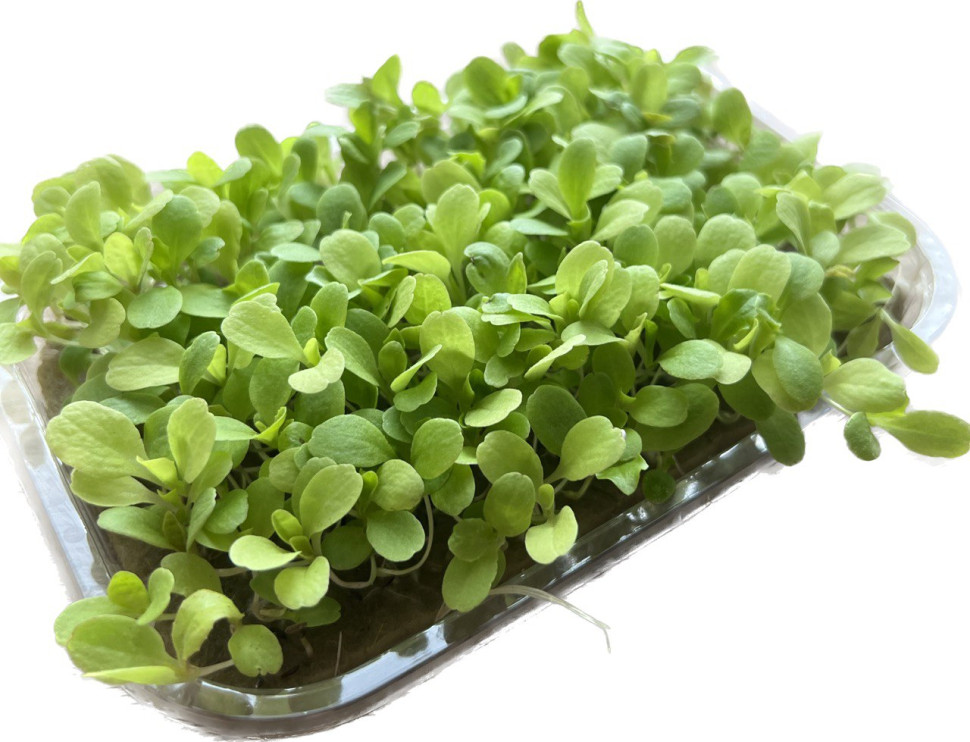
Flavor profile
Taste & aroma
Fresh, gentle, neutral — Fresh, pure green, slightly sweet. Weak, unobtrusive aroma.
Fresh, pure green, slightly sweet. Lettuce microgreens are softer and more tender than mature leaves: there is no slight bitterness or latex taste that occurs in mature lettuce during the heat
Weak, unobtrusive - fresh greens, a little herbal note. Lettuce does not have a distinctive smell, and this is an advantage: it does not interrupt the aroma of sauces, olive oil or spicy microgreens in mixes.
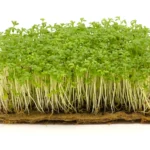
The leaves are very delicate, almost silky, without the stiffness of the stems. Thin, but not watery
Ripening and optimal harvest time
The cotyledons are barely opened, the taste is the mildest and neutral, almost sweet.
The first real leaves begin to appear, the taste acquires more "lettuce" depth, the texture becomes a little denser.
The leaves increase in size, the stems become a little coarser, a slight bitter shade characteristic of an adult salad may appear.
Why flavor may vary batch to batch
Red and burgundy varieties (Lollo Rosso, red-leaved) look brighter with good lighting — without enough light, anthocyanin pigments do not develop, and the leaves remain green. The growing temperature significantly affects the speed: at +20°C, lettuce grows evenly, at +25°C and above, the cycle is shortened, but the leaves can be a little more watery and less expressive.
Culinary use
How to use
Lettuce is a great culinary accent. Add fresh at the end of cooking or directly on the plate.
Mixed salad as a base
lettuce in the proportion of 50–60% of the total volume of the mix-assembly is a neutral base that gives volume and holds together the sharper components without competing with them
Sandwich or open toast
a layer of micro-lettuce instead of leaf lettuce - the same freshness and crunch, but the leaves are more uniform and do not "creep" over the edge
Tacos and rolls
put inside instead of chopped iceberg lettuce - smaller volume, same freshness, more delicate texture that does not tear the filling
Light soup or cream soup when serving
a handful of micro-lettuce on top of the plate adds a fresh green accent and contrast of temperatures - add at the last moment before serving
Scrambled eggs or omelette on a plate
spread next to or on top of an already prepared dish - the temperature of the egg will slightly wilt the leaves and emphasize their aroma
Side dish for meat or fish
a bunch of micro lettuce next to the main dish instead of traditional greens - looks neater and is eaten with a piece of the main product
Perfect pairings
The neutral texture softens sharp notes in mixes and gives volume without dominating
Delicate lettuce enhances the delicate taste of proteins without competing with them
Light dressings emphasize green freshness without interrupting the delicate taste
- Do not cook lettuce thermally - tender leaves instantly wither and become slippery even from a short contact with a hot surface. Lettuce is a purely fresh, raw product
- Do not combine with very spicy dressings or a lot of vinegar - the acid "kills" the delicate freshness and makes the taste empty
- Do not store cut at room temperature - tender leaves wilt quickly and lose texture within hours
- Do not use lettuce as the only microgreen in a dish that needs a distinct taste accent - it is not intended to be the "star", but strengthens the ensemble
Home storage
How to store
Lettuce keeps longer than most microgreens. Follow simple rules to keep it fresh for up to 8–10 days.
Keep at +4...+6°C in a refrigerator without excess moisture. Do not press the lid tightly - delicate leaves need minimal air circulation. Cut just before serving. The term in the tray is 7–10 days.
Place in a container with a lid, add one layer of dry paper towel to absorb condensation. Store at +4...+6°C. The term is 4–6 days. Lettuce is more tender than most microgreens and wilts faster, so the fresher the better.
Don't wash until ready to eat. Wet greens spoil much faster. Rinse just before serving.
Pro tip: Sale by live tray is a good option for lettuce: the customer cuts it himself, gets maximum freshness. Lettuce in a tray is better stored than cut.
Nutrients & health
Benefits & composition
Lettuce is valued for its rich vitamin-mineral composition and bioactive compounds typical of microgreens.
Like most microgreens, lettuce contains a concentrated amount of nutrients relative to its weight — many times more than the mature plant.
| Protein | 2.0 g — building material for cells |
|---|---|
| Calories | ~15 kcal |
| Vitamins | K, A |
| Minerals | Potassium, Calcium, Iron, Manganese |
- Lettuce contains a small amount of vitamin K. Those who take blood-thinning drugs should coordinate the use of leafy greens with a doctor - not because of the danger, but because of the stability of the dosage
- Microgreens of lettuce contain practically no allergens and are well tolerated by most people, including children
This information is general in nature and is not medical advice. Composition data: USDA FoodData Central.
Worth knowing
Vitamin K
present in a concentration that is higher in microgreens than in mature lettuce. It is fat-soluble - it is absorbed better in combination with olive oil or other fats.
Folic acid (B9)
one of the noticeable components of lettuce as a culture, which is traditionally included in the diet of people who pay attention to full nutrition at various stages of life.
Anthocyanins
pigments that give red and burgundy varieties of lettuce a characteristic color. They are antioxidants. Studies of vegetation stages confirm that the content of phenolic compounds and ascorbic acid in lettuce microgreens is higher than in adult plants of the same variety.
Very low calorie
(~15–17 kcal/100 g) and a high proportion of water (~95%) make lettuce a suitable component for a varied diet of those who monitor the balance in their diet.
Similar crops
Similar by taste microgreens
If you are looking to complement or replace Lettuce:


Lettuce: how to grow — step-by-step guide
Growing parameters, agronomy, common mistakesGrowing parameters
Small, oblong, light brown or dark depending on the variety
Step-by-step guide
Seed preparation
Lettuce seeds are small and light - soaking is unnecessary and harmful: soaked seeds stick together and are unevenly distributed. If the seeds have been stored for a long time or the batch is new, do a preliminary germination test: 10 seeds on a wet paper towel at +20°C, check after 5–7 days.
The main feature: Lettuce seeds are positively photoblastic — they need access to light to initiate germination. This means that the standard practice of "closing the tray for 4-5 days" does not work here. Remember this from the first sowing.
Lettuce seeds are very light and small, they are easily dispersed by air. Mix it before sowing with a small amount of wet vermiculite or fine sand (1:3) - this will facilitate even distribution over the surface.
Sowing
- Moisten the substrate evenly - without puddles and dry areas
- Spread the seeds as evenly as possible over the entire surface - the ventilation and uniformity of the seedlings will depend on the density of sowing
- Lightly press with the palm of your hand or a flat bottom - the seed should have contact with the substrate, but not be trampled
- Spray the surface with a fine mist from the sprayer
For even sowing, use a spice lid with small holes or a small metal planter. Uneven sowing is the main cause of uneven growth and problems with ventilation in the lettuce.
Coverage instead of blackout
Since lettuce is a photoblastic seed, a deaf blackout is inappropriate. There are two options:
Option A (recommended): Cover the tray transparent a lid or food film - it preserves moisture and lets diffused light pass through. Place in a warm place (+18...+22°C) with access to indirect lighting.
Option B (acceptable): If there is no transparent cover, cover with a dark tray, but only for 12-24 hours. After that, immediately open and expose to light, regardless of the condition of the stairs.
If you practice standard stacking (stacking trays on top of each other), for lettuce, replace the bottom tray of the stack with a clear pallet, or simply stack the stack next to a window - the side light partially solves the photoblast problem.
Germination — 3–5 days
The first shoots appear on the 3rd-5th day. Lettuce grows relatively evenly.
What is normal:
- Thin yellowish loops on day 3 - normal, they will turn green after exposure to light for 24-36 hours
- Uneven height at the beginning - evens out after 1-2 days in the light
What is NOT normal:
- No germination on day 6 → seeds were in the dark too long or old seeds with low germination
- Elongated pale stems without leaves → insufficient light after germination
Temperature: +16...+22°C is optimal. Lettuce is a cold-resistant culture, tolerates coolness well. At temperatures above +26°C, seedlings may be watery and less expressive. This is one of the few microgreens that grows comfortably in cool rooms.
Watering: minimal and accurate. Small seeds lie on the surface - excess moisture washes them off and sticks them together. It is better to lower watering through a pallet from the second day after the emergence of seedlings.
Vegetation in the light — 7–12 days (from sowing)
After the appearance of stable stairs, expose to full lighting.
Lighting: moderate and even. Unlike heat-loving crops, lettuce does not need bright direct sun — a diffused windowsill or LED lamp at a height of 20–30 cm from the tray, 14–16 hours a day, is suitable. With excessively bright direct sun in the summer, the leaves may dry out at the edges.
Color of red varieties: anthocyanins develop with sufficient light. If the "red" lettuce remains green, the lighting is insufficient. Add fluorescent or LED lamps with a blue-red spectrum.
Watering: the lower one through a pallet, once every 1–2 days. Lettuce does not tolerate either drying out or overmoistening - the average humidity of the substrate during the entire cycle.
Ventilation: important With dense sowing and high humidity, lettuce is prone to "lying down" - the stems stick together and fall. A light flow of air from a fan or an open window significantly reduces this risk.
Watering
- The first 1–2 days (before stairs): fine mist from a sprayer 1-2 times a day - seeds on the surface should not be poured, only moisture should be maintained
- After germination: exclusively lower watering through a pallet - upper watering pollutes delicate leaves and provokes mold
- Frequency: once every 1–2 days depending on temperature and humidity; the substrate should remain moderately moist, but not wet
- Overfilling is more dangerous than underfilling: check the substrate before each watering - the delicate small roots of lettuce die from stagnant water
Storage
| Uncut in tray | Fridge +4...+6°C | up to 3 weeks |
|---|---|---|
| Cut in container | Refrigerator | up to 7 days |
| Room temperature | 1–2 days |
Harvest
- Optimal — when the cotyledons are fully opened, and the first real leaves are just beginning to appear
- The height is 4–7 cm, the stems are green, the leaves are even and without yellowing
- If you need the most delicate texture, cut at the cotyledon stage (7–9 days)
- If you need a little more "salad" depth of taste - wait for the first real leaves (11-14 days)
Scissors or a sharp knife above the substrate level. The leaves are very delicate - minimal pressure when cutting, do not "squeeze" the bunch with your hand.
Only immediately before serving or shipping. After washing, tender leaves should be carefully dried or shaken out of the water - wet lettuce sticks together and spoils quickly.
Seasonal adjustments
- The quality decreases: at +24°C and above, the leaves become watery and lie down faster — keep trays away from direct sunlight, overheating of the substrate destroys the root zone
- Cut before: do not wait for real leaves, cut at the cotyledon stage (7-9 days) - the taste is better, the laying is less
- Cycle: reduced to 8-10 days, but the quality is lower; this is normal in the summer - plan accordingly
- Ventilation: mandatory - when it is warm in a thick crop without blowing, sticking of stems and mold quickly occurs
- Lighting: avoid direct sunlight through the glass — diffused or LED is better
- Ideal season: lettuce is one of the few cultures that tolerates coolness well; at +14...+16°C, the quality of the leaves is better — denser, more pronounced taste, less risk of lodging
- Blackouts: reduce to a minimum - low temperature and darkness together dramatically reduce the germination of photoblastic seeds
- Heat mat: not needed - unlike heat-loving crops, lettuce grows normally at +16°C without heating
Water pH and EC
The optimal range for lettuce: 6.0–7.0. Lettuce is unpretentious to pH. It tolerates a wide range well. Ordinary tap water is suitable without adjustment.
Optimal range: 0.8–1.2 mS/cm. Lettuce is a delicate crop with low mineral nutrition requirements. In hydroponics, avoid overly concentrated solutions—less is better than more.
Experienced grower tips
Lettuce and purslane are one team in principle
Both cultures are photoblastic — if you already have one proven protocol without a deaf blackout, it is also suitable for lettuce without changes.
A mix of greens and reds in one tray
Mix green and red varieties 50:50 in one crop - the difference in growth rate between them is minimal, and the visual effect of the "green-burgundy" micro-collection is much more expressive. Such a mix sells well "without explanation".
Control the lighting for color
If the red variety grows green, it is not a lack of seeds, it is a lack of light. Install an additional LED lamp or move the tray closer to the source for 2-3 days - the color will appear. Show customers that "with the right light will be brighter" is a live product demonstration.
A dry substrate before sowing is not a mistake
Some growers moisten the substrate already after sowing lettuce, and not before. Small seeds, when sown on a slightly moist surface, adhere better and are distributed more evenly than on a fully moistened substrate.
Continue the cycle for more volume
If you are not in a hurry to sell, let the lettuce grow to the first pair of real leaves (14-16 days). The output will be larger, the texture will be denser. This is the "baby leaf" stage - can be positioned as a separate product at a higher price.
A fan is a simple prevention of lying down
A USB fan for 5-10 minutes twice a day significantly reduces the risk of clumping of stems and mold in the lower tier. This is especially important in dense crops or in humid rooms.
Agronomy notes and common mistakes
- Sowing: lettuce seeds are small and dusty - mix with fine sand or dry vermiculite (1:3) for uniform distribution over the surface of the substrate
- Blackouts: no more than 12–24 h — lettuce photoblastic seeds, deaf blackout sharply reduces germination or blocks germination completely
- Temperature: +16...+22°C is optimal. Lettuce is cold-resistant: at +14°C it grows, at +26°C and above the quality drops (the leaves are watery, lie down)
- Ventilation: important - when sowing thickly without blowing, the stems stick together and mold appears in the lower tier
- Lighting: red varieties need sufficient lighting for color development - without it, they grow green regardless of the name of the variety
- Prolonged blackout (3–5 days) → No emergence or little emergence on the 6th day → Lettuce is photoblastic — a maximum of 24 hours in the dark, then immediately in the light
- Excessive sowing density → Sticking of stems, lying down, mold in the lower tier → Adhere to the norm of 3–5 g, uniform distribution, ventilation
- Top watering after germination → The leaves are dirty from splashes of the substrate, increased risk of mold → Only bottom watering through a tray starting from the 2nd day
- Weak lighting → Elongated pale or yellowish stems, lack of color in red varieties → Move closer to the light source or increase the duration of illumination to 16 h
- High temperature (>26°C) → Watery, unstable leaves, accelerated cycle with reduced quality → Lettuce is a cold-resistant crop, optimum +16...+22°C
- Drying out of the substrate → Leaves shrivel at the edges, growth stops → Regular bottom watering, monitor the substrate daily
Variety selection
Batavia and oil types (Butterhead, Bibb)
A little more delicate leaves with a light "oily" texture. They are well suited for premium packaging and the restaurant segment.
Romaine (Romaine / Cos)
A little more vertical growth, denser leaves, a little more expressive taste. Needs a little more time to develop.
What's next?
More crops in the catalog
Explore similar and contrasting flavors — from basil to amaranth