

Flavor profile
Taste & aroma
Fresh, sour, grassy - it does not dominate, but complements. Neutral fragrance.
does not dominate, but complements. That is why buckwheat is so easy to combine with various dishes
Neutral, slightly grassy. It doesn't overpower the other ingredients — it's a companion herb that works for texture and freshness, not flavor.
The main advantage. The stems are juicy, filled with moisture - when bitten, a slight "explosion" of juice is felt
Ripening and optimal harvest time
The leaves have just opened, the taste is the most tender and freshest, the acidity is minimal.
Optimal moment: large open cotyledons, bright acidity, maximum juiciness.
The stem begins to become woody from below, the first real leaves appear, the acidity intensifies.
Why flavor may vary batch to batch
The pink or reddish color of the stem — a trademark of microgreen buckwheat — is formed in the light. When grown under powerful phytolamps, the stems are bright pink. In natural or weak lighting, they are pale pink or almost green. It does not affect the taste, but the appearance is significant.
Culinary use
How to use
Buckwheat is a great culinary accent. Add fresh at the end of cooking or directly on the plate.
Bowl
pink stems on a background of green avocado or yellow hummus are one of the most spectacular design options; add at the last moment
Salad base
instead of lettuce, use buckwheat as a juicy base of the bowl, add vegetables, protein and dressing on top
Smoothies
a handful of buckwheat in a blender with berries and a banana adds nutrition without changing the taste
Replacement of sorrel
in dishes where acidity is needed, but sorrel is too sharp - buckwheat as a mild alternative
Cold soups
gazpacho or okroshka - a few stalks of buckwheat instead of greens give freshness and sourness
Toast
avocado + boiled egg + a handful of buckwheat — the acidity of the greens balances the fat content of the avocado
Perfect pairings
Buckwheat is a natural salad "moisturizer".
Especially good in bowls with hummus or avocado paste
In a smoothie, buckwheat does not change the taste of berries due to its neutral aroma, but adds volume and juiciness
- Do not subject to heat treatment - buckwheat instantly loses its juiciness and turns into limp leaves
- Do not season with sour sauces in advance - additional acid in combination with natural sourness gives a sharp taste
- Do not store at room temperature for a long time - juicy greens wither in a few hours in the heat
Home storage
How to store
Buckwheat keeps longer than most microgreens. Follow simple rules to keep it fresh for up to 7 days.
Refrigerator +4...+6°C - buckwheat tolerates standard conditions well, unlike basil. The term is up to 7 days in the tray. Cut before use.
Place in an open container or plate, cover with a damp paper towel. Don't seal — without air, greens yellow faster.
Don't wash until ready to eat. Wet greens spoil much faster. Rinse just before serving.
Pro tip: Unlike basil, buckwheat tolerates standard refrigerator temperatures of +4...+6°C. It is easy to store, it can be sold both cut and alive in a tray.
Nutrients & health
Benefits & composition
Buckwheat is valued for its rich vitamin-mineral composition and bioactive compounds typical of microgreens.
Like most microgreens, buckwheat contains a concentrated amount of nutrients relative to its weight — many times more than the mature plant.
| Protein | містить всі незамінні амінокислоти g — building material for cells |
|---|---|
| Calories | ~19 kcal |
| Vitamins | C, K |
| Minerals | Magnesium, Iron, Potassium |
- Buckwheat is one of the most hypoallergenic microcultures — there are no specific restrictions for most people
- People with a confirmed allergy to buckwheat (a rare but possible condition) should avoid using it
This information is general in nature and is not medical advice. Composition data: USDA FoodData Central.
Worth knowing
routine
flavonoid, which buckwheat is traditionally rich in. Buckwheat microgreens contain it in a much higher concentration than mature groats, since it is concentrated in young shoots in the highest amount during the entire plant development cycle. Rutin is traditionally associated with maintaining vascular elasticity.
Complete vegetable protein
Buckwheat is one of the few crops that contains all the essential amino acids. This makes it an interesting addition to the diet for those who eat without meat.
Gluten-free culture
Buckwheat is not a cereal - it belongs to the buckwheat family. This is a rare property for microgreens that makes it suitable for people with gluten sensitivity.
Very low calorie
(~19 kcal per 100 g) in combination with a juicy texture makes buckwheat an interesting option for those who want to add volume and satiety to a dish without extra calories.



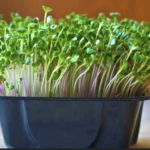

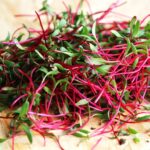
Buckwheat: how to grow — step-by-step guide
Growing parameters, agronomy, common mistakesGrowing parameters
Green buckwheat (raw, raw) - fried is absolutely not suitable
Step-by-step guide
Seed preparation
Green buckwheat in prolonged contact with water releases starch and organic acids - the liquid becomes viscous and cloudy, the grain sticks together and begins to ferment. This is not a property of the seed coat (as in basil), but a reaction to excess water.
That's why buckwheat do not soak, but only washed.
Proper preparation:
- Measure 7 g of green buckwheat
- Place in a sieve or colander
- Rinse with cold running water for 30-60 seconds - wash away the surface layer of secretions
- Shake lightly and sow immediately - the grain is still wet, but do not pour
After washing, let the grain stand in the sieve for 5-10 minutes - the excess water will drain, and the grain will acquire optimal moisture for uniform sowing without clumping.
Sowing
- Moisten the substrate - moist, but without standing water
- Spread the washed buckwheat evenly in one layer — grains should not overlap each other
- Lightly press with the palm of your hand for even contact with the substrate
- After washing, the grains are still a little wet and may stick together - distribute them carefully, take your time
The norm is 7 g gives a dense but not excessive carpet. Too dense sowing → poor ventilation → black leg in the center of the stack.
Clamp — 1–2 kg
Unlike basil, buckwheat needs a clamp. A large, rounded seed lies unsteadily on the surface of the substrate - without pressure, the roots grow on top of the mat, not deep. The clamp fixes the grain and directs the roots into the substrate.
- Place an empty tray + 1–2 kg of cargo on top
- The load is evenly distributed, without distortions
Darkness (Blackout) — 3–4 days
Buckwheat germinates quickly - one of the fastest among microgreens. Already on the 2nd day, active sprouts are visible.
What is normal:
- Uneven height - evens out in the light
- The pinkish shade of the stems already in the dark is the norm
What is NOT normal:
- Sour or rotten smell → the grain is not sufficiently washed or the substrate is too wet. Ventilate
- Dark soft spots → black leg from overwetting. Reduce watering, improve ventilation
Watering in the dark: usually not needed. If the substrate is dry, lower watering through a tray.
Vegetation in the light — 6–8 days
Lighting:
- LED phytolamps: 16–18 hours a day for bright pink stems
- Natural light (windowsill): acceptable, but the color of the stems will be paler
- Buckwheat is undemanding to intensity, but the more light, the brighter the pink color
Color in the light: pink pigment (anthocyanins) is formed under the influence of light. The first 1-2 days the stems are still pale, then the intensity of the color increases. This is a normal process.
Watering:
- 1 time a day, lower through the pallet
- Buckwheat is juicy and consumes moderately - do not pearl
- A sign of overhydration: blackening of the base of the stems ("black leg") → reduce watering and improve ventilation
Temperature: +18...+24°C. Buckwheat is unpretentious and grows well in a wide temperature range.
Husk: the remains of the buckwheat hull sometimes hang on the leaves after emerging from the darkness. Unlike sunflower, the shell of buckwheat is soft and does not require manual removal - it is easily washed off when washing or shaken.
Watering
- Water it 1-2 times a day (in the morning — mandatory, in the evening — at a temperature above +22°C)
- Bottom watering is better: top watering gets on the lower leaves and causes mold
- Buckwheat does not like excess moisture - a little less is better than overflowing
- A sign of lack: lobed leaves begin to turn yellow from below, the stems soften → water through a tray
Storage
| Uncut in tray | Fridge +4...+6°C | up to 3 weeks |
|---|---|---|
| Cut in container | Refrigerator | up to 7 days |
| Room temperature | 1–2 days |
Harvest
- Cotyledons are fully opened, large (1–1.5 cm), bright green
- The stems have gained a pink color
- Height 8–10 cm
Buckwheat is easily cut with bunches of scissors, the stems are juicy and soft.
Rinse in cold water immediately before use or sale.
Seasonal adjustments
- Soaking: reduce by 2–3 hours from the standard - the seeds are active in the heat
- Ventilation: open more often in the blackout phase to avoid excess moisture
- Watering: increase the frequency - the substrate dries faster at a higher temperature
- Expect: shortening of the cycle by 2–3 days, a more tender stem
- Soaking: increase by 2-3 hours from the standard - cold water is absorbed more slowly
- Placement: keep the trays in a warmer place (next to the battery, but not close to it)
- Watering: use water at room temperature—cold slows growth
- Expect: lengthening the cycle by 2-4 days, denser and more fragrant result
Water pH and EC
The optimal range for Buckwheat: 5.5–7.0. Buckwheat prefers a slightly acidic environment. At a pH above 7.5, a violation of iron assimilation is possible, which manifests itself in the form of chlorosis between the veins of the lower leaves.
Optimal range: 0.5–1.2 mS/cm. Buckwheat is an easy consumer. Water that is too mineralized (EC >1.5) can give a characteristic "earthy" aftertaste that masks the natural nutty aroma.
Experienced grower tips
Color is a marketing asset
Pink buckwheat stems are one of the most spectacular among all microgreens. Take pictures before selling - it sells better than any description.
Buckwheat + sunflower
A classic mix: sunflower gives crunch and a nutty taste, buckwheat gives acidity and a pink color. Together they look and taste better than separately.
Husks are not a problem
Newbies spend time removing shells manually. It's not worth it - they are soft and easily washed off when washing before selling. Focus on watering and ventilation.
Fast cycle — convenient for planning
9–12 days is one of the shortest cycles among non-root microgreens. It is convenient to alternate crops with crops of a longer cycle for a uniform weekly harvest.
Do not water before cutting
Stop watering 4-6 hours before harvesting. Dry greens after cutting are stored much longer than freshly watered wet carpet.
Agronomy notes and common mistakes
- Sowing: Soaked (4–6 hours) and washed buckwheat — the husk must remain. One layer, tight.
- Clamp: 2–3 kg, 3–4 days. CRITICAL: without firm pressure, the husk floats up, the roots do not go deep - "helicopters".
- Temperature: +18...+24°C. At +26°C, buckwheat is drawn out and becomes less aromatic.
- Watering: 1-2 times a day, ONLY the bottom. Water on buckwheat leaves is a guaranteed mold.
- Ventilation: Very important. Buckwheat is a record holder for mold with poor ventilation. Mandatory air movement.
- Sowing fried (brown) buckwheat → Zero stairs, mold → Only green (raw) buckwheat
- Soaking instead of rinsing → Sour smell, fermentation → Rinse for 30–60 seconds, do not soak
- Dense sowing → Black leg in the center, clumping → One layer of grain, norm of 7 g per box
- Overwetting of the substrate → Black leg, base rot → Moderate watering, good ventilation
- Lack of clamping → Roots on top of the substrate, uneven growth → 1–2 kg, exactly for the entire tray
- Keeping warm → Withers in a few hours → Always refrigerate after cutting
Variety selection
green buckwheat
Unheated grain. Varieties practically do not differ among themselves in terms of agricultural technology and results. The most important parameter when choosing seeds is the germination percentage: buy from proven suppliers, fresh grain of the new harvest.
Small-grained buckwheat
Smolensk, Iskra
Smaller grain, sometimes more even steps. The taste is identical - without any heat treatment.
Що далі?
More crops in the catalog
Explore similar and contrasting flavors — from basil to amaranth