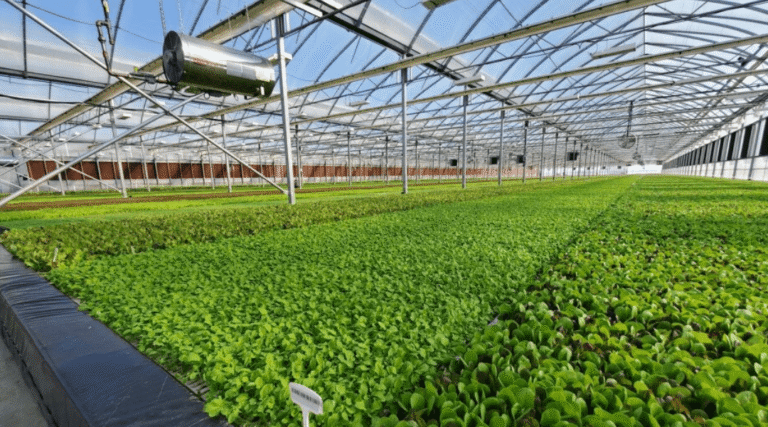

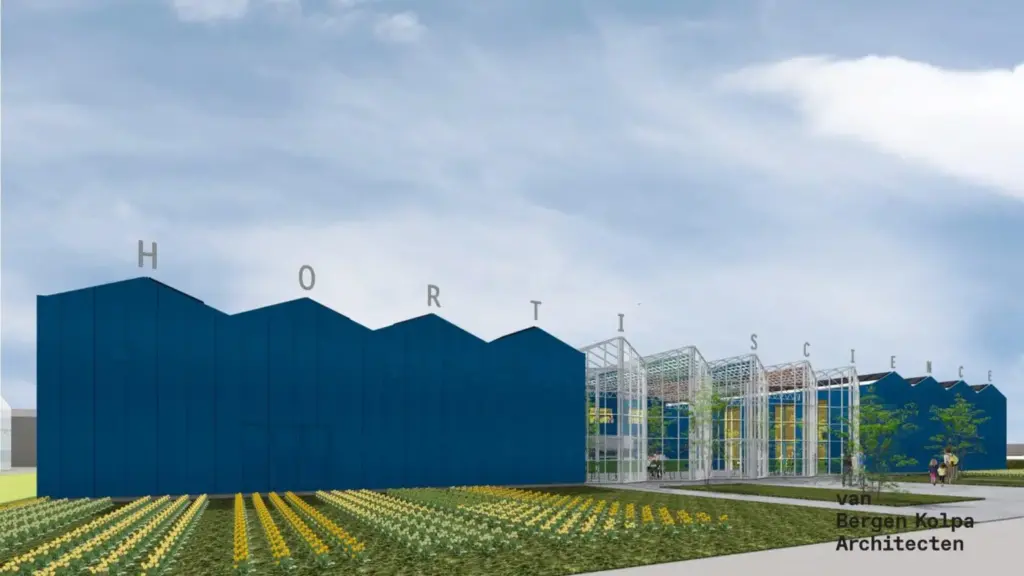
Wageningen University & Research has broken ground on the Vitrum complex — a next-generation research greenhouse that will operate entirely without fossil fuels. The design includes solar panels, heat pumps, aquifer thermal energy storage (ATES), and closed-loop water and nutrient cycles.
The standout feature is dynamic LED lighting that allows intensity and spectrum to be adjusted for each specific crop and growth stage. This brings conditions close to ideal, improving both quality and repeatability of results.
Vitrum is intended as a platform for testing energy-efficient solutions, robotics, and AI-driven microclimate management — innovations that will then transfer into commercial greenhouse projects. For the industry, it marks the direction of development: higher efficiency without a larger environmental footprint.
Investment in such centres matters for the long-term resilience of European horticulture: producers will gain validated methodologies, and consumers will receive consistent product quality regardless of weather conditions.