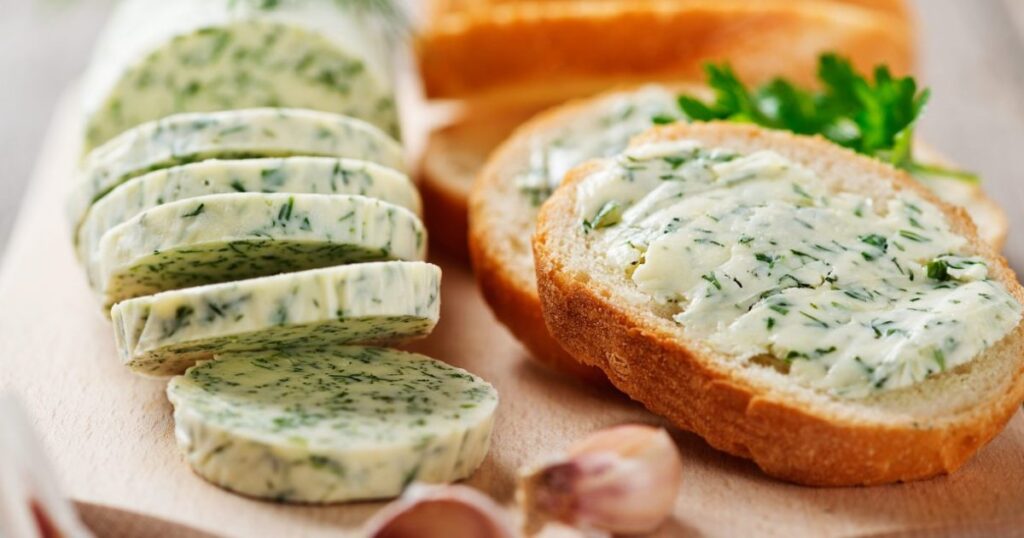
Aromatic Microgreen Butter
Creamy compound butter folded with fresh microgreens — a simple way to preserve greens for months and gain…
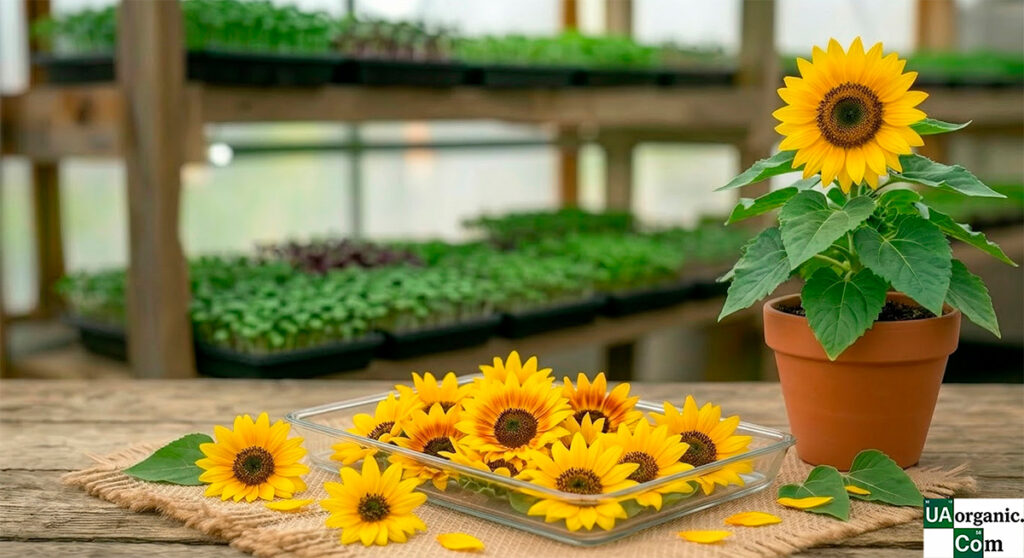
Helianthus annuus
Petals have a light vegetable bitterness - subtle, not aggressive, similar to endive or young artichoke. The nutty undertone, familiar from the seeds, is felt weakly. Unopened buds have a much more expressive and complex taste: after cooking - juicy, slightly resinous meat with a characteristic "sunflower" taste, which chefs describe as grassy-nutty. The core of young stems is tender, almost neutral, juicy.
| the moon | Accessibility |
|---|---|
| January — May | ❌ Not the season |
| June | ✅ The first buds are the best moment for artichoke buds |
| July — August | ✅ The peak of flowering - petals in maximum quality |
| September | ✅ Completion of flowering, ripening of seeds |
| October — December | ❌ Not the season |
City farms with controlled environments can supply young sunflower plants and petals in a wider seasonal window. Sunflower microgreens are a separate product available year-round.
| Form | Features of use |
|---|---|
| Fresh (petals) | Decoration of salads, cold dishes, cheese plates; period of 1-2 days |
| Fresh buds | They are prepared like artichokes - boiling, stewing; seasonal product |
| dry | For teas and tinctures; color and light taste are preserved |
| Kandovan | Dessert decor is a bright yellow accent on cakes and pastries |
| Frozen in ice | Cocktails and lemonades are a sunny heart in an ice cube |
| Microgreens | A separate product - nutty taste, crispy texture, year-round |
Petals have a light vegetable bitterness - subtle, not aggressive, similar to endive or young artichoke. The nutty undertone, familiar from the seeds, is felt weakly. Unopened buds have a much more expressive and complex taste: after cooking - juicy, slightly resinous meat with a characteristic "sunflower" taste, which chefs describe as grassy-nutty. The core of young stems is tender, almost neutral, juicy.
Fresh petals have a barely perceptible green-floral aroma - without bright notes. When cut, the bud gives off a stronger, resinous, herbal smell. When cooked, the buds reveal a deeper aroma — warm, slightly nutty.
Petals are thin, slightly hardened compared to more delicate edible flowers - they do not "melt" as much, but retain their shape in the decor longer. Long, up to 5–8 cm, which makes them one of the largest petals in the catalog of edible flowers. Buds after cooking are fibrous, soft, similar in texture to a boiled artichoke.
Edible flowers are not the same as florist flowers. Only flowers grown specifically for food use without synthetic pesticides are suitable.
Are all varieties edible: Yes - all varieties Helianthus annuus are considered edible. Decorative dwarf and multi-colored varieties (orange, burgundy, cream) are also edible, but the taste of their petals may differ from the classic yellow. Not to be confused with Jerusalem artichoke (Helianthus tuberosus) is another kind of genus.
Heat treatment: It is better not to heat the petals - they quickly wither and darken. Add to the dish at the last moment or after removing from the heat. Buds, on the other hand, require heat treatment: they are boiled, stewed or grilled, like artichokes.
This information is general in nature and is not medical advice. Sources: USDA FoodData Central, EFSA.
Sunflower in cooking exists in two parallel worlds. The first is petals: a bright yellow decoration for salads, cheese plates and cold dishes, where the main thing is the color and association with summer. The second is unopened buds: this is a full-fledged seasonal vegetable that chefs Daniel Humm and Sean Sherman introduced to their menu a long time ago. The bud, cooked and peeled, gives juicy meat with the texture of an artichoke and a characteristic "sunflower" taste - an ingredient that almost no one has tried in Ukraine.
closed buds are boiled in salted water for 15–25 minutes, depending on the size. After cooling, remove the tough outer leaves and cut off the petals from the inner part. Served like an artichoke - with butter, lemon, olive oil or sauce.
cover the petals with egg white and sugar, dry. The bright yellow color lasts for weeks; the large size of the petals gives a spectacular decor.
a petal or a small flower is placed in an ice cube tray. The yellow color is kept even in frozen form.
the petals are infused in olive or sunflower oil for 1–2 weeks. The oil acquires a yellow tint and a light vegetable aroma; for dressings and finishing.
the petals are dried at a low temperature or in a dehydrator. They are used for teas, tinctures and decoration of baked goods.
separate yellow petals or a small sunflower inflorescence are placed on the dish before serving; the large size of the petals gives a large-scale decorative effect even in a small amount.
Perfect pairings
burrata, ricotta, goat cheese — yellow petals provide a color contrast on a white creamy base; a classic combination in summer serving.
arugula, spinach, endive, radicchio — the light bitterness of the petals supports the bitter line of greens and adds color without excessive flavor load.
after cooking, sunflower buds are served just like that - a minimalist Scandinavian serving, where the taste of the ingredient comes first.
Salmon, tuna, scallops - petals as decoration; a yellow accent without competing with the taste of the sea ingredient.
seeds and petals together in a salad or on a cheese plate — a common nutty undertone, different texture.
sunflower petals in bread, focaccia or muffins as a yellow dye and a soft nutty accent; the seeds and petals together give a complete sunflower profile.
Buy edible sunflower flowers and buds only from producers who grow them specifically for food use. Sunflowers from supermarkets and flower shops not suitable for consumption. If you grow it yourself, make sure the soil is clean: the plant will honestly show everything that is in the ground.
Freshness after cutting: 2–3 days
Sunflower is a crop with a long food tradition: the indigenous peoples of America used the seeds, petals, stems and roots long before it reached Europe. The nutrient profile of the petals is more modest than the seeds, but their potential is not zero either.
| Nutrient | Value (seeds, per 100 g) |
|---|---|
| Vitamin E | ~26 mg (~173% of daily norm) |
| Vitamin B1 (thiamine) | ~1.5 mg |
| Magnesium | ~325 mg |
| Selenium | ~53 μg |
| iron | ~5 mg |
| Zinc | ~5 mg |
| Fats (mainly unsaturated) | ~51 g |
| Squirrel | ~21 g |
| Calorie content of seeds | ~584 kcal |
| Calorie content of petals | minimal - used in small quantities |
Sunflower seeds are one of the richest plant sources of vitamin E, a fat-soluble antioxidant. According to the content of magnesium and selenium, sunflower seeds are among the best plant sources of these trace elements.
Petals and buds contain flavonoids and saponins — plant compounds studied in the context of antioxidant properties. However, due to the small amount of petals used as an edible flower, their influence on the nutritional status is insignificant - they are eaten primarily for taste and decoration.
The plant has a long culinary tradition among the indigenous peoples of North America: the seeds were eaten raw and in the form of paste, the petals and buds were cooked, and the stems were used for various purposes. Contemporary avant-garde cuisine returns to these practices through the works of chefs Sean Sherman and Daniel Hamm.
Data are given for seed kernels. No separate data has been published for sunflower petals in the USDA FoodData Central database. Sources: USDA FoodData Central.
Creamy compound butter folded with fresh microgreens — a simple way to preserve greens for months and gain…
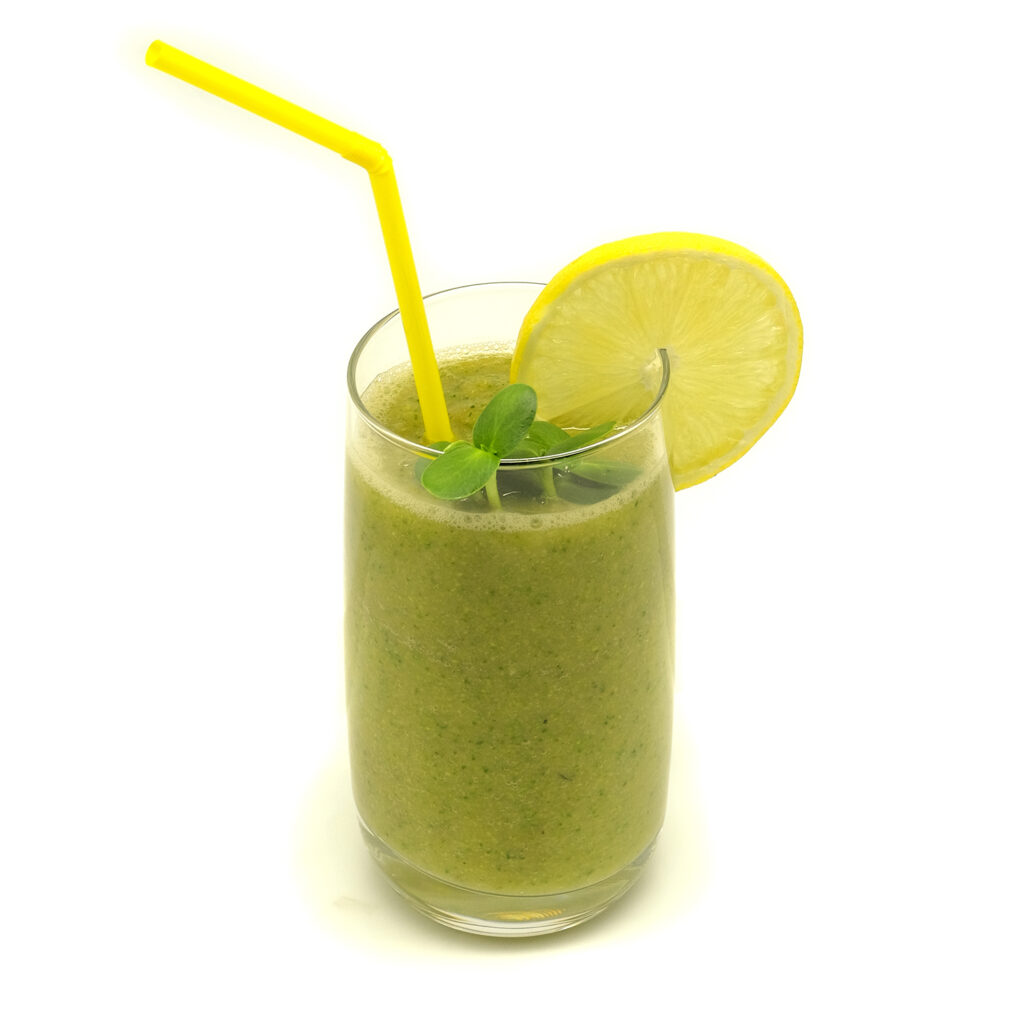
A thick green smoothie with sunflower microgreens, banana, and apple — mild nutty flavor, no bitterness, packed with…
Crispy toast loaded with creamy avocado, a runny egg, and peppery radish or cress microgreens. A complete breakfast…
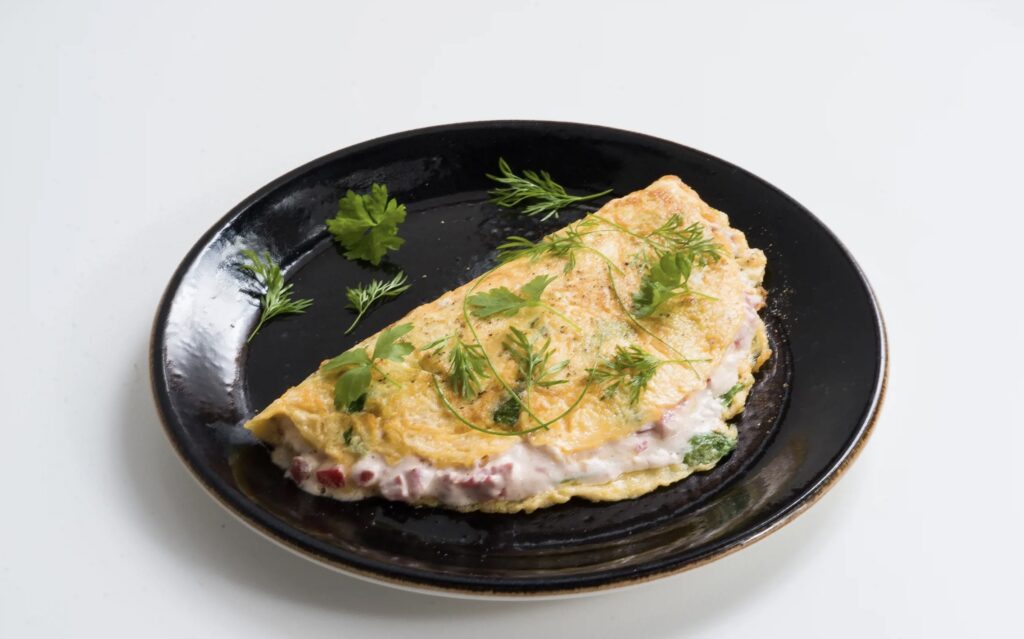
A classic French-style omelet with a creamy tomato and curd cheese filling, topped with fresh microgreens. Ready in…